All regions An approaching voice
The Americas Weather, ancestors and spirits brought near
Across the Americas, the circulating blade brings a power into human affairs. It calls weather, announces dancers, makes ancestors audible and moves around the sick. Painted fish receive meals, winter instructors speak with thunder, and children make their own voices. These recurring actions connect a hemisphere of particular traditions.
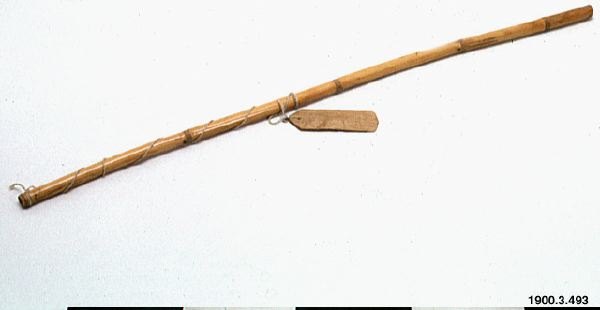
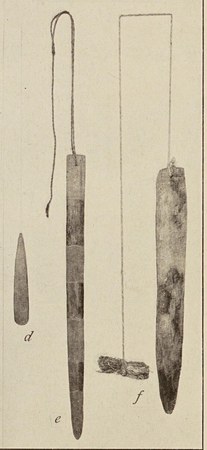
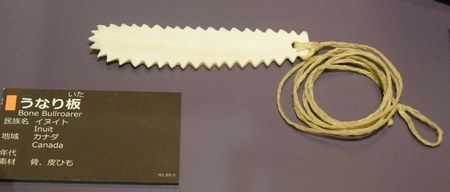
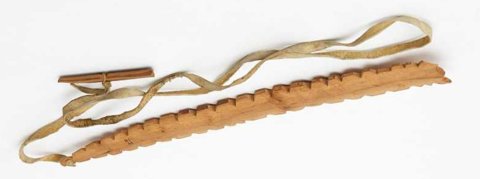
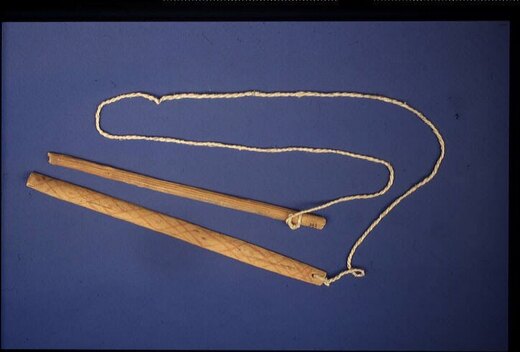
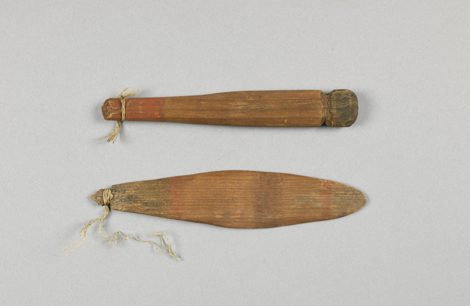
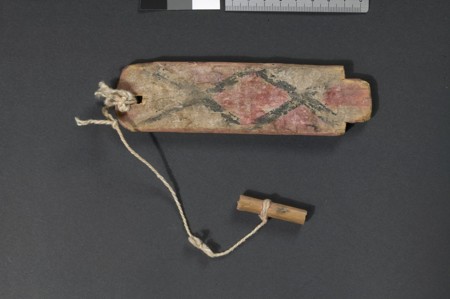
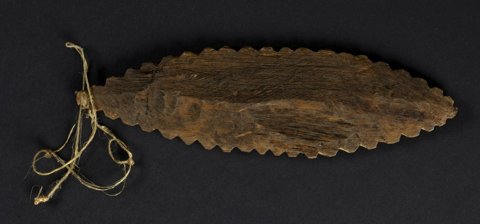
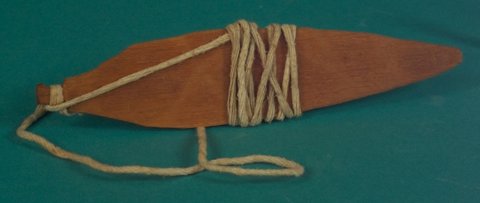
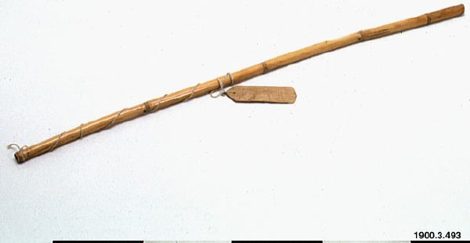
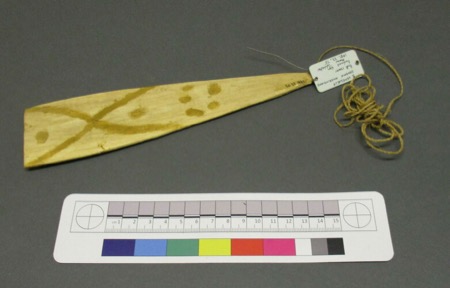
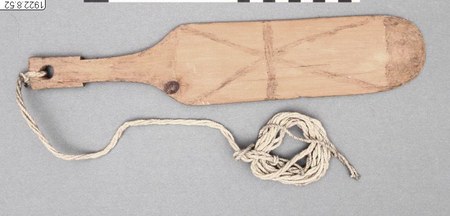
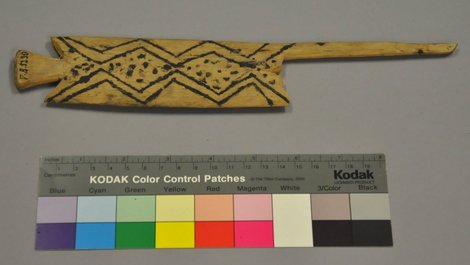
Pipil (Nahua-Pipil) Pipil rung rung from Nahuizalco, with a sounding slat, cord, and reed handle. Statens museer for varldskultur / Etnografiska museet (1900.03.0493) · CC BY 4.0
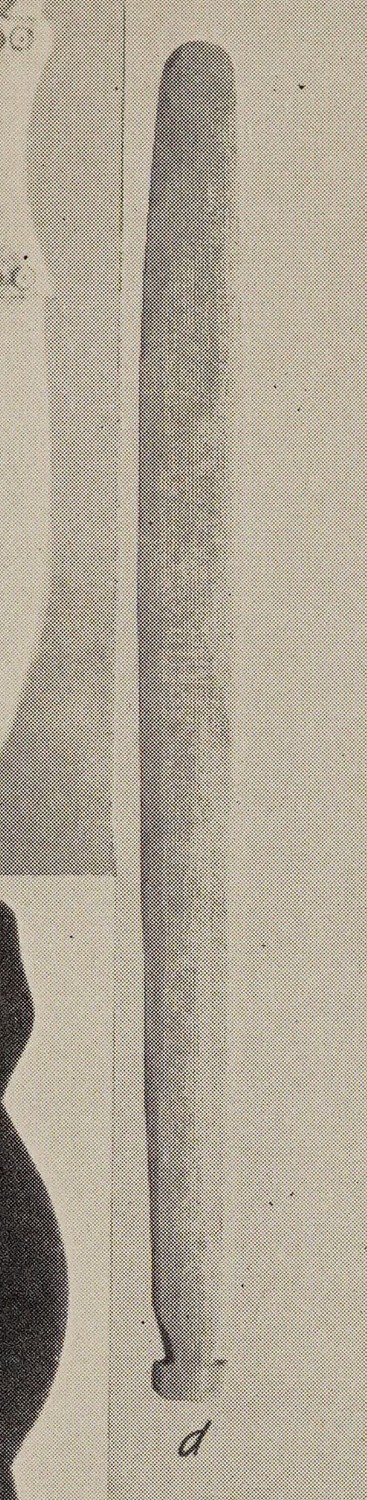
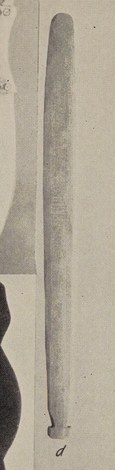
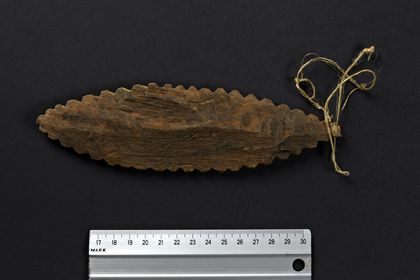
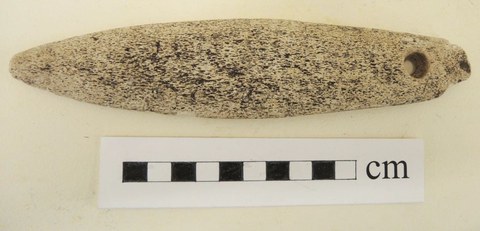
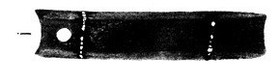
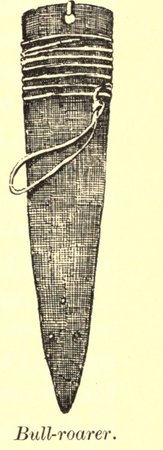
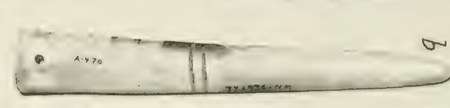
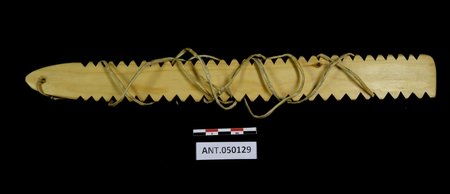
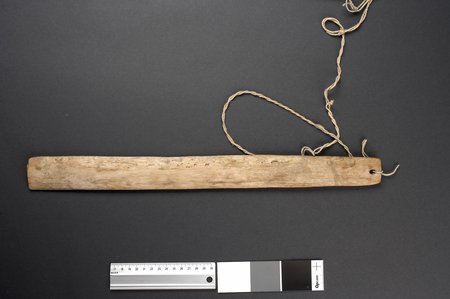
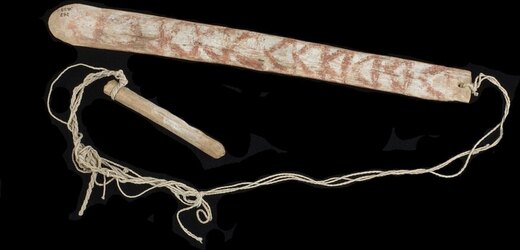
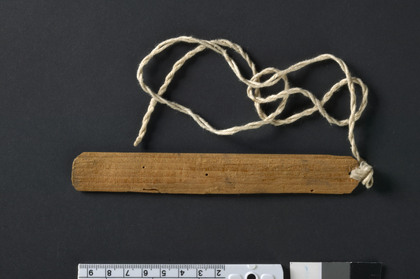
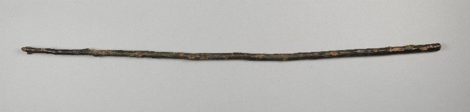
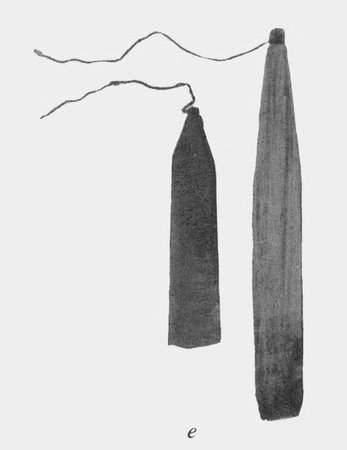
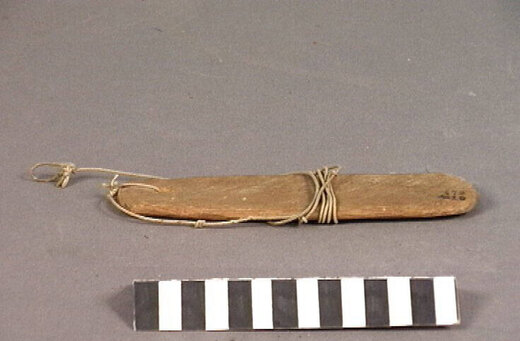
Makah Makah Klokali-ceremony bullroarer blade, photographed without its cord. Densmore, Nootka and Quileute Music (BAE Bulletin 124), 1939, Plate 11 (item d) · Public domain
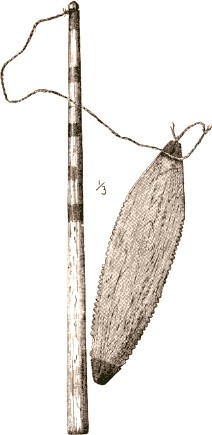
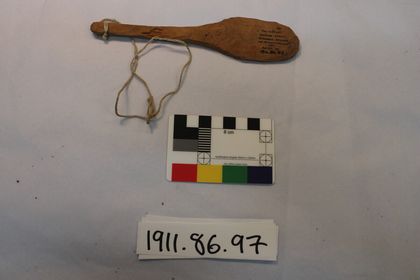
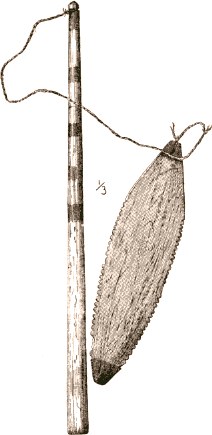
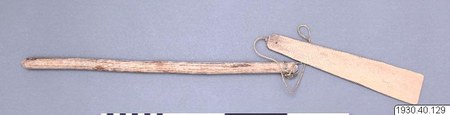
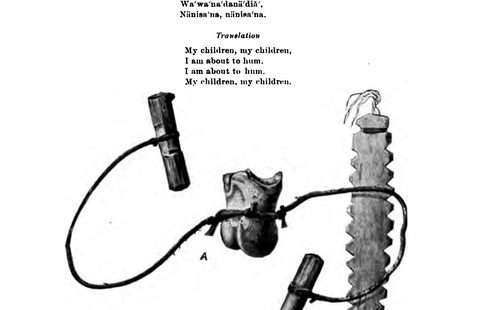
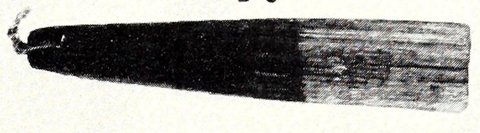
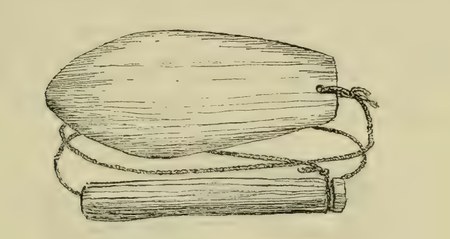
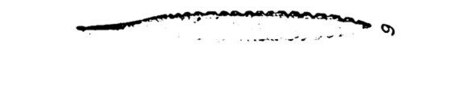
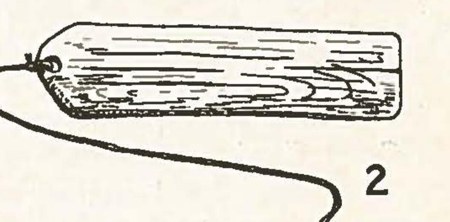
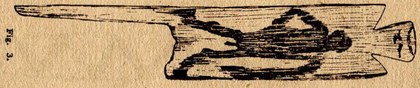
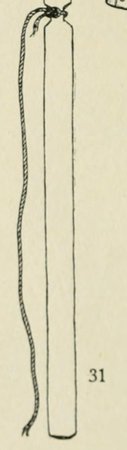
Point Barrow Eskimo / Inupiat Murdoch’s drawing of a Point Barrow whizzing stick with cord and wooden handle. Murdoch 1892, fig. 377, reproduced in Haddon, The Study of Man (1898) · Public domain On this page Giving thunder a name The voice arrives before its owner A returning presence must be answered Around a house, toward a body The dead have keepers Craft, play and practical sound A hemisphere also makes new arrangements The records Sources After a late-winter thaw, Cree people around James Bay once whirled an almond-shaped slat to call back the cold north wind. A hard crust made travel easier for snowshoes and toboggans. Far south, at Lagunita Salada in Patagonia, Mapuche children formerly swung their furfúrwe during storms to bring rain. Both accounts put the sound to work on weather that mattered immediately. Across the hemisphere, people give an approaching power a voice they can carry: wind, thunder, a dead relation or a visiting spirit. Who sends that voice, who answers and who knows its source turn a simple rotating blade into an instrument of social action. 1 , 2
James Bay (East) Cree · Araucanian (Mapuche) children of Patagonia; rain use at Lagunita Salada
Giving thunder a name Among the Inland Yuki of Round Valley, aelamo’otom meant thunder breath. During winter instruction, the teacher whirled it when he spoke of Thunder and the creator Taikomol. The subject of the lesson became audible. In a curing description transmitted by Loeb, two men stood at a sick person’s doorway and sounded the blades to induce a trance. Instruction and healing shared the thunder-named voice, moving it from a winter lesson to a patient’s threshold. 3
Inland (Northern) Yuki, southern Round Valley
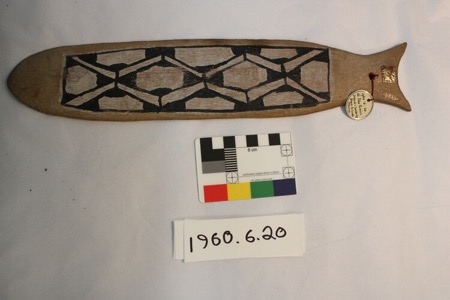
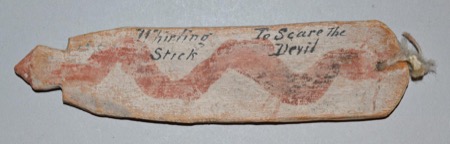
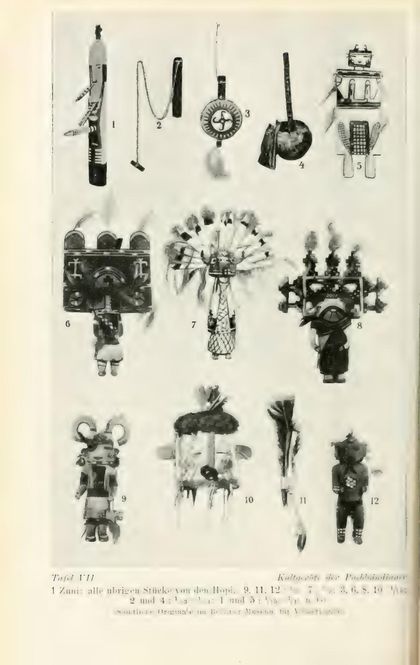
The storm could also take visible form. Hopi boards have cloud-terraced ends and lightning painting; performers joined their thunder-like sound to lightning frames and spring visits. A Diné groaning stick carried black mineral glitter and turquoise eyes and mouth, its pine taken from a tree struck by lightning. In Oberg’s Kamayura telling, Yanama obtained a bullroarer from dogfish in exchange for red toucan feathers, then traded it to the pequi tree for knowledge of making oil. Sound, rain and the fruit harvest entered an exchange with named partners. These materials and stories make weather a relationship people can address. 4 , 5 , 6
Tusayan / Walpi / Hopi · Navajo / Dine · Kamaiurá
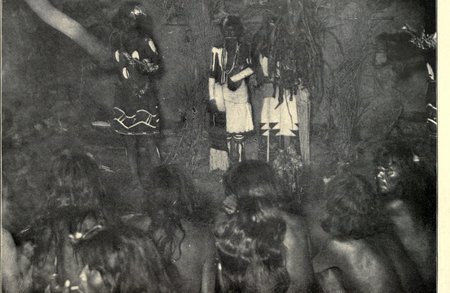
The voice arrives before its owner At a Kato winter school near Laytonville, boys were secluded in the earth-covered dance house, blackened and weakened by fasting, lying under straw like dead people. Men impersonating the dead came down from the hills at night. After they entered, bullroarers sounded inside; women outside understood the noise as the ghosts’ voices. The arrangement depended on a house, a threshold and differently informed audiences. Learning the source of the sound belonged to learning how that presence was made. 3
Kato (Cahto)
At Neah Bay the Makah Klokali assembled a more varied sound world. Densmore listed four or five bullroarers among its instruments; the meeting was grave and terrifying, with children kept at home. Separate whistles gave wolf and Thunderbird cries. The whirled boards belonged to the ensemble through which ceremonial beings approached, although the source assigns those specific animal imitations to the whistles. A roarer need not monopolize a spirit’s voice to help establish its arrival. 7
Makah
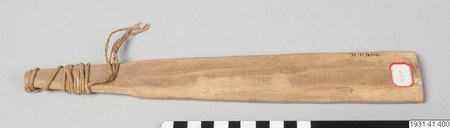
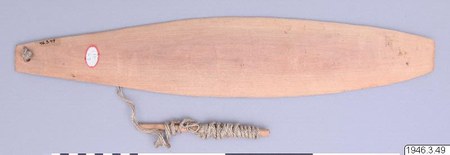
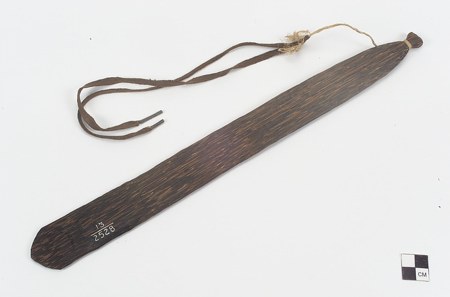
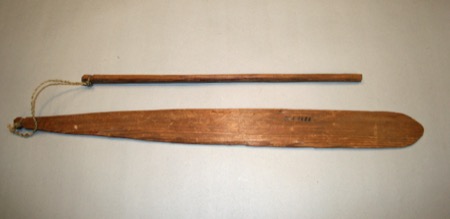
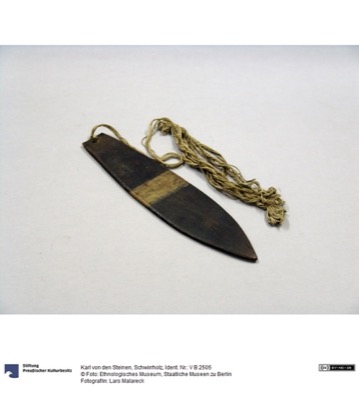
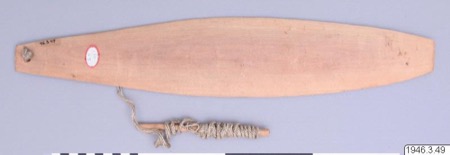
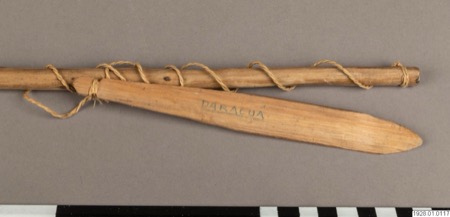
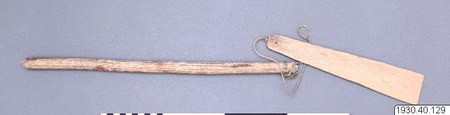
Among the Maxakali, the men’s house howled after dark. Initiated men and older boys sounded panandóad while women and small boys outside heard the dead. Concealment reached even the instrument’s name. Nimuendajú’s documentation distinguished sizes called men, women and boys; a surviving wooden blade retains its cord and handle. Across these scenes, custody of an audible presence establishes a place for the living: inside or outside, already instructed or waiting to learn. 8 , 9
Maxakali · Mashacali
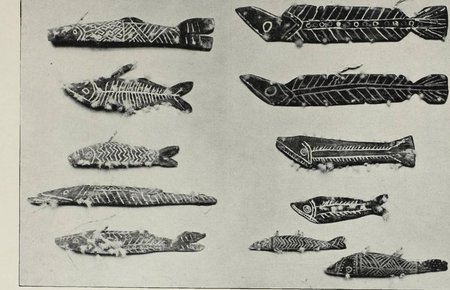
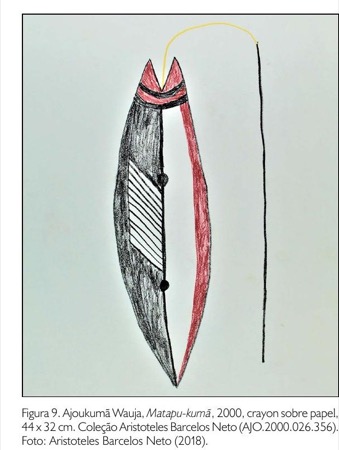
A returning presence must be answered Upper Xingu fish spirits make a particularly tangible demand. In Ball’s Wauja account, performers carry matapu from the village centre to houses of spirit masters and receive payments. After their return a sponsor puts a lit cigarette mouth to mouth with a performer. Among the Mehinaku, Braida describes two men simultaneously whirling a pair of spirit-fish at the pequi festival. Only when the boards stop do women deliver roasted fish, porridge and beiju. Painted wood, an arriving voice and a meal belong to one transaction. 10 , 11
Wauja (Waurá) · Mehinaku
Braida’s Mehinaku history makes that continuing obligation explicit: illness followed the production of too many boards for sale, and successive sponsored festivals repaid a cure. The sound requires work and food from the people who owe it. This gives the continental comparison substance. People do more than recognize a noise as supernatural; they answer the presence it brings with a changed course of action. Wauja tobacco and Mehinaku food remain their own particular forms of response. 11 , 10
Mehinaku · Wauja (Waurá)
Around a house, toward a body At Nahuizalco in El Salvador, Hartman recorded a householder making three evening circuits with rung rung to drive away evil spirits and sorcerers. Three surviving Pipil instruments preserve the name and the rig: a blade corded to a long reed handle. Circling establishes a protected dwelling. In a Diné curing description, an assistant first prepares the thong in a medicine bowl, then circles the hogan while violently whirling the blade; everyone inside stays silent. The wrapped instrument is afterwards applied to the patient’s limbs. 12 , 13
Pipil (Nahua-Pipil) · Navajo / Dine
One circuit expels a danger, the other belongs to preparing and treating the sick. Both extend a carried voice around a vulnerable interior before the work comes closer. Matsigenka shamanism supplies another form of approach: nocturnal rumbling like the Master of Thunder calls great spotted cats to help the allied shaman. Separately catalogued children’s boards belong to the same people. The nocturnal summons establishes the desired arrival; it does not turn every engraved or toy specimen into a healer’s instrument. 14 , 13 , 12
Matsigenka · Navajo / Dine · Pipil (Nahua-Pipil)
The dead have keepers A Caripuna board could not be purchased like an ordinary utensil. Keller offered scissors for a blade about half a metre long; its young keeper appealed to an elder, who walked around the burial grounds imitating its howl and explained its place in lamenting the dead. The refusal made custody visible. The keeper’s answer belongs beside Maxakali dead voices: sound sustains relations whose proper occasion and authority the living must preserve. These are two particular arrangements of care for the dead, rather than one shared funeral institution. 15 , 8
Caripuna · Maxakali
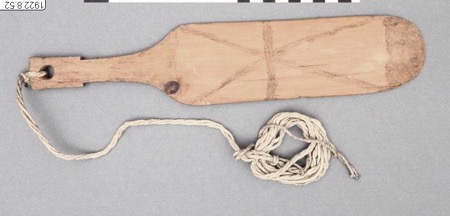
Nimuendajú heard a remembered Xipaya account of another ancestral voice. After midnight at the Zetáβia feast, warī warī sámį joined singing and great bamboo flutes: continual turning combined with a term for an elder male relative. People feared even discussing it, and women and children could not approach. The rite was no longer performed after its last qualified leader died; the sacred mechanism was known to the ethnographer through sparse oral information and a difficult drawing. Alongside that memory he documented openly used paddle-shaped children’s boards. Ancestral sound and ordinary play coexisted. 16
Xipaya (Šipáia)
Craft, play and practical sound The children’s instrument has its own richness. Catawba makers cut yen’ wihəre, wind turns, from gourd rind, yellow pine bark or cypress shingle. A short, sometimes notched blade on roughly two and a half feet of cord made a deep tremolo hum. Speck could find no attached purpose or symbolism beyond play. At Point Barrow, Murdoch obtained a pine whizzing-stick painted in black and red, with braided sinew and a slender handle; a boy of about thirteen or fourteen made the specimen for sale. Those accounts establish skill, colour and an admired sound. 17 , 18
Catawba / Rock Hill York County · Point Barrow Eskimo / Inupiat
Practical force could remain quite direct. Amy B. Jones made a roots-and-seal-sinew bullroarer at Kotzebue in 1976 that the museum identifies as a wolf scarer. In an Omaha tale recorded by Fortune, two brothers escaping with horses make a bullroarer to drive them; that tale stands alongside La Flesche’s description of the boys’ gahoota toy. At Lagunita Salada the children’s storm-time play was itself rain work. Craft, useful noise and weather knowledge therefore belong inside the American comparison, with their precise occasions intact. 19 , 20 , 21 , 2
Iñupiaq / Kotzebue · Omaha / Nebraska · Araucanian (Mapuche) children of Patagonia; rain use at Lagunita Salada
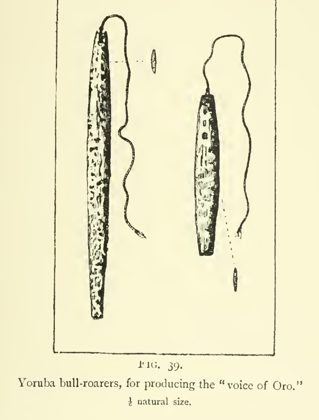
A hemisphere also makes new arrangements The Caribbean extends the story through distinct histories. Aruba’s rough oval zeeuw survives as a nineteenth-century children’s toy, its cord wound around the blade. In Cuba, Marcuzzi traces the bullroarer cult within orisha worship to the Yoruba Oro institution across the Atlantic; his abstract highlights instruments constructed so that they are muted. Presence can persist through an object whose voice has been withheld. These Caribbean records belong to the hemisphere through their own documented settings, including migration and changing institutions. They do not have to furnish an ancient Indigenous route from island to mainland. 22 , 23
Aruba Island · Afro-Cuban orisha worship / Oro-derived cult
Loeb’s 1929 comparison asked why bullroarers so often travelled with withheld knowledge, spirit impersonation and initiation. Following Lowie, he proposed diffusion of a complex rather than independent invention of every element. That was a historical explanation. The original comparison here rests on the actions the witnesses describe: people send a voice toward weather, a house, a gathering or the dead, and its hearers respond. Winter teachers, spirit hosts, healers, children and practical makers all participate in that larger repertoire. The circulating blade joins an audible arrival to the human work of answering it. 24 , 3 , 10 , 2
Inland (Northern) Yuki, southern Round Valley · Wauja (Waurá) · Araucanian (Mapuche) children of Patagonia; rain use at Lagunita Salada
Objects, voices and stories
Stories from the region
James Bay (East) Cree
On the eastern shore of James Bay, the bullroarer was a tool for calling winter back. John M. Cooper, working through Cree and Ojibwa country from Lake of the Woods to Rupert House across four summers in the 1920s, found the flat, almond-shaped slat in common use - whirled, above all after the…
© Pitt Rivers Museum, University of Oxford (acc. 1911.86.97)
Inland (Northern) Yuki, southern Round Valley
aelamo'otom
Among the inland Yuki of Round Valley the bullroarer breathed thunder. Aelamo'otom, thunder breath, spoke with the voice of Taikomol, the creator, who was Thunder himself; in the winter initiation it swung whenever the instructor's teaching turned to him, and at a sick person's doorway two men…
Representative — not this record’s object · The schoolboys' ual ual: a hand-sized paddle on its cotton string
A. L. Kroeber, Handbook of the Indians of California (BAE Bulletin 78, 1925), Plate 44 · Public domain
Kato (Cahto)
telbut
Among the Kato (Cahto), the southernmost Athabascan people of the California coast, at the head of the South Fork of the Eel River, every boy of about twelve was shut into the earth-covered dance house for the whole winter. Starved, blackened, and laid in a row under straw until they grew weak…
Representative — not this record’s object · Kroeber’s plate of Yokuts, Luiseño, and Pomo bullroarers.
Densmore, Nootka and Quileute Music (BAE Bulletin 124), 1939, Plate 11 (item d) · Public domain
Makah
A Makah bull-roarer from the Cape Flattery country near Neah Bay, Washington, now held at the Smithsonian's National Museum of Natural History and figured by Frances Densmore in her Nootka and Quileute Music (1939). Far from a stray household object, Densmore names the bull-roarer among the…
Catawba / Rock Hill York County
yen' wihǝre
A bullroarer of carved wood from the Catawba of the South Carolina Piedmont, collected by the salvage ethnographer Frank G. Speck and sold by him to the Museum of the American Indian in New York in 1942. It comes from Rock Hill, in York County, where the Catawba reservation lay a few miles south of…
Murdoch 1892, fig. 377, reproduced in Haddon, The Study of Man (1898) · Public domain
Point Barrow Eskimo / Inupiat
At Utkiavwĭñ, near Point Barrow, the naturalist John Murdoch obtained the well-known "whizzing-stick" the children often played with: a thin board of pine wood, painted with black lead and red ocher and fastened by about a foot of braided sinew to a slender rod that served as a handle. Swung…
Find a people, name or story 356 records
Hogup Cave, Early Archaic occupation (Unit I, Stratum 3)
Världskulturmuseet, Göteborg / SMVK (1979.10.0313) · CC BY 4.0
Wéhnayey / Wichí
jwim-jwim / juimjuim
Qikiqtani / Belcher Islands Inuit / Sanikiluaq
© The Trustees of the British Museum, Am1929,0412.54 · CC BY-NC-SA 4.0
Eskimo-Aleut / Mackenzie River mouth
Hokkaido Museum of Northern Peoples (北海道立北方民族博物館), acc. H1.89.9, via Hokkaido Digital Museum · CC0
Northern Labrador Inuit
Representative — not this record’s object · Complete Inuit bullroarer rig.
Inupiaq / Point Hope
wolf scarer
St. Lawrence Island Yupik (Siberian Yupik), Bering Sea, Alaska
Yup'ik (Nunakauyarmiut) / Toksook Bay, Nelson Island
Levlugtaq
Tunumiit (Ammassalik Inuit), East Greenland
imitita
Kulturhistorisk museum, Universitetet i Oslo, UEM26188; photo Camilla and Mårten Teigen · CC BY-SA
Världskulturmuseet, Göteborg / SMVK (1930.40.0129) · CC BY 4.0
Atshuana (source spelling)
pumbuentzade
Representative — not this record’s object · Ticuna mare bullroarer from the western Amazon.
James Mooney, The Ghost-Dance Religion (1896), fig. 93 · Public domain
Tolowa
Representative — not this record’s object · Mooney's plate: (a) the Ghost Dance buffalo-hoof hummer on two strings…
James Mooney, The Ghost-Dance Religion (1896), fig. 93 · Public domain
Galice Creek (Taltushtuntede)
Representative — not this record’s object · Mooney's plate: (a) the Ghost Dance buffalo-hoof hummer on two strings…
© Pitt Rivers Museum, University of Oxford (acc. 1903.129.4.1)
Sixes River (Kwatami)
Representative — not this record’s object · Zuni bullroarer with a slender wooden handle and coiled cord
Object 22127. Courtesy of the Penn Museum.
Yosemite Valley (attribution reputed Southern Miwok)
Representative — not this record’s object · Penn Museum 22127, an Oglala bullroarer; not the Yosemite Miwok specimens (unphotographed).
Site ENAP-3, Concón (Bernardo Berdichewsky excavation, November 1962 into 1963)
pendiente (original identification); placa o látigo zumbador (later proposed use)
Nationalmuseet, Denmark, H1.65 (object 85119); photograph Mads Kildegaard Nielsen · CC BY-SA 4.0
Chipewyan / Dene / Etthen-eldeli
detjEndEl ne
Shuswap / Secwepemc (Kamloops division)
Huitoto (source label; subtype unspecified)
pluma zumbadora
© The Trustees of the British Museum, Am1891,0612.21 · CC BY-NC-SA 4.0
Tusayan / Walpi / Hopi
tovokìnpi
J. W. Powell / J. G. Bourke (1892) · Public domain
Apache / San Carlos Agency context
tzi-ditindi
J. W. Powell / J. G. Bourke (1892) · Public domain
Verde Valley cliff dwellings
Representative — not this record’s object · Bourke’s engraving of two Apache rhombi with chevron and wavy-line carvings.
J. W. Fewkes, Hopi Katcinas Drawn by Native Artists (21st ARBAE, 1903), pl. XXXV · Public domain
Rio Grande Pueblo tribes
Representative — not this record’s object · Fewkes’s painted plate of the Ciwikoli katcina swinging a whizzer overhead.
Mattocks site (Mimbres Classic)
Seri / Comcaac-associated contemporary Bufo ceremony
Bufo alvarius / sapo del amanecer context
Museu Paraense Emílio Goeldi, 2011; photo: Lohana Gomes, in Cohen & Venturieri, Arqueologia musical amazônica (2021), p. 71
Lagoa das Oncas, Upper Xingu (culture not identified)
zumbidor
Mbyá-Guaraní
waimí kerambú
© The Trustees of the British Museum (E/Am1937-0316-28-a) · CC BY-NC-SA 4.0
Vilela
kiré ajlipié
Representative — not this record’s object · Eastern Mataco/Wichí bullroarer from the Bermejo River country.
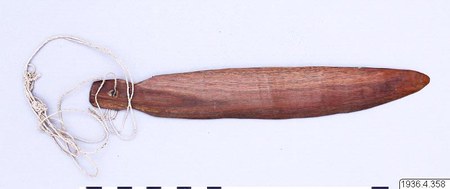
Världskulturmuseet, Göteborg (1936.04.0358) · CC BY 4.0
Araucanian (Mapuche) children of Patagonia; rain use at Lagunita Salada
furfúrwe
Representative — not this record’s object · Mataco bullroarer from the Gran Chaco, with a perforated tab and plaited cord.
Kulturhistorisk museum, Universitetet i Oslo, UEM41249/a; photo Kirsten Helgeland · CC BY-SA
San Marcos, Santa Bárbara
ronrón (de tablita)
Representative — not this record’s object · The second Mesbilja whirler
© The Trustees of the British Museum, Am1891,0612.21 · CC BY-NC-SA 4.0
Washoe
Thunder-stick
Representative — not this record’s object · Painted Hopi snake-lightning bullroarer from Mishongnovi, British Museum.
Penn Museum (acc. 38702; Oraibi, Third Mesa)
Sierra de la Giganta, Loreto area (find); Museo Regional de Antropología e Historia de Baja California Sur, La Paz (repository)
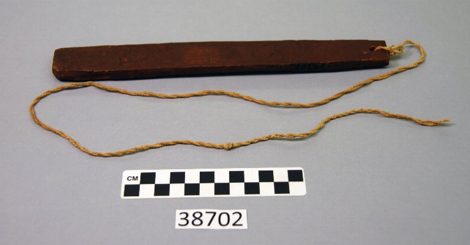
Representative — not this record’s object · A plain Hopi To-Wok-Kin-Pi, Oraibi; not the Sierra de la Giganta bullroarer (unphotographed).
Curt Nimuendajú, The Apinayé (1939), fig. 25 · Public domain
Porangaba Recomenda das Almas groups
vumvum / berra-boi
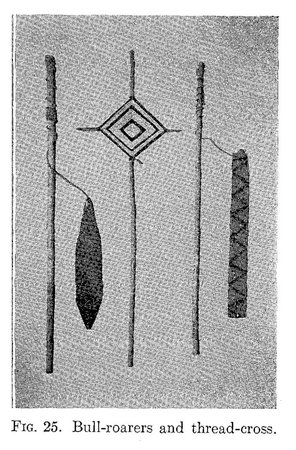
Representative — not this record’s object · A pair of Apinayé bullroarers from Brazil.
Wereldmuseum / NMVW (RV-362-54) · CC BY-SA 4.0
Pass Cahuilla (Kauisiktum clan), Palm Springs
Representative — not this record’s object · Pima Wihoewiketeke with painted slat, long cord, and separate handle.
A. L. Kroeber, Handbook of the Indians of California (BAE Bulletin 78, 1925), Plate 44 · Public domain
Desert Cahuilla (Wontcaktamyahwic clan), Tuva
Representative — not this record’s object · Kroeber’s plate of Yokuts, Luiseño, and Pomo bullroarers.
Clayoquot (Tla-o-qui-aht)
Franz Boas, The Social Organization and the Secret Societies of the Kwakiutl Indians (Report of the U.S. National Museum for 1895; Washington, 1897), fig. 189, p. 611 · Public domain
Koskimo (Gusgimukw)
Representative — not this record’s object · Boas's 1897 drawing of a Northwest Coast whirring stick on cord and handle.
Stewart Culin, Games of the North American Indians (24th ARBAE, 1907), fig. 1008 · Public domain
Kweeha (Kwixa), Fort Rupert Kwaguʼł
Representative — not this record’s object · Oglala tateka yuhmunpi from Pine Ridge, figured by Culin in 1907.
Franz Boas, The Social Organization and the Secret Societies of the Kwakiutl Indians (Report of the U.S. National Museum for 1895; Washington, 1897), fig. 189, p. 611 · Public domain
Wikeno (Wuikinuxv)
Representative — not this record’s object · Koskimo blade, cord and handle, Boas fig. 189.
© Pitt Rivers Museum, University of Oxford (acc. 1903.129.4.1)
Bella Coola (Nuxalk)
Representative — not this record’s object · Zuni bullroarer with a slender wooden handle and coiled cord.
Franz Boas, The Social Organization and the Secret Societies of the Kwakiutl Indians (Report of the U.S. National Museum for 1895; Washington, 1897), fig. 189, p. 611 · Public domain
Bella Bella (Heiltsuk), Oyalit division
Representative — not this record’s object · Koskimo whirring stick: a tapering blade on cord and handle (Boas fig. 189).
Photograph Grant Keddie, Royal BC Museum (DhRx-16:1166)
China Hat (Xaihais / Kitasoo)
Representative — not this record’s object · whalebone blade with cord hole, Departure Bay, B.C.
Penn Museum, object 18400
Hartley Bay Tsimshian (Kitqata / Gitga'at)
Representative — not this record’s object · leaf-shaped Yup’ik blade on a wooden handle, Bristol Bay.
Tsimshian proper, Gilutsa tribe
Gitksan (Gitxsan), Kispiyox division
Stewart Culin, Games of the North American Indians (24th ARBAE, 1907), fig. 1008 · Public domain
Massett Haida
Representative — not this record’s object · Oglala tateka yuhmunpi from Pine Ridge, figured by Culin in 1907.
Skedans Haida (K'uuna Llnagaay)
Densmore, Nootka and Quileute Music (BAE Bulletin 124), 1939, Plate 11 (item d) · Public domain
Twana (Skokomish and related Hood Canal bands)
Representative — not this record’s object · Makah Klokali-ceremony bullroarer blade, photographed without its cord.
Soinuenea Folk Music Corner, Oiartzun (SHMT 30369) · CC BY-NC-SA 4.0
Northeastern Brazilian folk (caboclo/sertanejo)
roi-roi (Nordeste) / zunidor (Rio de Janeiro) / berra-boi / sonidor / zumbidor
Representative — not this record’s object · Brazilian zumbador with cross-hatched carving and red cord.
Yale Peabody Museum, YPM ANT 057335 · CC0
Slavey (Dene, Northern Athapaskan)
Världskulturmuseet, Göteborg (1935.14.0065) · CC BY 4.0
Kagaba (Kogi)
seibuká
Representative — not this record’s object · Chocó bullroarer from Colombia.
Penn Museum (acc. 38702; Oraibi, Third Mesa)
Kiliwa
Representative — not this record’s object · Plain Hopi To-Wok-Kin-Pi from Oraibi, with cord tied through one end.
Massey & Osborne, 'A Burial Cave in Baja California' (UC Anthropological Records 16:8, 1961), pl. 15i, via Project Gutenberg #30385 · Public domain
Bahía de los Ángeles burial cave, Baja California
Birnirk culture (ancestral Iñupiat), Piġniq mounds, Chukchi Sea coast
Kaibab Southern Paiute (?)
naiyaratinömpö
Muwu, VEN-11 (Chumash)
ʔalaxtəməmə / ʔaxtəməmənəʔəš
Atsugewi (Atsuge and Apwaruge)
Pitt Rivers Museum, University of Oxford, 1911.86.95 (Freire-Marreco collection)
Northeastern Yavapai (Yavepe)
i'ikwauwa
Representative — not this record’s object · Yavapai medicine bullroarer with lightning incisions
© The Trustees of the British Museum, Am1920,1008.20 · CC BY-NC-SA 4.0
Eastern White Mountain Apache
Representative — not this record’s object · bundle of plain Zuni wooden slats with cords, BM
J. W. Powell / J. G. Bourke (1892), Ninth Annual Report of the Bureau of Ethnology · Public domain
Cibecue Apache (Cibecue Creek band)
Representative — not this record’s object · Bourke’s engraving of two Apache bullroarers, one carved and one plain.
J. W. Powell / J. G. Bourke (1892), Ninth Annual Report of the Bureau of Ethnology · Public domain
Northern Tonto Apache, Fossil Creek band, Strawberry Valley semiband
Representative — not this record’s object · Two decorated Apache bullroarers figured by Bourke
Southern Tonto Apache, sixth semiband
Shaiahene band, Chiricahua Apache
Courtesy of the Penn Museum (object 38702)
Llanero (Gusgayi) division, Jicarilla Apache
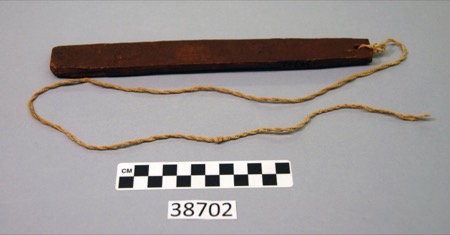
Representative — not this record’s object · Plain Hopi wooden slat with long cord, Penn Museum 38702
Frances Densmore, Papago Music, BAE Bulletin 90 (1929), pl. 15c · Public domain
Kikimai Papago local group
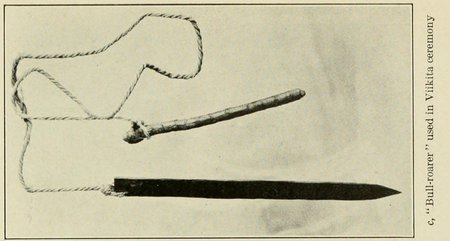
Representative — not this record’s object · Papago Viikita bullroarer: dark blade, twisted cord and stick handle.
Washington Matthews, “The Mountain Chant: A Navajo Ceremony”, BAE 5th Annual Report (1887), fig. 56, p. 436 · Public domain
Eastern Navajo / Diné
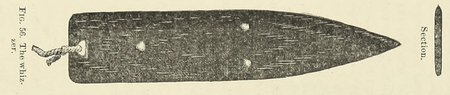
Representative — not this record’s object · Matthews’s engraving of a Navajo whizzer, three pale inlays and a knotted cord.
Kulturhistorisk museum, Universitetet i Oslo (Etnografisk) (UEM29633/b) · CC BY-SA
San Carlos Apache, Pinal band
Representative — not this record’s object · Pale wooden slat on a long braided cord, Oslo
The Franciscan Fathers, St Michaels, Arizona (1910) · Public domain
Western Navajo / Diné
Representative — not this record’s object · Navajo bullroarer published engraving
Theodor Koch-Grünberg, Zwei Jahre unter den Indianern, vol. 2 (1910), Abb. 90 · Public domain
Cubeo (Kubeo)
Representative — not this record’s object · Koch-Grünberg’s painted Kobéua fish bullroarer from the Rio Cuduiarý.
© Pitt Rivers Museum, University of Oxford (acc. 1960.6.20)
Wajãpi / Wayãpi
Representative — not this record’s object · Kamaiurá bullroarer from the Upper Xingu.
Murdoch 1892, fig. 377, reproduced in Haddon, The Study of Man (1898) · Public domain
Point Barrow Eskimo / Inupiat
Wereldmuseum / NMVW (RV-362-54) · CC BY-SA 4.0
Pima / Akimel O'odham
Wihoewiketeke
© The Trustees of the British Museum (Am1891,0612.22) · CC BY-NC-SA 4.0
Kiowa, Anadarko, Oklahoma
gyǹ-bou-pọu-gyʜ-gɑ
Representative — not this record’s object · A second Hopi blade from the 1891 exchange
Hurricane Deck cave region, San Rafael Mountains (Chumash traditional territory)
Walter Hough, Culture of the Ancient Pueblos of the Upper Gila River Region (1914), plate 26, fig. 25; United States National Museum · Public domain
Mogollon ("Ancient Pueblo") / Bear Creek Cave, Blue River
Günther Tessmann, Die Indianer Nordost-Perus (1930), Tafel 85, Fig. 3 · Public domain
Chapra (Shapra; historical Candoshi-Shapra label)
Representative — not this record’s object · Tessmann's corded Tschamikuro bullroarer from Peru.
Nomatsigenga (Campa Nomatsiguenga)
Copper Inuit (Inuinnait), Coronation Gulf
imilguptak
Wereldmuseum / NMVW (RV-362-54) · CC BY-SA 4.0
Owens Valley Paiute
Representative — not this record’s object · Pima bullroarer with blade, cord and handle, Wereldmuseum RV-362-54.
Courtesy of the Penn Museum, object 22610
Fish Springs Northern Paiute (NP-FSp)
Representative — not this record’s object · Zuni wooden bullroarer with its surviving cord, Penn Museum 22610.
Pitt Rivers Museum, University of Oxford, 1911.86.95 (Freire-Marreco collection)
Ash Meadows Southern Paiute (SP-Ash)
Representative — not this record’s object · Yavapai medicine bullroarer with lightning incisions and cord, Pitt Rivers Museum.
Object NA10426. Courtesy of the Penn Museum
Death Valley Shoshoni (S-DthV)
Representative — not this record’s object · Point Barrow bone blade on sinew beside its wooden handle
Finnish Heritage Agency / National Museum of Finland (VK4834:411), via Finna · CC BY 4.0
Great Smoky Valley Shoshoni (S-GSmV)
Representative — not this record’s object · Mesa Verde Ruin 14 deer-bone bullroarer with terminal hole and incised lines.
Kulturhistorisk museum, Universitetet i Oslo, UEM13727 (photo Marten Teigen); rotated 180° by The Bullroarer Atlas · CC BY-SA
Smith Creek Valley Shoshoni (S-SmCr)
Representative — not this record’s object · Painted Hopi tovolpi with cord and toggle from Shipaulovi, KHM Oslo UEM13727.
Reese River and Ione Valley Shoshoni (S-RsRi)
Hamilton Shoshoni (S-Hmlt)
Leslie A. White, The Pueblo of Sia, BAE Bulletin 184 (1962), fig. 50 · Public domain
Ely Shoshoni (S-Ely)
Representative — not this record’s object · Zia háomomo rig with blade, cord and handle, drawn by Leslie White.
Penn Museum (acc. 62-33-53)
Spring Valley Shoshoni (S-SprV)
wunzivu
Representative — not this record’s object · Two Seri ironwood bullroarers with their hide cords, Penn Museum 62-33-53.
Ruby Valley Shoshoni (S-RubV)
wutiŋgubbüü'u (as MM "thought")
Snake River Shoshoni (S-SnRv)
Bohogue Shoshoni ('sagebrush-butte people'), Fort Hall
wiipunonohwi
Northern Paiute-speaking Bannock, Fort Hall
wupu'nonoyuwin:
© The Trustees of the British Museum, Am1891,0612.21 · CC BY-NC-SA 4.0
Shoshoni of Promontory Point and Cache Valley: Huk'undUka and Pankwi-dUka
newUkivo
Representative — not this record’s object · Painted Hopi snake-lightning bullroarer from Mishongnovi, British Museum.
Neil M. Judd, Pueblo del Arroyo, Chaco Canyon, Smithsonian Miscellaneous Collections 138 (1959), plate 37 q · Public domain
Ancestral Puebloan / Chacoan Pueblo del Arroyo
Photograph Grant Keddie, Royal BC Museum (DhRx-16:1166)
Departure Bay shellmidden DhRx-16, Snuneymuxw (Island Halkomelem Coast Salish) territory, Nanaimo
Wereldmuseum / NMVW (RV-362-54) · CC BY-SA 4.0
Surprise Valley Paiute (Kidütökadö)
kwi'mo
Representative — not this record’s object · Pima bullroarer with blade, cord and handle, Wereldmuseum RV-362-54.
Recomendação das Almas group of São Manuel
berra-boi
A. L. Kroeber, The Arapaho (Bulletin AMNH 18, 1907), fig. 153 · Public domain
Ethnologisches Museum, Staatliche Museen zu Berlin (obj. 1313877) — via MIMO · CC BY-NC-SA 4.0
Kwakiutl / Kwakwaka'wakw
x·îndayu
Representative — not this record’s object · British Columbia coast bullroarer with a separate whirling stick.
A. L. Kroeber (1908) · Public domain
Courtesy of the Penn Museum, object 22610
Paiute
Representative — not this record’s object · Zuni wooden bullroarer with its surviving cord, Penn Museum 22610.
Ethnologisches Museum, Staatliche Museen zu Berlin (V B 2505); coll. K. von den Steinen, Kulisehu River, 1887 · CC BY-NC-SA 4.0
Kulisehu River peoples
yelo
© Pitt Rivers Museum, University of Oxford (acc. 1911.86.97)
Inland (Northern) Yuki, southern Round Valley
aelamo'otom
Representative — not this record’s object · The schoolboys' ual ual: a hand-sized paddle on its cotton string
Soinuenea Folk Music Corner, Oiartzun (SHMT 30369) · CC BY-NC-SA 4.0
Reza Pr'as Almas groups of Morrinhos / Palmito
berra-boi
Representative — not this record’s object · a Brazilian zunidor with red cord and ball grip.
A. C. Haddon, The Study of Man (1898), plate · Public domain
Afro-Cuban orisha worship / Oro-derived cult
Oro / bullroarer cult
Representative — not this record’s object · Yoruba Oro bullroarers figured by Haddon in 1898.
Kulturhistorisk museum, Universitetet i Oslo, UEM41249/a; photo Kirsten Helgeland · CC BY-SA
Site BC 60, cave in the San Julio Basin
Representative — not this record’s object · a bullroarer from Mesbilja, Chiapas
Therkel Mathiassen, Archaeology of the Central Eskimos I (1927), plate 84 fig. 9 · Public domain
Malerualik early Thule settlement, house ruin 13
Kulturhistorisk museum, Universitetet i Oslo, UEM26188; photo Camilla and Mårten Teigen · CC BY-SA 4.0
Iglulik Inuit
Representative — not this record’s object · a west Hudson Bay wooden blade.
Yale Peabody Museum, YPM ANT 057335 · CC0
Upper Tanana Dene; Nabesna John
Representative — not this record’s object · Unfinished bullroarer blank made by George Bain at Fort Nelson
Yale Peabody Museum of Natural History (YPM ANT 050129) · CC0
Chandalar Kutchin (Neets'aii Gwich'in)
Representative — not this record’s object · Deg Hit'an spruce bullroarer
Saline Valley Shoshoni
wumuitui
Object NA10426. Courtesy of the Penn Museum
Elko and Battle Mountain Shoshoni
nui; tsahanunu
Representative — not this record’s object · Point Barrow bone blade on sinew beside its wooden handle
Canadian Museum of History, III-G-372 a-b
Northern Saulteaux (Ojibwe)
Representative — not this record’s object · Anishinaabe bullroarer from Lac Seul, with a scalloped blade and handle.
Pitt Rivers Museum, University of Oxford, 1911.86.95 (Freire-Marreco collection)
Fort McDowell Mohave-Apache Community (now Fort McDowell Yavapai Nation)
ual ual ii'g agual
Soinuenea — Herri Musikaren Txokoa, object 30369 · CC BY-NC-SA 4.0
Folia das Almas of Itajui
berra-boi
Representative — not this record’s object · Brazilian zunidor carved with crosshatched diamonds and a corded wooden ball.
Trumai
kuth; uríuri (shared with Kamayurá); huri huri
Néprajzi Múzeum / Museum of Ethnography, Budapest, NM 69.41.16
Piaroa / Wothuja
Imu-chuwo
Representative — not this record’s object · Piaroa bullroarer, NM 69.41.16.
Världskulturmuseet, Göteborg (1931.41.0400) · CC BY 4.0
Canela (Ramkokamekra)
pimpó; pî-kwek
J. W. Powell / J. G. Bourke (1892) · Public domain
Chiricahua Apache
Representative — not this record’s object · Bourke’s 1892 engraving of two Apache bullroarers with carved wooden blades.
Kulturhistorisk museum, Universitetet i Oslo (Etnografisk) (UEM29633/b) · CC BY-SA
Jemez (Walatowa)
Representative — not this record’s object · Hopi bullroarer in Oslo, a pale wooden slat on a long braided cord.
Kulturhistorisk museum, Universitetet i Oslo (UEM29633) · CC BY-SA 4.0
Kumeyaay (Diegueño), catalogued Kamia
Representative — not this record’s object · Tohono O’odham bullroarer from Arizona, with a weathered blade and fibre cord.
Densmore, Nootka and Quileute Music (BAE Bulletin 124), 1939, Plate 11 (item d) · Public domain
Världskulturmuseet, Gothenburg (1946.03.0049); collected by Curt Nimuendajú, 1939 · CC0
Mapuche
Furfurcabue
Representative — not this record’s object · Maxakalí bullroarer collected by Curt Nimuendajú in Minas Gerais in 1939.
National Museum of the American Indian, Smithsonian Institution (13/2528) · CC0
Pitt Rivers Museum, University of Oxford, 1911.86.95 (Freire-Marreco collection)
Mohave (Mojave)
Representative — not this record’s object · Yavapai medicine bullroarer from Fort McDowell.
Wereldmuseum / NMVW (RV-362-38) · CC BY-SA 4.0
Quechan (Yuma)
Representative — not this record’s object · Tohono O’odham Wihoewiketeke with painted blade, cord, and whirling handle.
Ajoukuma Wauja, drawing of matapu-kuma (2000), in Aristoteles Barcelos Neto 2021, fig. 9 · CC BY 4.0
Wauja (Waurá)
matapu / aripe
Cashinahua (Kaxinawá)
asu
Statens museer for varldskultur / Etnografiska museet (1900.03.0493) · CC BY 4.0
Pipil (Nahua-Pipil)
rung rung
© Pitt Rivers Museum, University of Oxford (acc. 1960.6.20)
Kamaiurá
parapara / uriwuri / hori-hori (horí-horí)
© Pitt Rivers Museum, University of Oxford (acc. 1981.33.75)
Ethnological Museum, Staatliche Museen zu Berlin (acc. IV A 1488) · CC BY-NC-SA 3.0
Hesquiaht (Nuu-chah-nulth)
Penn Museum, object 18400
Bristol Bay provenance (historic catalogue: Eskimo)
Penn Museum (acc. 62-33-53)
Comcaac (Seri), Bahia de Kino
hacaaij / hacaailc (plural)
Världskulturmuseet, Göteborg (1931.41.0400) · CC BY 4.0
Kayapo
Representative — not this record’s object · Canela pimpó collected by Curt Nimuendajú in 1931.
Kulturhistorisk museum, Universitetet i Oslo, UEM41249/b; photo Kirsten Helgeland · CC BY-SA
Otomi
Representative — not this record’s object · Mesbilja bullroarer from Chiapas.
Canadian Museum of History, III-G-372 a-b
Moose Cree
Representative — not this record’s object · Lac Seul Anishinaabe bullroarer with a scalloped blade, cord, and handle.
Kulturhistorisk museum, Universitetet i Oslo, UEM41249/b; photo Kirsten Helgeland · CC BY-SA
Världskulturmuseerna / Museum of World Culture, Gothenburg (1922.08.0052); collected by Curt Nimuendajú · CC BY 4.0
Ethnologisches Museum, Staatliche Museen zu Berlin (V B 2505); photo: Lars Malareck · CC BY-NC-SA
Nahukúá (upper Xingu)
"Kleiner Blitz" (main-catalog gloss, German: "little lightning")
Yale Peabody Museum, YPM ANT 231820 · CC0
Dividing Point, Yukon River
Inupiaq, Wainwright
Imigluktaaq
Finnish Heritage Agency / National Museum of Finland (VK4834:411), via Finna · CC BY 4.0
Ancestral Pueblo / Ruin 14
Kulturhistorisk museum, Universitetet i Oslo (UEM16245); collected by Roald Amundsen, Gjøa expedition 1903–1906 · CC BY-SA 4.0
Netsilik Inuit (Netsilingmiut)
Världskulturmuseet, Göteborg / SMVK (1930.40.0129) · CC BY 4.0
Ticuna (Tikuna / Magüta)
mare
Swedish Museums of World Culture / Carlotta, object 1915.01.1453 · CC BY 4.0
Museum der Kulturen Basel, IVc 16316 · CC BY 4.0
San José Xilatzén, Tanlajás municipality, Huasteca (Huastec / Tének village in Stresser-Péan's own captions)
Kulturhistorisk museum, Universitetet i Oslo (UEM29633) · CC BY-SA 4.0
Capitan Grande Kumeyaay (Diegueño), San Diego River canyon, San Diego County
Representative — not this record’s object · Tohono O’odham wooden blade with fibre cord, Oslo
Probably Tunumiit (attributed), Site D, Clavering Island, Northeast Greenland
Netsilingmiut, Pelly Bay / Kugaaruk, Nunavut
imiklutAQ
Kulturhistorisk museum, Universitetet i Oslo, UEM13727 (photo Marten Teigen); rotated 180° by The Bullroarer Atlas · CC BY-SA
Hopi, Shipaulovi (Second Mesa), Arizona
tovolpi
Central Arctic (catalogue culture field: Inuit / Inuit (Greenland))
Upper Xingu; people unrecorded
Courtesy of the Penn Museum (object 38702)
Statens museer för världskultur (1946.03.0049) · CC BY 4.0
Statens museer för världskultur (1915.01.1261) · CC BY 4.0
Statens museer för världskultur (1913.01.0300a) · CC BY 4.0
Nivaclé; historic Ashluslay label
Statens museer för världskultur (1928.01.0117) · CC BY 4.0
© Pitt Rivers Museum, University of Oxford (acc. 1935.52.7)
Xingu River people; specific community unrecorded
Wereldmuseum / NMVW (RV-362-38) · CC BY-SA 4.0
Mountain Cahuilla
melawhic (northern Mountain Cahuilla); meūlakpic (southern Mountain Cahuilla)
Representative — not this record’s object · Tohono O’odham Wihoewiketeke with painted blade, cord, and whirling handle.
A. L. Kroeber, Handbook of the Indians of California (BAE Bulletin 78, 1925), Plate 44 · Public domain
J. W. Fewkes, Hopi Katcinas Drawn by Native Artists (21st ARBAE, 1903), pl. XLVIII · Public domain
Field Museum of Natural History (60974; negative 113080), via Biodiversity Heritage Library · CC BY-NC-SA 3.0
Wimonuntci Ute
kwiemtinömpö
Representative — not this record’s object · Northern Ute bullroarer 60974 with buckskin line, collected by Dorsey in 1900.
Courtesy of the Penn Museum, object 22610
Zuni
Nu'nu Nan'ne / thlem-tum-a-nv-nai / Towokpi
Wereldmuseum / NMVW (RV-362-38) · CC BY-SA 4.0
Cupeno
aīil
Representative — not this record’s object · Tohono O’odham Wihoewiketeke with painted blade, cord, and whirling handle.
Museum of Us Photograph Collection, P026654 (1915 glass plate) · Public domain
Diegueno / Kumeyaay
Representative — not this record’s object · the 1915 Panama-California Exposition case; a bullroarer hangs at right.
A. L. Kroeber, Handbook of the Indians of California (BAE Bulletin 78, 1925), Plate 44 · Public domain
Luiseno
momlahpish
Representative — not this record’s object · Kroeber’s plate of Yokuts, Luiseño, and Pomo bullroarers.
Wereldmuseum / NMVW (RV-362-38) · CC BY-SA 4.0
Papago / Tohono O'odham
Wihoewiketeke / wewegita
The Franciscan Fathers, St Michaels, Arizona (1910) · Public domain
J. W. Powell / J. G. Bourke (1892), Ninth Annual Report of the Bureau of Ethnology · Public domain
Tonto Apache
Representative — not this record’s object · Bourke’s engraving of two Apache bullroarers, one carved and one plain.
Wukchamni Yokuts (Sam Garfield; Taya'pnucau near Lemon Cove)
himhimna; huhuudech; hmhm'udech
Yale Peabody Museum of Natural History (YPM ANT 050129) · CC0
Tanaina / Dena'ina
Representative — not this record’s object · Deg Hit’an spruce bullroarer from Alaska.
Catawba / Rock Hill York County
yen' wihǝre
Mattaponi / Mattaponi Reservation
Turtle Mountain Chippewa / Belcourt
Kulturhistorisk museum, Universitetet i Oslo (UEM26188), CC BY-SA 4.0 · CC BY-SA 4.0
Baffinland Inuit Kingarmiut/Sikosuilarmiut / Kinngait
Sallirmiut Inuit / Southampton Island
annoresiut
Yup'ik Norton Sound / Saint Michael
© Pitt Rivers Museum, University of Oxford (acc. 1907.72.1)
Tunumiit, Clavering Island (Northeast Greenland)
Representative — not this record’s object · Arctic bone bullroarer with fine sawtooth edges and a long hide cord.
Eastern Band Cherokee / Birdtown
Frank G. Speck, 'Back Again to Indian River', Bulletin of the Archaeological Society of Delaware 3(5), 1942, fig. 2 (detail)
Nanticoke / Indian River descendants
Muscogee (Creek) / James H. Hill text corpus
fohfokv
Koasati / Coushatta Tribe of Louisiana / Bel Abbey
Stewart Culin, Games of the North American Indians (24th ARBAE, 1907), fig. 1008 · Public domain
Sicangu Lakota, Rosebud (South Dakota)
Tateka yumunpi
Representative — not this record’s object · Culin’s engraving of an Oglala tateka yuhmunpi from Pine Ridge.
Stewart Culin, Games of the North American Indians (24th ARBAE, 1907), fig. 1008 · Public domain
Oglala Dakota / Pine Ridge
tateka juihmunpi
Courtesy of the Penn Museum (non-commercial / educational use)
Teton Dakota / Lakota
Chan kadble tunpinpi
© Pitt Rivers Museum, University of Oxford (acc. 1903.129.4.1)
Omaha / Nebraska
gahoota
Representative — not this record’s object · Zuni bullroarer with a slender wooden handle and coiled cord, PRM 1903.129.4.1.
© Pitt Rivers Museum, University of Oxford (acc. 1928.9.99)
San Carlos Apache
Representative — not this record’s object · painted Hopi wooden blade with cord, Mishongnovi, PRM
© The Trustees of the British Museum (Am1891,0612.22) · CC BY-NC-SA 4.0
San Carlos Apache
Representative — not this record’s object · painted Hopi wooden blade, British Museum
© The Trustees of the British Museum (Am1891,0612.22) · CC BY-NC-SA 4.0
White Mountain Apache
Representative — not this record’s object · Hopi wooden blade painted with a red zigzag, British Museum
Dorsey and Voth, The Mishongnovi Ceremonies of the Snake and Antelope Fraternities (1902), pl. CI · Public domain
Site C-158/A, Granite Hill, east-central San Diego County; Kumeyaay/Diegueño tribes and bands (collective NAGPRA affiliation)
Representative — not this record’s object · A Kalehtaka with a bullroarer, Mishongnovi; not the Granite Hill object.
Photograph Grant Keddie, Royal BC Museum (DhRx-16:1166)
Tsimshian
Representative — not this record’s object · whalebone blade with cord hole, Departure Bay, B.C.
Comcaac (Seri), Isla Tiburón
hacaaij
Northern Ojibwa, Weagamow Lake, Ontario
Site 40HW44, Hawkins County, Tennessee
Castaic Cave, Los Angeles County, California (Chumash)
J. W. Fewkes, Hopi Katcinas Drawn by Native Artists (21st ARBAE, 1903), pl. LVIII · Public domain
Hopi / Songoopavi, Second Mesa
Dorsey and Voth, The Mishongnovi Ceremonies of the Snake and Antelope Fraternities (1902), pl. CI · Public domain
Hopi, Mishongnovi (Second Mesa), Arizona
Representative — not this record’s object · A Kalehtaka whirling a bullroarer inside the Antelope kiva at Mishongnovi.
Mesa Grande Diegueño, San Diego County, California
Finnish Heritage Agency / National Museum of Finland (VK4834:411), via Finna · CC BY 4.0
Northern Paiute, Utah
Representative — not this record’s object · Mesa Verde Ruin 14 deer-bone bullroarer with terminal hole and incised lines.
Northern Pomo (maker Sam Tony), Mendocino County, California
ma-dim / pa-doch
Ethnological Museum, Staatliche Museen zu Berlin (acc. IV A 1488) · CC BY-NC-SA 3.0
Haida, Haida Gwaii (Queen Charlotte Islands)
Representative — not this record’s object · Complete Hesquiaht bullroarer rig.
Yale Peabody Museum of Natural History (YPM ANT 050129) · CC0
Ingalik (Deg Hit'an), lower Yukon / Innoko River, interior Alaska
Lowie 1924, fig. 36 (AMNH 50.1-8637) · Public domain
Chemehuevi (Southern Paiute), eastern Mojave Desert and Chemehuevi Valley, lower Colorado River
Representative — not this record’s object · Shivwits Southern Paiute bullroarer model.
Classic Lillooet (St'át'imc) — Keatley Creek pithouse village (EeRl 7)
Coast Yuki (Ukoht-ontilka / Ukhotnom)
tinem
A. L. Kroeber, Handbook of the Indians of California (BAE Bulletin 78, 1925), Plate 44 · Public domain
Kato (Cahto)
telbut
Representative — not this record’s object · Kroeber’s plate of Yokuts, Luiseño, and Pomo bullroarers.
Världskulturmuseet, Göteborg / SMVK (1922.08.0052) · CC BY 4.0
Xipaya (Šipáia)
warī warī sámį
Ethnologisches Museum, Staatliche Museen zu Berlin (obj. 1313877) — via MIMO · CC BY-NC-SA 4.0
Tlingit, southeastern Alaska
hunkaya'na
Representative — not this record’s object · British Columbia coast bullroarer with a separate whirling stick.
Yale Peabody Museum of Natural History (YPM ANT 050129) · CC0
Crow River Kutchin / Vunta (Vuntut Gwich'in)
Representative — not this record’s object · a Deg Hit’an serrated spruce blade.
© The Trustees of the British Museum, Am1920,1008.20 · CC BY-NC-SA 4.0
Laguna (Kawaik) Pueblo / Keresan
oyamamuts
Representative — not this record’s object · Zuni bull-roarers (bundle), New Mexico
Världskulturmuseerna / Museum of World Culture, Gothenburg (1922.08.0052); collected by Curt Nimuendajú · CC BY 4.0
Encomendadores do Rio das Mortes
berra-boi
Representative — not this record’s object · a painted Tembé bullroarer from Brazil.
Northern Patagonia / Tehuelche-Gunun a Kena / Patagonian-Pampas plaque-hacha corpus
placas grabadas; hachas ceremoniales; tauk a ulungasum
Tinogasta Geométrico Temprano stone-blade corpus
zumbador de piedra
© The Trustees of the British Museum, Am1929,0412.54 · CC BY-NC-SA 4.0
Kittitas
Representative — not this record’s object · notched leaf-shaped wooden blade, Mackenzie River
Nationalmuseet, Denmark, H1.65 (object 85119); photograph Mads Kildegaard Nielsen · CC BY-SA 4.0
Wenatchi
Representative — not this record’s object · Chipewyan notched wooden slab on a skin thong
© The Trustees of the British Museum, Am1929,0412.54 · CC BY-NC-SA 4.0
Kalispel
Representative — not this record’s object · notched leaf-shaped wooden blade, Mackenzie River
Nationalmuseet, Denmark, H1.65 (object 85119); photograph Mads Kildegaard Nielsen · CC BY-SA 4.0
Lower Thompson (Nlaka'pamux)
Representative — not this record’s object · Chipewyan notched wooden slab on a skin thong
Coeur d'Alene (Schitsu'umsh)
Groom Range site 26Ln3088, historic-period Numic (Southern Paiute / Western Shoshone) camp
Världskulturmuseet, Gothenburg (1946.03.0049); collected by Curt Nimuendajú, 1939 · CC0
Terno Irmãos Paiva
berra-boi
Representative — not this record’s object · a Maxakalí bullroarer from Brazil.
Yale Peabody Museum, YPM ANT 057335 · CC0
Dunne-za (Beaver, Northern Athapaskan)
Representative — not this record’s object · Unfinished bullroarer blank made by George Bain at Fort Nelson
Guaraŝug'wä (exonym Pauserna), Santa Anita village
ivirapähĩm̃'ne
Pitt Rivers Museum, University of Oxford, acc. 1903.40.1; Balzola–Giglioli collection
Världskulturmuseerna / Museum of World Culture, Gothenburg (1937.27.0146); collected by Curt Nimuendajú · CC BY 4.0
Sherente
hieparo-wawe-wazdize'
Curt Nimuendajú, The Eastern Timbira (1946), pl. 35e · Public domain
Eastern Timbira - Canella and Chakamekra
Curt Nimuendajú, The Apinayé (1939), fig. 25 · Public domain
Världskulturmuseet, Gothenburg (1946.03.0049); collected by Curt Nimuendajú, 1939 · CC0
Staatliche Museen zu Berlin, Ethnologisches Museum / Katharina Kepplinger (V B 5230, coll. Max Schmidt 1904) · CC BY-SA 4.0
Karaja
Representative — not this record’s object · Pale wooden bullroarer painted with a dark zigzag lattice.
Otto Zerries, The Bull-roarer among South American Indians (1953), Fig. 3, after Max Schmidt 1905, p. 328, fig. 158
K. von den Steinen, Unter den Naturvölkern Zentral-Brasiliens (1894), p. 327, Abb. 121 · Public domain
Paul Ehrenreich, Beiträge zur Völkerkunde Brasiliens (1891), fig. 48 · Public domain
Världskulturmuseerna / Museum of World Culture, Gothenburg (1930.40.0129); collected by Curt Nimuendajú · CC BY 4.0
Världskulturmuseerna / Museum of World Culture, Gothenburg (1930.40.0129); collected by Curt Nimuendajú · CC BY 4.0
Bora
tsíxtsi
Representative — not this record’s object · Ticuna bullroarer and handle stick from the Rio Solimões.
Världskulturmuseerna / Museum of World Culture, Gothenburg (1928.01.0038); collected by Curt Nimuendajú · CC BY 4.0
Världskulturmuseerna / Museum of World Culture, Gothenburg (1930.40.0129); collected by Curt Nimuendajú · CC BY 4.0
Omagua
Representative — not this record’s object · Ticuna bullroarer and handle stick from the Rio Solimões.
Günther Tessmann, Die Indianer Nordost-Perus (1930), Tafel 85, Fig. 3 · Public domain
Koto
wígǫ́
Representative — not this record’s object · Tessmann’s drawing of the corded Tschamikuro bullroarer.
Günther Tessmann, Die Indianer Nordost-Perus (1930), Tafel 85, Fig. 3 · Public domain
Aguano; Lamisto; Tschamikuro
bōribṓri (Lamisto)
Swedish Museums of World Culture / Carlotta, object 1915.01.1453 · CC BY 4.0
Panobo
rę̄òrę̄ò
Representative — not this record’s object · Cavineño toy bullroarer 1915.01.1453 from the Río Beni collection
Etnografiska museet, Stockholm (1913.11.0128) · CC BY 4.0
Caripuna
Representative — not this record’s object · a Chacobo bullroarer from the upper Amazon.
Etnografiska museet, Stockholm (1913.11.0128) · CC BY 4.0
Världskulturmuseet, Göteborg (1915.01.1261) · CC BY 4.0
Etnografiska museet, Stockholm (1913.15.0024) · CC BY 4.0
Museum der Kulturen Basel, IVc 25229 · CC BY 4.0
Chiquitano, including the Churapa attestation
sukurush (Churapa) / upaspakiña (Chiquitano specimen)
Erland Nordenskiöld, Indianer und Weisse in Nordostbolivien (1922), Abb. 31 · Public domain
Erland Nordenskiöld, Indianer und Weisse in Nordostbolivien (1922), Abb. 31 · Public domain
Chimane
kakabadje
Representative — not this record’s object · Nordenskiöld’s drawing of a narrow, corded Yuracaré bullroarer.
Världskulturmuseerna / Etnografiska museet (SMVK), drawing 011571, coll. Erland Nordenskiöld · CC BY-NC-ND 2.5
Chiriguano and Chane
runrun
Världskulturmuseet, Göteborg (1936.04.0358) · CC BY 4.0
Mataco; Choroti; Ashluslay
koyék (-quyeq)
© The Trustees of the British Museum (E/Am1937-0316-28-a) · CC BY-NC-SA 4.0
Mbaya-Caduveo
Representative — not this record’s object · Eastern Mataco/Wichi bullroarer from the Gran Chaco / Bermejo River.
Museum der Kulturen Basel, IVc 16316 · CC BY 4.0
Carib
Representative — not this record’s object · Tiriyó bullroarer from the Guianas.
Wereldmuseum / NMVW (RV-472-10) · CC BY-SA 4.0
Otto Zerries, The Bull-roarer among South American Indians (1953), Fig. 4, after Reichel-Dolmatoff 1945
Otto Zerries, The Bull-roarer among South American Indians (1953), Fig. 5, after Wassén 1935
Otto Zerries, The Bull-roarer among South American Indians (1953), Fig. 6 — figure first published Nordenskiöld 1928, p. 73, fig. 53c · Public domain
Maleku (Guatuso), Rio Frio basin
Jafara / Lhafara; sabara
Representative — not this record’s object · Nordenskiöld’s drawing of a bird-incised Chocó bullroarer from the Río Sambú.
Ancestral Puebloan / Salmon Pueblo
Världskulturmuseet, Göteborg (1935.14.0065) · CC BY 4.0
Noanamá (Waunana / Wounaan)
sigur-wauna
Theodor Koch-Grünberg, Zwei Jahre unter den Indianern, vol. 2 (1910), Abb. 90 · Public domain
Museum der Kulturen Basel, IVc 16316 · CC BY 4.0
Oayana (Wayana), Guiana borderlands
yolok eu
Representative — not this record’s object · Tiriyó bullroarer from the Guianas.
Bororo, Kejara (Rio Vermelho, Mato Grosso)
aige
© The Trustees of the British Museum (E/Am1937-0316-28-a) · CC BY-NC-SA 4.0
Eastern Mataco (Wichí), Bermejo River
Georg Buschan, Illustrierte Völkerkunde I (1922), Tafel VII · Public domain
Umatilla
Representative — not this record’s object · Buschan’s plate of Pueblo cult gear.
The Franciscan Fathers, St Michaels, Arizona (1910) · Public domain
Eastern Shoshone (Wind River Shoshone)
Representative — not this record’s object · Navajo (Diné) bullroarer in a nineteenth-century published engraving.
Karl von den Steinen, Unter den Naturvölkern Zentral-Brasiliens (1894), p. 327, Abb. 122 · Public domain
Nahuquä (Nahukuá), Upper Xingu Carib
matavu
The Franciscan Fathers, St Michaels, Arizona (1910) · Public domain
Wadatika (Wada-dokado, Burns Northern Paiute)
wimo'to
Representative — not this record’s object · Navajo (Diné) bullroarer in a nineteenth-century published engraving.
Atsa (Atsa'kudokwa-tuviwarai, 'red-butte dwellers') Northern Paiute, Fort McDermitt
Wimo'to
Leslie A. White, The Pueblo of Sia, BAE Bulletin 184 (1962), fig. 50 · Public domain
Tasiget-tuviwarai ('between dwellers') Northern Paiute
wimo'to
Representative — not this record’s object · Zia háomomo rig with blade, cord and handle, drawn by Leslie White.
Penn Museum (acc. 62-33-53)
Kuyui-dokado ('cui-ui eaters') Northern Paiute, Pyramid Lake
wimo'to
Representative — not this record’s object · Two Seri ironwood bullroarers with their hide cords, Penn Museum 62-33-53.
Kuipa-dokado ('ground-squirrel eaters') Northern Paiute
wimo'to
Toe-dokado ('tule eaters') Northern Paiute, Stillwater and Fallon
wimo'to
Pakwi-dokado ('chub eaters') Northern Paiute
wimo'to
© The Trustees of the British Museum, Am1891,0612.21 · CC BY-NC-SA 4.0
Sawawaktodo-tuviwarai ('sagebrush-mountain dwellers') Northern Paiute
wimo'to
Representative — not this record’s object · Painted Hopi snake-lightning bullroarer from Mishongnovi, British Museum.
Tago-toka Northern Paiute, Owyhee River (now Duck Valley)
wimo'to
Achomawi (Pit River), Likely and Alturas
Courtesy of the Penn Museum (non-commercial / educational use)
Deep Creek Goshute (Pieroagönota)
Representative — not this record’s object · Pair of Comcaac (Seri) ironwood bullroarers with cords, Penn Museum.
Field Museum of Natural History (60974; negative 113080), via Biodiversity Heritage Library · CC BY-NC-SA 3.0
Moanunts Ute
niã'painöpö
Representative — not this record’s object · Northern Ute bullroarer with its buckskin line.
Timpanogots Ute (Tömpanöwotsnunts)
nia'monöpö
Field Museum of Natural History (60974; negative 113080), via Biodiversity Heritage Library · CC BY-NC-SA 3.0
Pahvant Ute
muyaratinumpö
Representative — not this record’s object · Northern Ute bullroarer with its buckskin line.
Taviwatsiu Ute (White River Ute)
nia'monöpö
Canadian Museum of History, III-G-372 a-b
Mowataviwatsiu Ute (Uncompahgre)
munu'nunöpö
Representative — not this record’s object · Anishinaabe wooden blade with cord and handle, Lac Seul
Lowie 1924, fig. 36 (AMNH 50.1-8637) · Public domain
Shivwits Southern Paiute
nanemotö
San Juan Southern Paiute (Kaibökadöt-tawip-nunts)
naiyaratinömpö
Mowatci Ute (Moache)
munu'nunöpö (U1); nianu'nömpö (U2)
Finnish Heritage Agency / National Museum of Finland (VK4834:411), via Finna · CC BY 4.0
Antarianunts Southern Paiute
niayaranömpö
Representative — not this record’s object · Mesa Verde Ruin 14 deer-bone bullroarer with terminal hole and incised lines.
Neil M. Judd, Pueblo del Arroyo, Chaco Canyon, Smithsonian Miscellaneous Collections 138 (1959), plate 37 q · Public domain
Pecos Pueblo
Representative — not this record’s object · Elk-bone bullroarer from Pueblo del Arroyo.
Campa (Asháninka)
mēromēro
Statens museer for varldskultur / Etnografiska museet (1900.03.0493) · CC BY 4.0
Mopan Maya
Representative — not this record’s object · a Pipil bullroarer from Nahuizalco, El Salvador.
Kulturhistorisk museum, Universitetet i Oslo, UEM13727 (photo Marten Teigen); rotated 180° by The Bullroarer Atlas · CC BY-SA
Kachina Cave (26WP69), Archaic component
Representative — not this record’s object · Painted Hopi tovolpi with cord and toggle from Shipaulovi, KHM Oslo UEM13727.
Field Museum of Natural History (60974; negative 113080), via Biodiversity Heritage Library · CC BY-NC-SA 3.0
Sociedade Renasceriana of Itapecerica / GRERTACUF
berra-boi
Object NA10426. Courtesy of the Penn Museum
Eastern Achomawi (Hammawi band)
Representative — not this record’s object · Point Barrow bone blade on sinew beside its wooden handle
Hayfork Wintu (Trinity River Wintu)
A. L. Kroeber, Handbook of the Indians of California (BAE Bulletin 78, 1925), Plate 44 · Public domain
Valley Maidu (Sacramento Valley Maidu, michopdo/Mechoopda)
Representative — not this record’s object · Kroeber’s plate of California bullroarers; the Pomo specimen is at right.
Courtesy of the Penn Museum, object 22610
Comanche, Southern Plains
yuane (yu'anee)
Representative — not this record’s object · Zuni bullroarer with surviving cord
Potter Valley Pomo (Northern Pomo)
Leslie A. White, The Pueblo of Sia, BAE Bulletin 184 (1962), fig. 50 · Public domain
Zia (Sia) Pueblo / Keresan
háomomo
Kulturhistorisk museum, Universitetet i Oslo, UEM41249/a; photo Kirsten Helgeland · CC BY-SA
Chortí Maya
Representative — not this record’s object · The second Mesbilja whirler
James Mooney, The Ghost-Dance Religion (1896), fig. 93 · Public domain
Blackfoot Confederacy, northern Plains
Representative — not this record’s object · Mooney's plate: (a) the Ghost Dance buffalo-hoof hummer on two strings…
© Pitt Rivers Museum, University of Oxford (acc. 1981.33.75)
Waika (Yanoama; today’s Yanomami)
alabaco
Representative — not this record’s object · Sanumá bullroarer from the northern Yanomami region.
© Pitt Rivers Museum, University of Oxford (acc. 1928.9.99)
Honey Lake Northern Paiute (Wadatkuht)
tupununoin
Representative — not this record’s object · A Mishongnovi boy's painted blade
National Museum of the American Indian, Smithsonian Institution (13/2528) · CC0
Mayangna (Sumu)
uwauwau
Representative — not this record’s object · a Miskito palm-wood roarer from the Río Coco.
Kulturhistorisk museum, Universitetet i Oslo, UEM41249/b; photo Kirsten Helgeland · CC BY-SA
Tzotzil Maya (Zinacantán)
himhim
Representative — not this record’s object · a highland Chiapas blade from Mesbilja, Oxchuc.
© The Trustees of the British Museum (E/Am1937-0316-28-a) · CC BY-NC-SA 4.0
Ayoreo (Ayoréode)
Representative — not this record’s object · an eastern Wichí bullroarer, Bermejo River.
Wereldmuseum / NMVW (RV-472-10) · CC BY-SA 4.0
Haitian country people (Rara bands)
von-von
Representative — not this record’s object · a rough oval wooden zeeuw from Aruba.
Yale Peabody Museum, YPM ANT 057335 · CC0
Kaska (Dease River)
Representative — not this record’s object · a Slavey blade blank from Fort Nelson, B.C.
Penn Museum, object 18400
Chugach (Sugpiaq)
Representative — not this record’s object · a Bristol Bay blade and handle, Alaska.
Show 24 more Show all 356 records
16 candidates These records have been proposed as bullroarer attestations. Their individual accounts explain the evidence; archaeological finds include their dates.
Courtesy of the Penn Museum (non-commercial / educational use)
Tututni (Lower Rogue River)
Candidate only
Representative — not this record’s object · Oglala Lakota bull-roarer, Pine Ridge Reservation, South Dakota
LA 3398, a rockshelter in the Navajo Reservoir district (Navajo occupation)
Candidate only
J. W. Fewkes, Archeological Expedition to Arizona in 1895 (17th Annual Report of the Bureau of American Ethnology, pt. 2, 1898), plate CLXXV, fig. s · Public domain
Ancestral Hopi / Sikyatki
Candidate only
Coso Range rock art galleries: Little Petroglyph, Big Petroglyph, or Sheep Canyon (the article does not resolve which one holds Fig. 6h)
Candidate only
Volcan Llullaillaco summit capacocha deposit; female figurine LL-99-058
placa zumbadora
Candidate only
Alero de los Jinetes, Cerro Colorado rock-art complex
placa zumbadora / zumbador
Candidate only
Vicús culture; a catalogue attribution, with no findspot published for any of the three
placa zumbadora
Candidate only
Alberto Rex González and Marta I. Baldini, ‘Un nuevo estilo arqueológico del Noroeste Argentino,’ Relaciones de la Sociedad Argentina de Antropología 24 (1999), Plate II:1, after Helena Losada 1980 · CC BY-NC-SA 2.5 Ar
Tinogasta Geométrico Temprano stone-blade corpus
Candidate only
L. L. Loud and M. R. Harrington, Lovelock Cave (University of California Publications in American Archaeology and Ethnology 25(1), 1929), Plate 15; Internet Archive scan · Public domain
Lovelock Cave
Candidate only
Mesa Prieta, panel 015_124_005E (exact coordinate withheld by the recorder)
Candidate only
© Pitt Rivers Museum, University of Oxford — 1919.59.88
Necropolis of Ancon
Candidate only
© Pitt Rivers Museum, University of Oxford (acc. 1911.86.97)
Elk Hills Cemetery, Buena Vista Lake (historic Yokuts village adjacent)
Candidate only
Representative — not this record’s object · The schoolboys' ual ual: a hand-sized paddle on its cotton string
Reportedly found at Tiwanaku; held (per the source) by the Museo de Tiwanaku
posible zumbador de piedra
Candidate only
Carter Ranch Pueblo, burial no. 9 (adult male)
Candidate only
E. W. Gifford, Californian Bone Artifacts, Anthropological Records 3(2) (1940), type Q8 drawings, p. 221 · Public domain
Santa Cruz Island archaeological site C83
Candidate only
Hueco-phase cave dwellers, Rustler Hills sink-hole shelter
Candidate only
Sources John M. Cooper, Field Notes on Northern Algonkian Magic (1930) Printed p. 515: almond-shaped board, former cold north-wind calling after late-winter thaw and travel crust; regional Cree/Ojibwa visits distinguished.
Back to passage ↑ Raúl Martínez-Crovetto, Juegos araucanos de la Patagonia (1969) Printed p. 19, V.6: furfúrwe construction; former rain work by children at Lagunita Salada during storms.
Back to passage ↑ Edwin M. Loeb, The Western Kuksu Cult (1932) Printed p. 27: Kato winter school and ghost voices; pp. 66–68: Inland Yuki thunder breath in instruction and curing, the latter transmitted after Curtis.
Back to passage ↑ Elsie Clews Parsons, Pueblo Indian Religion (1939) Vol. I, pp. 377–378: Hopi lightning frame and rhombus, cloud terraces and related ceremonial equipment.
Back to passage ↑ Washington Matthews, The Mountain Chant (1887) Printed pp. 435–439, especially paragraph 135: lightning-struck pine, specular iron ore and turquoise face.
Back to passage ↑ Kalervo Oberg, Indian Tribes of Northern Mato Grosso, Brazil (1953) Printed pp. 24, 53–55, 57: Yanama–dogfish–pequi exchange and seasonal sounding. Keep this telling apart from Sun-and-Moon flute-seizure variants.
Back to passage ↑ Frances Densmore, Nootka and Quileute Music (1939) Printed pp. 29, 103–105, Plate 11: Makah Klokali, four or five bullroarers; wolf and Thunderbird imitations assigned to separate whistles.
Back to passage ↑ Världskulturmuseerna, Maxakali panandóad 1946.03.0049 Exact surviving 48 cm wood/cord/handle rig; collection documentation of night sounding in men’s house and withheld name.
Back to passage ↑ Alfred Métraux and Curt Nimuendajú, Mashacalí, Patashó, and Malalí linguistic families (1946) Handbook of South American Indians I, p. 545: size classes, initiation and concealment.
Back to passage ↑ Christopher Ball, As Spirits Speak (2011) Printed pp. 105–106: Wauja house-to-house sounding, payments and sponsor’s cigarette; source does not name Piyulaga or claim eyewitness observation of that celebration.
Back to passage ↑ Roberta Garcia Anffe Braida, Objetos Mehinako (2012) Printed pp. 178–181: paired spirit-fish, food after sounding, making too many sale boards, illness and repayment through sponsored festivals.
Back to passage ↑ Carl Vilhelm Hartman, Nahuizalco rung rung collection notes Exact accessions 1900.03.0493–0495: evening three circuits around a house against evil spirits and sorcerers; terminal blade and reed handle.
Back to passage ↑ Franciscan Fathers, An Ethnologic Dictionary of the Navaho Language (1910) Printed pp. 414–415: medicine-bowl thong preparation, silent hogan circuit, wrapped blade applied to limbs.
Back to passage ↑ France-Marie Renard-Casevitz, Inscriptions (1980) Printed p. 263: nocturnal roar like Master of Thunder summons spotted cats to the shaman. Child objects are separately identified by exact museum cards.
Back to passage ↑ Franz Keller, The Amazon and Madeira Rivers (1874) Printed English p. 124 / German p. 104: scissors offered for Caripuna blade, refusal, burial-ground demonstration and funeral lament.
Back to passage ↑ Curt Nimuendajú, Religion und Überlieferung der Šipáia-Indianer (1919/20) Printed pp. 1027–1028: remembered midnight forefather instrument, sparse description of mechanism, taboo and openly used paddle toys.
Back to passage ↑ Frank G. Speck, Catawba Games and Amusements (1944) Primitive Man 17, printed p. 23: name, gourd/pine-bark/cypress materials, dimensions, deep tremolo hum and no symbolism found.
Back to passage ↑ John Murdoch, Ethnological Results of the Point Barrow Expedition (1892) Printed p. 379, fig. 377: Utkiavwĭñ child’s painted pine toy, sinew rig and teenage maker; Haddon’s later copy is not an independent witness.
Back to passage ↑ National Museum of the American Indian, Amy B. Jones wolf scarer Catalog 26/2512, Kotzebue, made 1976 from roots and seal sinew; exact practical function given by museum.
Back to passage ↑ R. F. Fortune, Omaha Secret Societies (1932) Printed pp. 178–180: Omaha tale of brothers making a bullroarer to drive horses; separate from the younger brother’s Thunderbird power and La Flesche’s toy.
Back to passage ↑ Stewart Culin, Games of the North American Indians (1907) Printed p. 750: Francis La Flesche’s Omaha gahoota toy; presumed borrowing is Culin’s hypothesis.
Back to passage ↑ J. D. E. Schmeltz, Das Schwirrholz (1896) Printed p. 118, fig. 17; Wereldmuseum RV-472-10, collected by van Koolwijk and donated 1885. Mixed-community toy does not establish ancestral Carib transmission.
Back to passage ↑ Michael Marcuzzi, The Bullroarer Cult in Cuba (2010) Latin American Music Review 31(2), pp. 151–181. Public abstract establishes Afro-Cuban Oro-derived cult and deliberately muted construction; full article not newly inspected.
Back to passage ↑ Edwin M. Loeb, Tribal Initiations and Secret Societies (1929) Printed pp. 284–285, independently reread primary transcription: following Lowie’s Primitive Society p. 313, diffusion of initiation complex proposed; toy distribution not proof of former secret rites.
Back to passage ↑