No. KARI1990-001
That which speaks, that which blows
United States · Alaska, Copper River basin · North America · Subarctic
Function not recorded
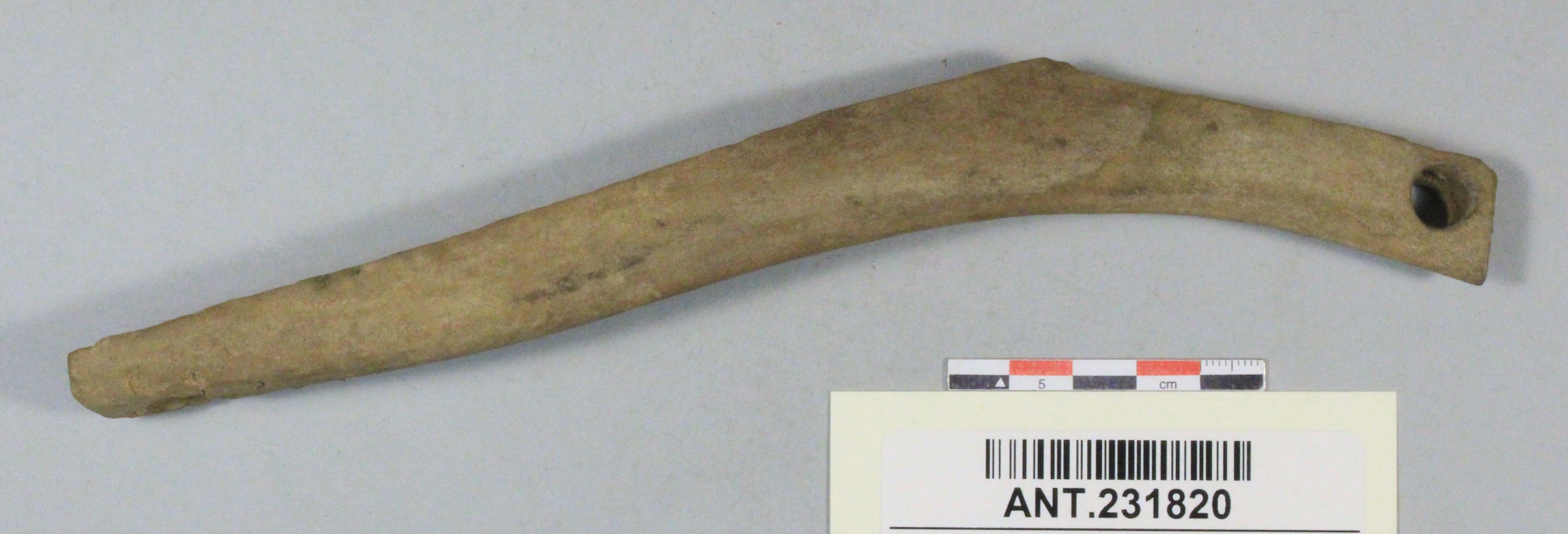
deniiyi; hwdelyoli; ladinen' (Mentasta)
Source term: bull-roarer
deniiyi: 'that which speaks', from nii' 'say'. hwdelyoli: 'that which blows', from yotl' 'blow, breathe'. ladinen': 'hemp rope; bull-roarer' (Mentasta), from Russian kanatnyy 'rope' via Upper Inlet Dena'ina.
In Ahtna, the language of Alaska's Copper River country, the bullroarer has two names, and each hears it differently. Deniiyi, 'that which speaks', comes from the verb for saying and telling. Hwdelyoli, 'that which blows', comes from the verb for blowing and breathing, the same root that says a gentle breeze is blowing. Upriver at Mentasta it had a third name, ladinen', which also means hemp rope: a word that came from Russian kanatnyy, 'rope', by way of the Dena'ina of Cook Inlet, and named the instrument for the cord that swings it.
deniiyi … bull-roarer, lit. 'that which speaks'
James Kari, Ahtna Athabaskan Dictionary (1990), p. 304.
Particulars
- Object
- A bullroarer, named in Ahtna for its voice, its breath and its cord.
- Function
- Not recorded.
Source
James Kari (comp. and ed.), Ahtna Athabaskan Dictionary (Fairbanks: Alaska Native Language Center, 1990), pp. 272, 304, 441