No. GOLDMAN1963-001
Cubeo stone bullroarer, Cuduyari River
Colombia · Cuduyari River · Vaupes · South America · Northwest Amazonia
Sacred / spirit
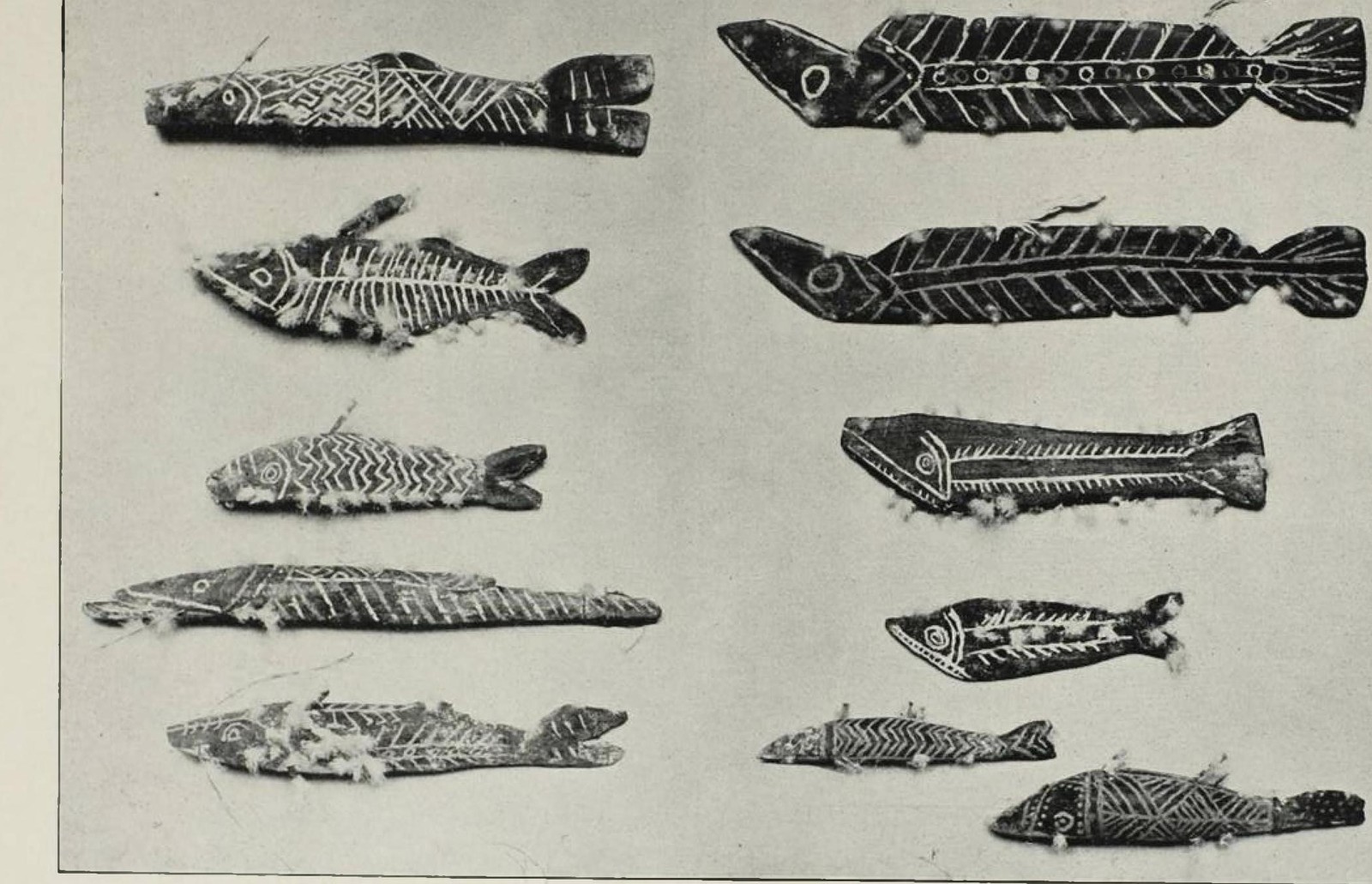
Source term: stone bull-roarer
Among the Cubeo of the Cuduyarí River, the shaman — the yaví, the 'jaguar' — was the one truly feared figure, said to grow more malevolent with age until he could put on a jaguar skin and take the animal's form. Irving Goldman, who lived on the river in 1939-40, set down the yaví's ways of killing at a distance: spines and crystals shot invisibly into the body, victims made to die inside their own dreams, a soul drawn down as a butterfly into a boiling pot and killed when the pot was smashed. Last on the list came a stone bullroarer. As the shaman whirled it, the victim — wherever he was — suffered as if struck with a machete.
One yaví, it is said, had his daughter pick the bits of human flesh from his teeth with the fang of a serpent.
Irving Goldman, The Cubeo: Indians of the Northwest Amazon (1963), p. 263.
Particulars
- Object
- Stone bullroarer, a shaman's weapon.
- Function
- Lethal sorcery: the shaman whirls it to strike down a victim from afar.
Source
Irving Goldman, The Cubeo: Indians of the Northwest Amazon (1963; 1979 edition), p. 268