Travel weather, healing bodies and the skills of sounding wood
From the American Arctic through Mexico and Central America, the bullroarer puts moving air to work. It calls travel weather, turns back rain, closes a healing session, teaches winter knowledge and summons songs from the sea. Children and adults also make toys whose craft belongs to the same broad history.
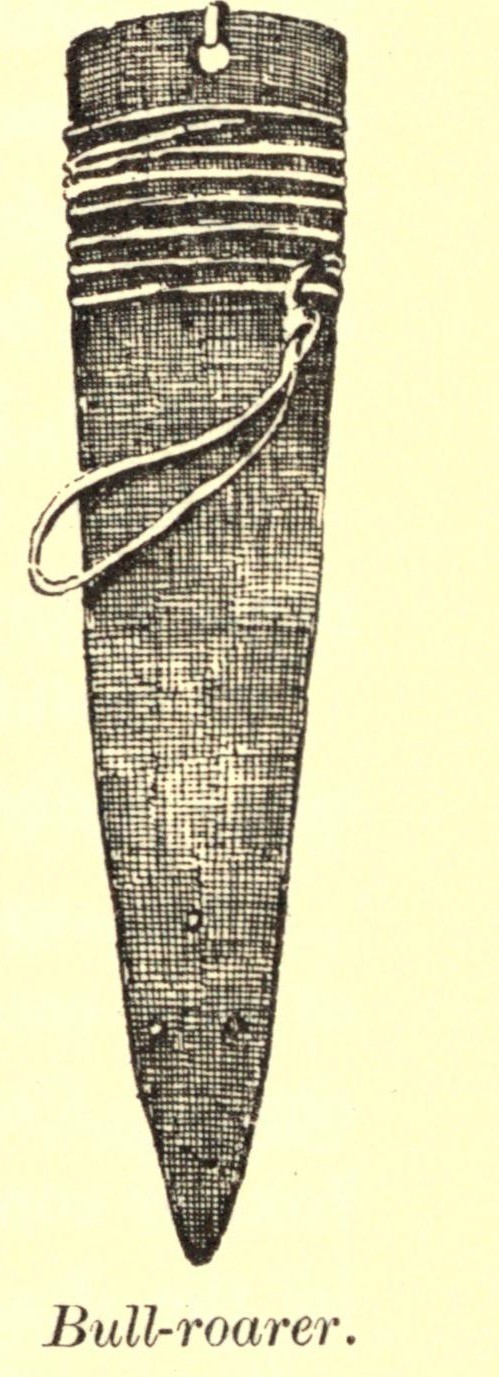
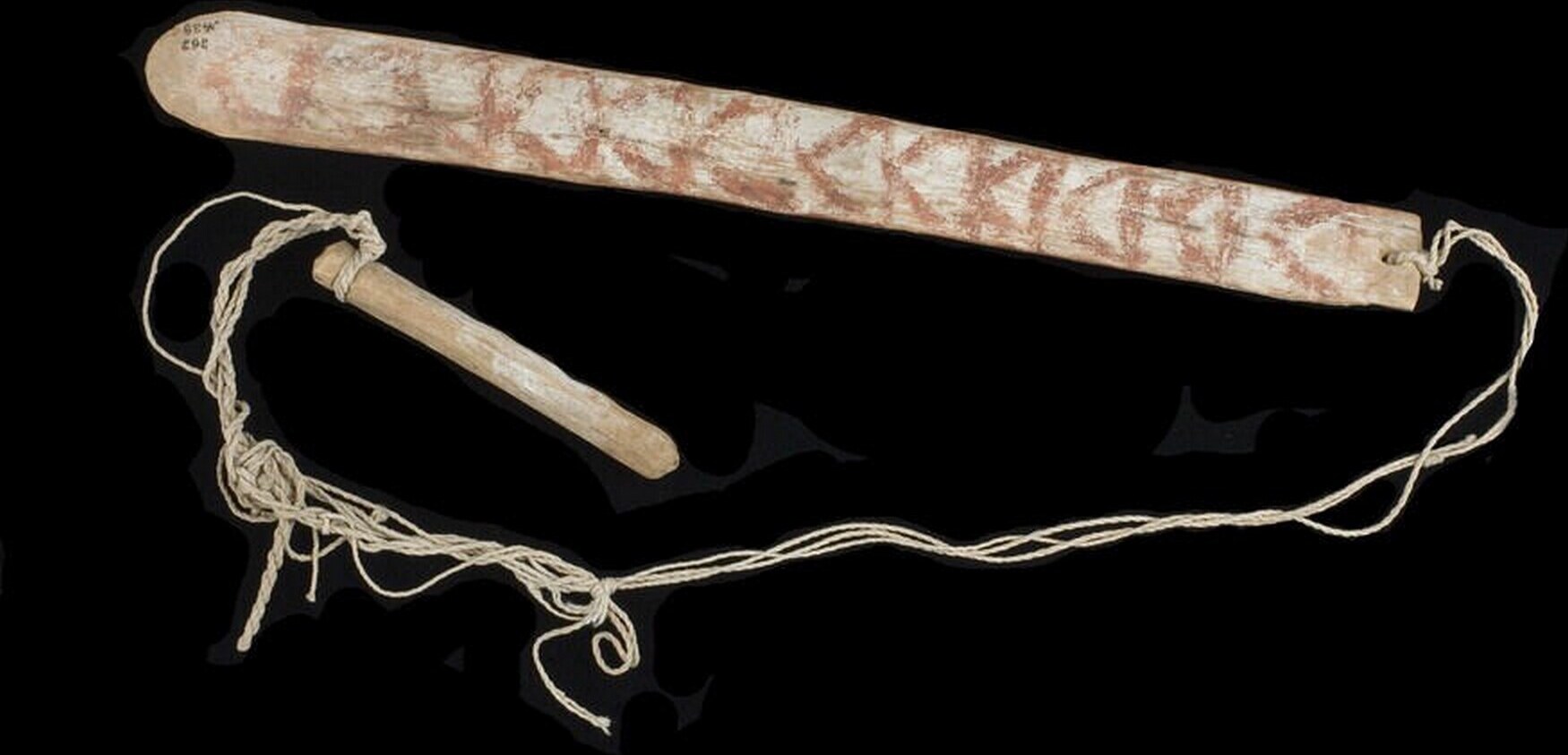
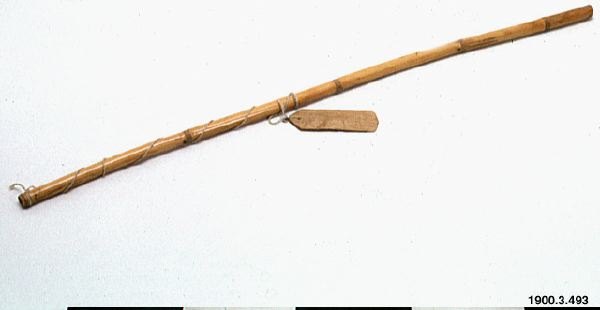
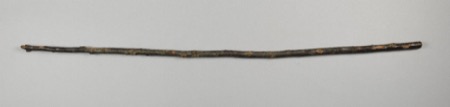
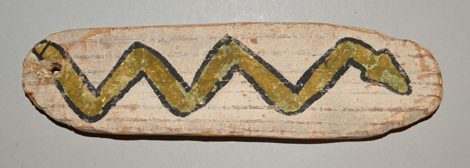
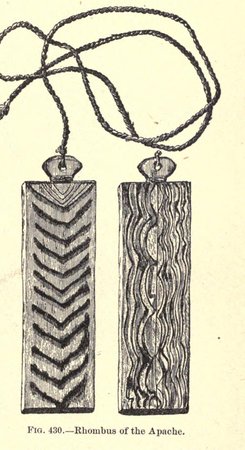
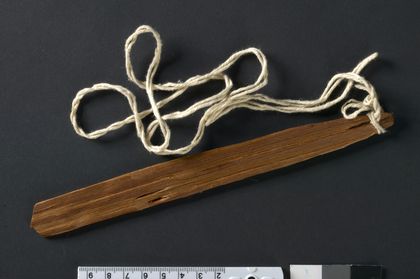
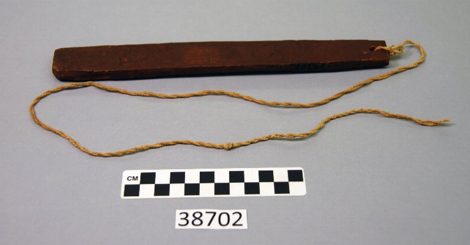
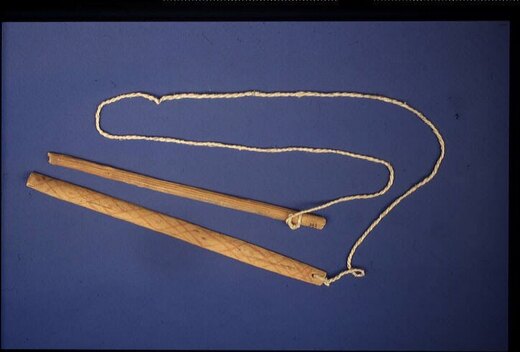
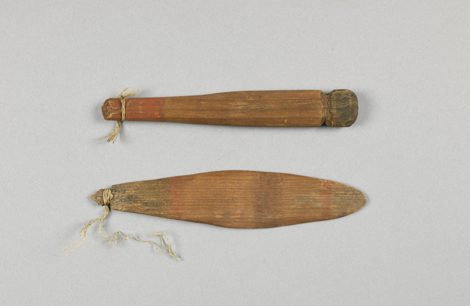
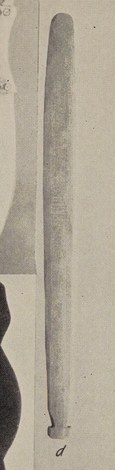
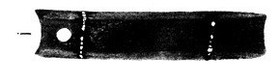
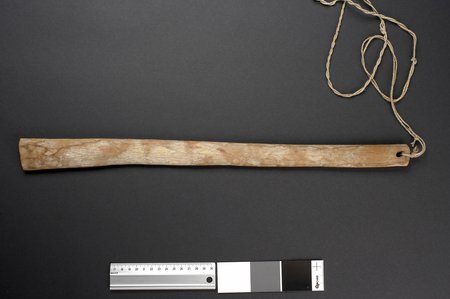
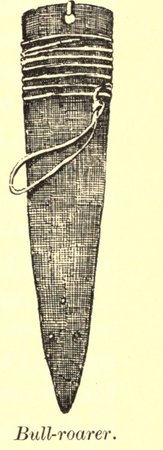
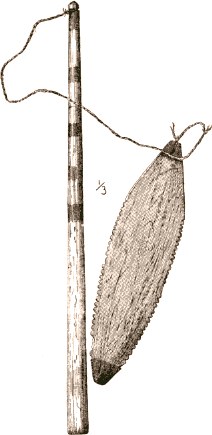
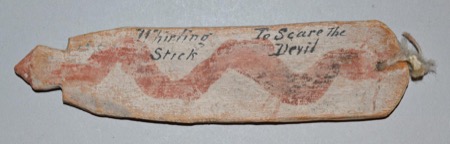
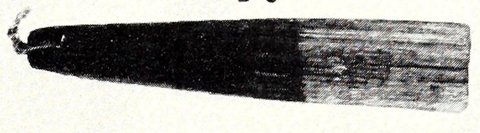
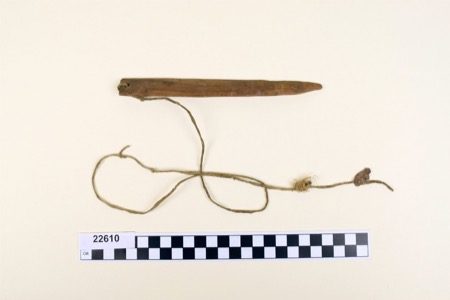
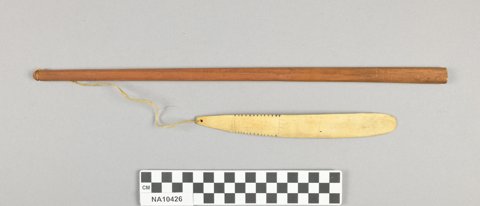
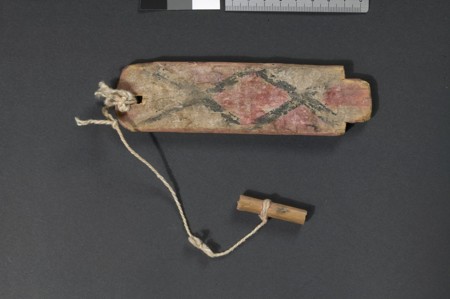
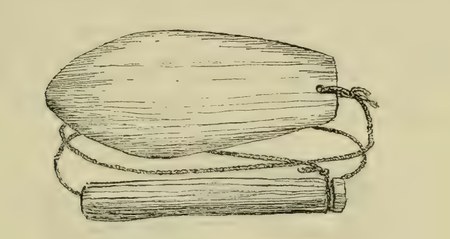
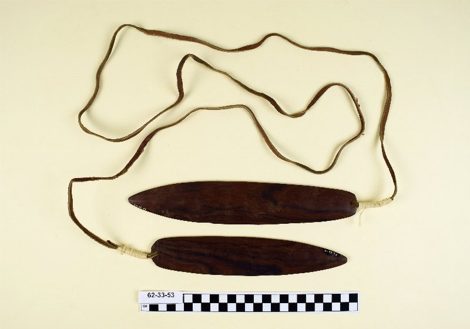
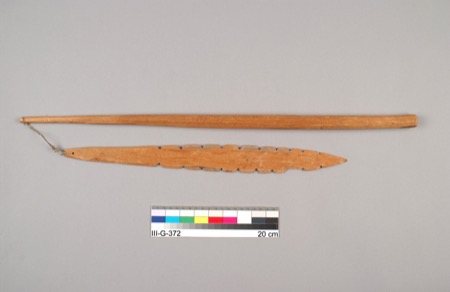
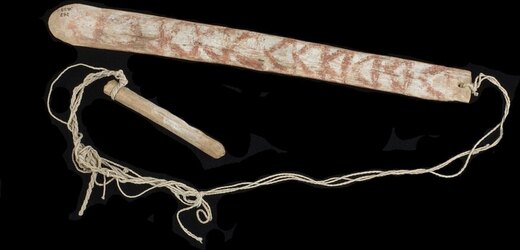
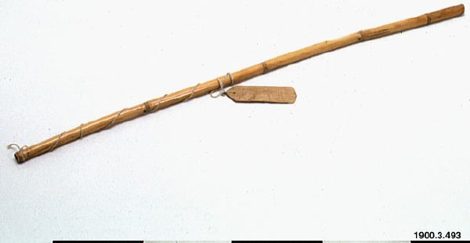
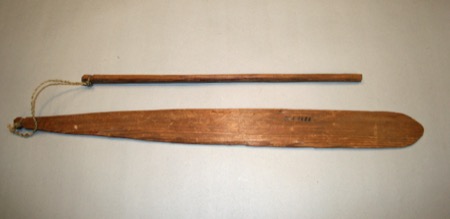
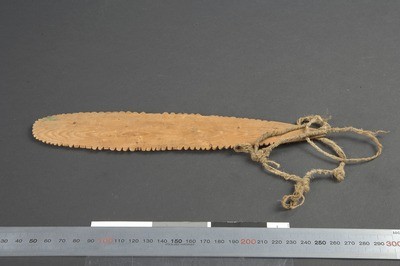
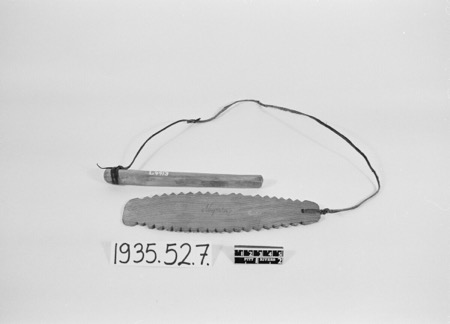
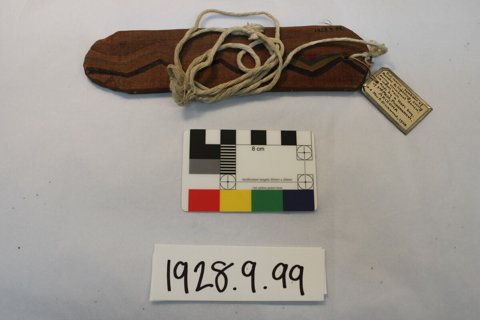
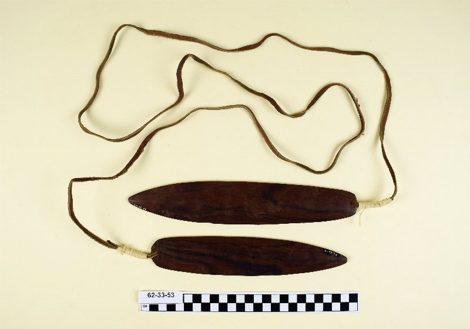
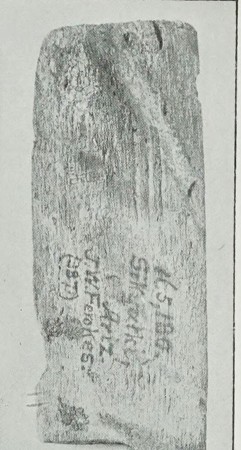
Navajo / DineNavajo (Diné) bull-roarer.The Franciscan Fathers, St Michaels, Arizona (1910) · Public domainPapago / Tohono O'odhamTohono O’odham Wihoewiketeke with painted blade, cord, and whirling handle.Wereldmuseum / NMVW (RV-362-38) · CC BY-SA 4.0Pipil (Nahua-Pipil)Pipil rung rung from Nahuizalco, with a sounding slat, cord, and reed handle.Statens museer for varldskultur / Etnografiska museet (1900.03.0493) · CC BY 4.0
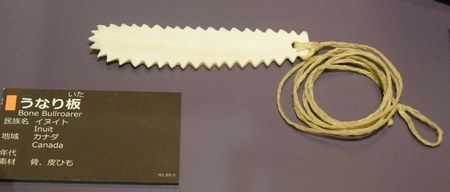
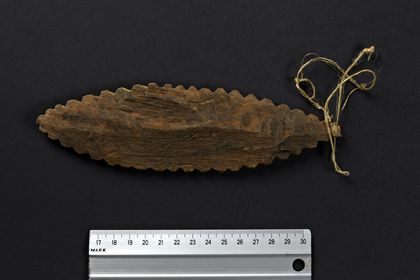
After the first late-winter thaw around James Bay, a flat, almond-shaped board whirled overhead could call back the cold north wind. A hard crust made snowshoe travel and toboggan hauling less laborious. The desired weather was a working surface for moving people and their loads. Across North America, the circling voice repeatedly enters such immediate concerns: rain approaching a camp, a patient’s shoulder, a household’s safety, a boy’s winter instruction. It gives people a means to address what they need from an otherwise uncertain world. The same hand-held technology also rewards play, practice and the pleasure of a well-made sound. 1
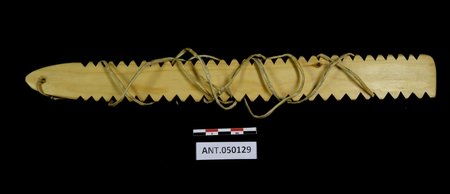
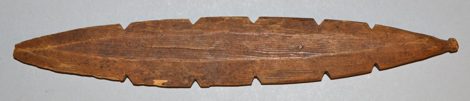
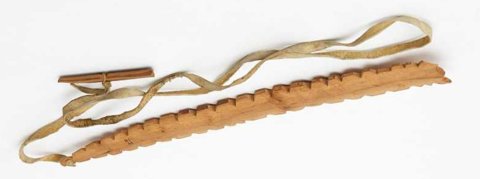
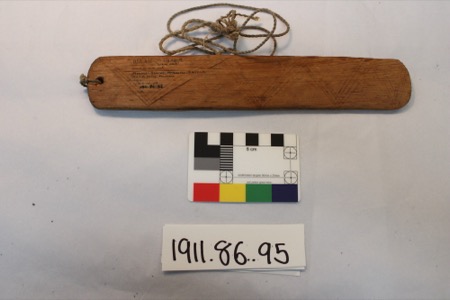
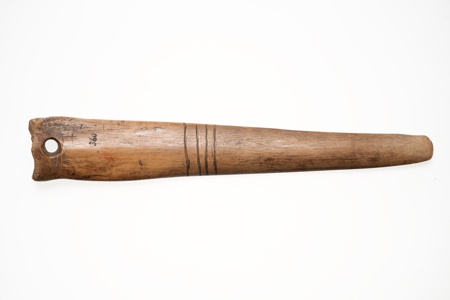
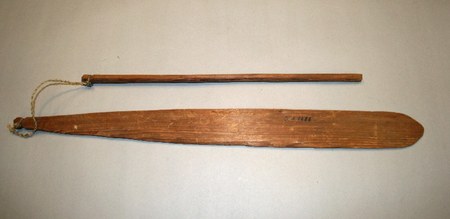
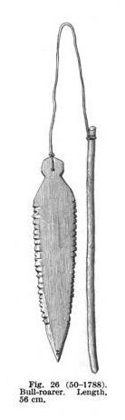
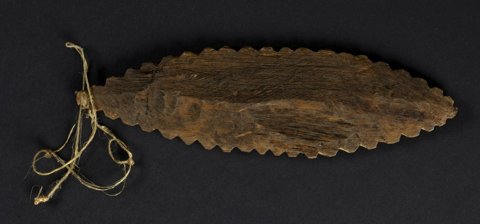
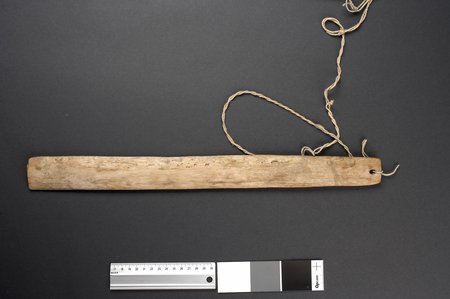
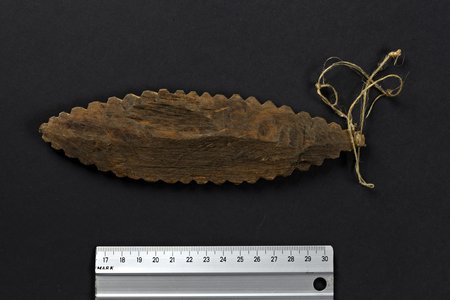
Among the Chandalar Gwich’in of interior Alaska, whirling a board could forestall rain. The surrounding weather kit had different tools for different errands: hanging a bullhead from a child’s neck or disturbing a raven could bring rain instead. McKennan also saw the boards as popular playthings for children and adults, notched along both edges and blackened with charcoal. Weather work and ordinary enjoyment coexisted. The carved edges and darkened wood make the broad northern resemblance visible: these were things people made, handled and could use for more than one purpose. 10
On the Sonoran coast, a Seri quest sought knowledge of the sea through a fourth-night summons. The seeker fasted for four days in a beach shelter whose walls carried pictures of sea animals, then went out with a bullroarer. If the quest succeeded, the animals appeared like little people, singing and speaking. They taught songs, the timing of winds and the fish runs. This instrument called teachers whose knowledge could guide a life beside the water. It joins the northern weather accounts through practical attention to an environment, while its immediate purpose is the acquisition of songs and sea lore. 4
This North American world reaches from Greenland and the American Arctic down the mainland through Mexico and Central America to the Darién borderlands. The Southwestern deserts and pueblos form one part of that larger reach, beside northern forest and tundra, California dance houses and the Sonoran shore. At its southern edge, Pipil household circuits and Maleku sacred listeners give the moving voice further purposes. Across these settings, sounding wood enters the ordinary work of travelling, learning and maintaining relations with powerful beings. 1, 4, 5, 14
On November 26, 1929, the whole camp gathered in Nabesna John’s cabin to treat Joe’s sore shoulder. A bullroarer hung from a six-foot staff; one face bore the moose that was John’s medicine animal. John dipped a bandanna into a pan of water at its foot and pressed it to Joe’s shoulder. People sang songs John had learned in dreams and taught them. As he knelt, touched the patient and moved around the staff, the gathering remained a recognizably domestic one: Lucy played with a dog and Jack looked at pictures. The twenty-minute ceremony ended with a gentle whirl of the blade. 9
John later purified his cabin with it so a visiting mail carrier would not bring disease spirits inside. McKennan explicitly described the shamanic use as John’s individual practice; Upper Tanana children commonly used similar boards as toys. A Diné curing account gives movement another bodily sequence. The assistant prepares the thong in a medicine bowl, circles the hogan while whirling vigorously as everyone inside stays silent, and afterwards applies the wrapped instrument to the patient’s limbs. Sound reaches around a dwelling and then the object touches the body. The two scenes connect moving air to care through actions that a patient and household can experience. 9, 3
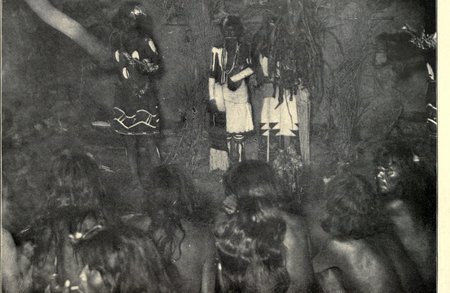
At the Kato winter school in northern California, boys lay under straw in the earth-covered dance house, blackened and subjected to fasting. Ghost impersonators came down from the hills and entered. Only afterwards did the bullroarers sound; women at home understood the noise as the ghosts’ voices. The order matters. An arriving presence had a body, an audible announcement and differently informed listeners. In the morning, the chief taught them about Nagaitco, who could cure sickness brought by the big snake or the poisonous mountains. Winter instruction taught boys how the ceremony worked and whom to turn to when danger became illness. 6
Among the Inland Yuki, the instructor whirled aelamo’otom, thunder breath, when speaking about Thunder and the creator Taikomol. A lesson about powerful beings acquired an audible demonstration. In a curing account, two men sounded blades at either side of a sick person’s doorway while a masked performer danced within. Farther west, Coast Yuki boys played with tinem, and the instrument could stop storms. The coastal toy, inland teaching and Kato ghosts show how one California sound could enter several consequential settings: play, weather, winter knowledge and healing. 6, 7
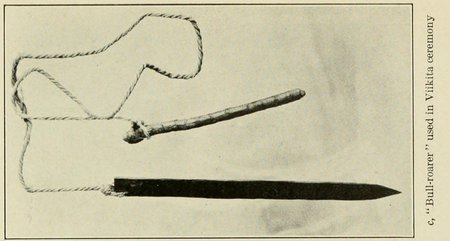
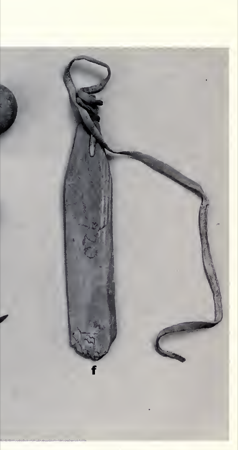
A Diné Mountain Chant groaning stick was made from lightning-struck pine. Black mineral glitter covered it, and turquoise marked its eyes and mouth. The storm’s voice had been given a face and a body of materials already touched by lightning. In the O’odham Viikita, men wielded cactus blades on long cords and greasewood handles; sixty or more might be sounding as people entered the enclosure. The thunder-like noise assembled a community seeking rain and good crops. The gathering heard the weather it wanted while organizing the work of asking for it. 8, 2
The O’odham board also addressed an immediate bodily mishap. If another man’s swinging blade accidentally struck someone, the injured man pressed his own blade to the wound, lest a sore or general illness follow. Densmore describes that specific precaution within Viikita, alongside the assembly signal and rain work. The same ceremonial property could call people together, sound like the clouds and be brought against an injury. Its usefulness belonged to the sequence of actions and responsibilities surrounding the instrument. 2
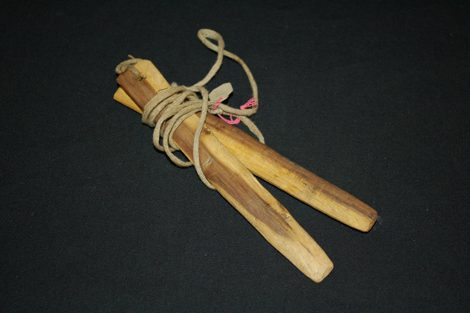
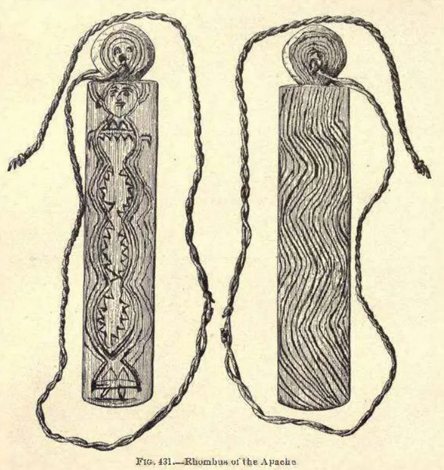
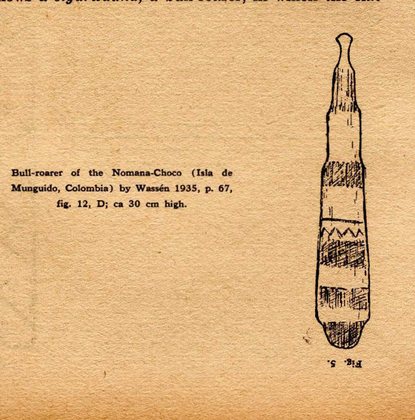
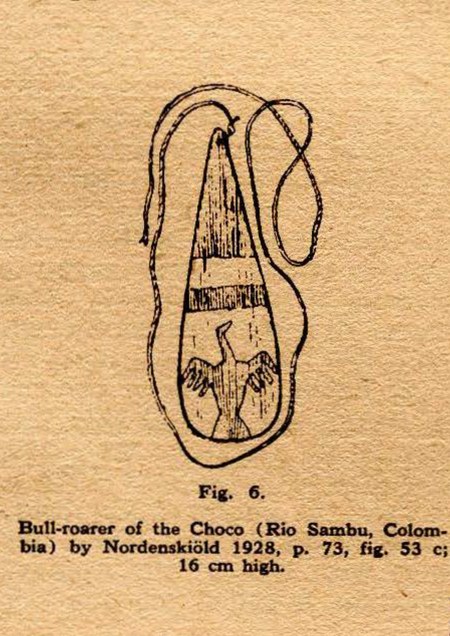
At Nahuizalco in El Salvador, a Pipil householder made three evening circuits with rung rung to drive away evil spirits and sorcerers. The surviving rig places a corded blade on a long reed handle. In Costa Rica’s Río Frío basin, the Maleku Jafara, made from pejibaye wood and burio-fibre cord, carried sacred messages a seer listened to and decoded. These named southern accounts extend the pattern of addressing a presence: the Pipil circuit clears a home, while the Maleku listener attends to a deity’s message. 5, 12
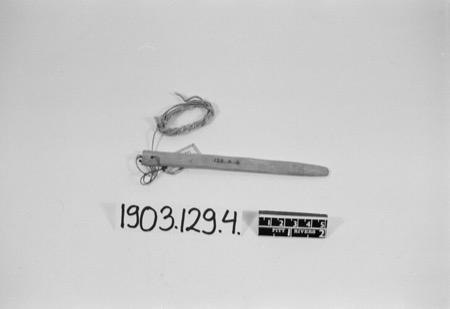
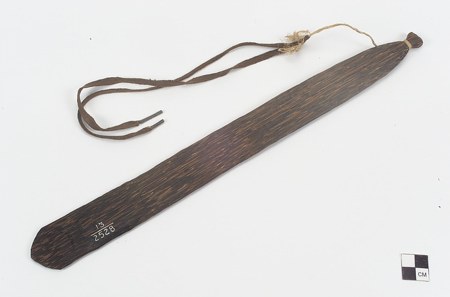
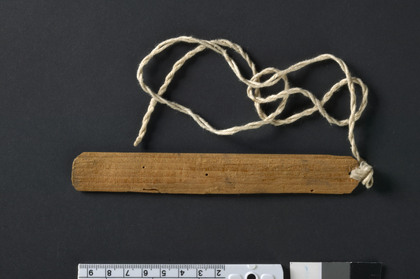
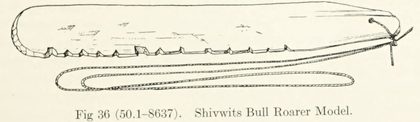
Pleasure in construction is equally part of this history. A Catawba maker could use a gourd rind, pine bark or a cypress shingle, shaping a board whose long cord produced a deep, tremulous hum. At Point Barrow, a teenage boy made a black-and-red pine blade on braided sinew for sale. A Yucatán Maya game used a hollow piston pod with three holes, and a belief credited it with teaching the early Maya to whistle. From a worked shingle to a whistling pod, people discovered what rotating matter could say. That craft underlies the traveller’s weather call, the healer’s closing whirl and the winter teacher’s audible lesson. 13, 11, 14
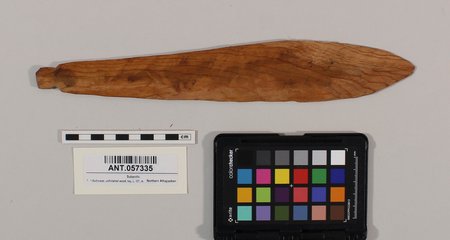
On the eastern shore of James Bay, the bullroarer was a tool for calling winter back. John M. Cooper, working through Cree and Ojibwa country from Lake of the Woods to Rupert House across four summers in the 1920s, found the flat, almond-shaped slat in common use - whirled, above all after the…
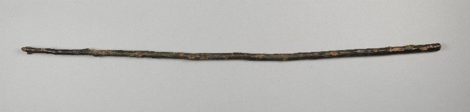
Yale Peabody Museum of Natural History (YPM ANT 050129) · CC0
Children and adults played with blades blackened with charcoal and notched along both edges. The sound also belonged to weather-working: a bullroarer could forestall approaching rain. Other recipes called rain down—hanging a bullhead from a child’s neck or bothering a raven. A familiar plaything…
Representative — not this record’s object · Deg Hit'an spruce bullroarer
For Upper Tanana children, the bullroarer was commonly a toy. Nabesna John gave the same form another life. McKennan watched the shaman mount a roarer on a long stave for seances, whirl it gently as a ceremony ended, and later use it to purify a cabin so a visiting mail carrier would not bring…
Representative — not this record’s object · Unfinished bullroarer blank made by George Bain at Fort Nelson
A four-day fast could end with the sea answering back. In a Seri quest for songs, the seeker painted sea animals on a beach shelter, then went out on the fourth night with a bullroarer. If he succeeded, the animals sang and spoke like little people, teaching songs, the winds’ timing and the fish…
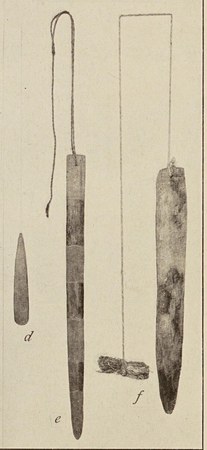
A. L. Kroeber, Handbook of the Indians of California (BAE Bulletin 78, 1925), Plate 44 · Public domain
Among the Kato (Cahto), the southernmost Athabascan people of the California coast, at the head of the South Fork of the Eel River, every boy of about twelve was shut into the earth-covered dance house for the whole winter. Starved, blackened, and laid in a row under straw until they grew weak…
Representative — not this record’s object · Kroeber’s plate of Yokuts, Luiseño, and Pomo bullroarers.
Among the inland Yuki of Round Valley the bullroarer breathed thunder. Aelamo'otom, thunder breath, spoke with the voice of Taikomol, the creator, who was Thunder himself; in the winter initiation it swung whenever the instructor's teaching turned to him, and at a sick person's doorway two men…
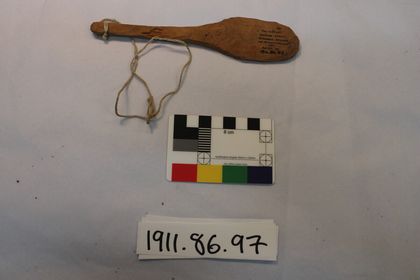
Representative — not this record’s object · The schoolboys' ual ual: a hand-sized paddle on its cotton string
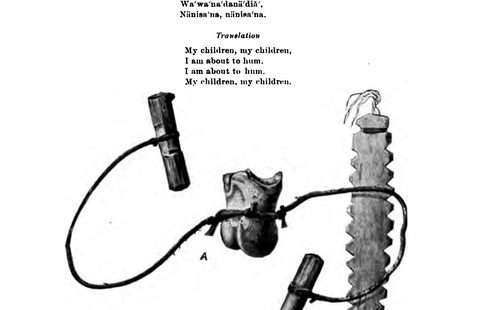
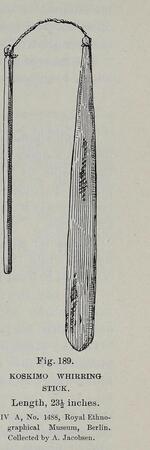
Franz Boas, The Social Organization and the Secret Societies of the Kwakiutl Indians (Report of the U.S. National Museum for 1895; Washington, 1897), fig. 189, p. 611 · Public domain
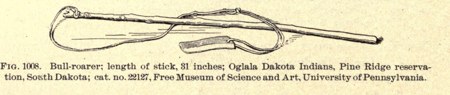
Representative — not this record’s object · Oglala tateka yuhmunpi from Pine Ridge, figured by Culin in 1907.
Franz Boas, The Social Organization and the Secret Societies of the Kwakiutl Indians (Report of the U.S. National Museum for 1895; Washington, 1897), fig. 189, p. 611 · Public domain
Representative — not this record’s object · Zuni bullroarer with a slender wooden handle and coiled cord.
Franz Boas, The Social Organization and the Secret Societies of the Kwakiutl Indians (Report of the U.S. National Museum for 1895; Washington, 1897), fig. 189, p. 611 · Public domain
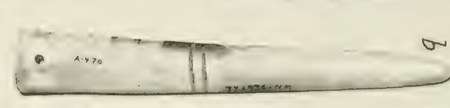
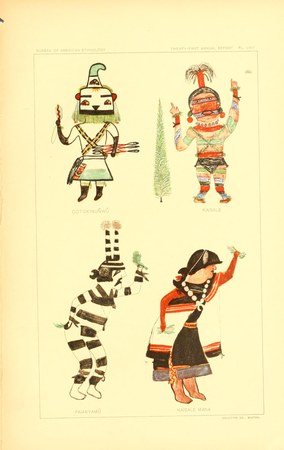
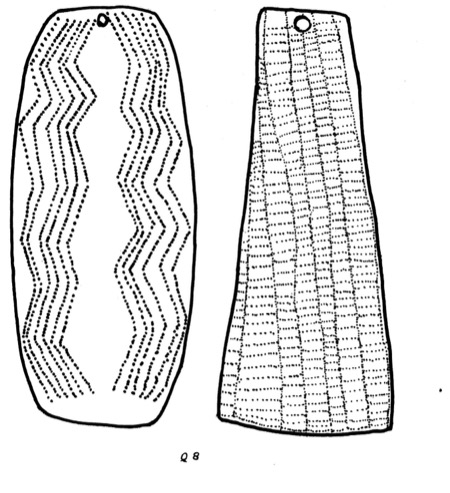
J. W. Fewkes, Archeological Expedition to Arizona in 1895 (17th Annual Report of the Bureau of American Ethnology, pt. 2, 1898), plate CLXXV, fig. s · Public domain
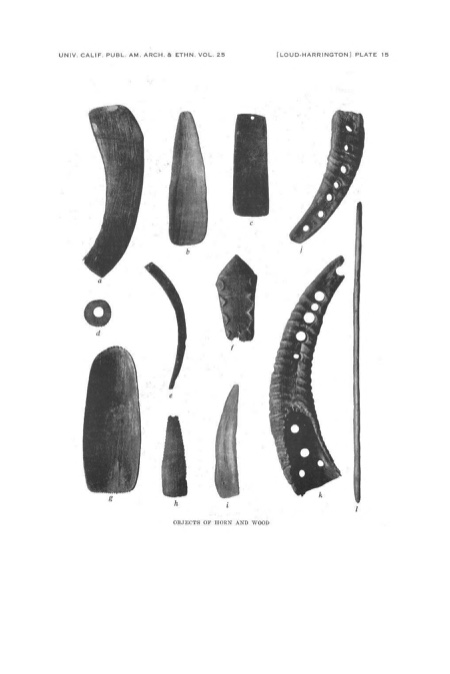
L. L. Loud and M. R. Harrington, Lovelock Cave (University of California Publications in American Archaeology and Ethnology 25(1), 1929), Plate 15; Internet Archive scan · Public domain
Printed p. 515: almond-shaped board, former cold north-wind calling after late-winter thaw and travel crust; regional Cree/Ojibwa visits distinguished.
Printed p. 27: Kato winter school and ghost voices; pp. 66–68: Inland Yuki thunder breath in instruction and curing, the latter transmitted after Curtis.
Printed p.55: boys’ tinem play can stop storms; this coastal case is distinct from the Kato winter school and Inland Yuki thunder teaching at27 and66–68.
Printed pp.102 and152–154: common toy; Nabesna John’s personal staff/blade, moose medicine animal, witnessed November26,1929 shoulder healing, gentle closing whirl and cabin cleansing against mail-carrier disease spirits. Hood accession42.41.8528 is the object witness.
AINA Technical Paper17, printed p.50: children/adults, notched edges, charcoal blackening; p.84: rain prevention with the bullroarer; willow-bark rolls are separately pointed at storms.
Printed p.69: pejibaye blade/burio cord, turned to hear sacred messages; pp.15 and84 identify Lhafara and the listening office. No weather-making claim is inferred.
Printed p.77 in the Yucatán Maya games section: hollow piston pod, three holes, string/whirling and the belief that it taught early Maya to whistle. Izikowitz’s subsequent Lacandon attribution is not followed.