No. INC1978-003
Nomatsigenga palo zumbador Pangoa
Peru · Pangoa and Sonomoro valleys, Satipo, Junin (Selva Central montana) · South America · Upper Amazon
Function not recorded
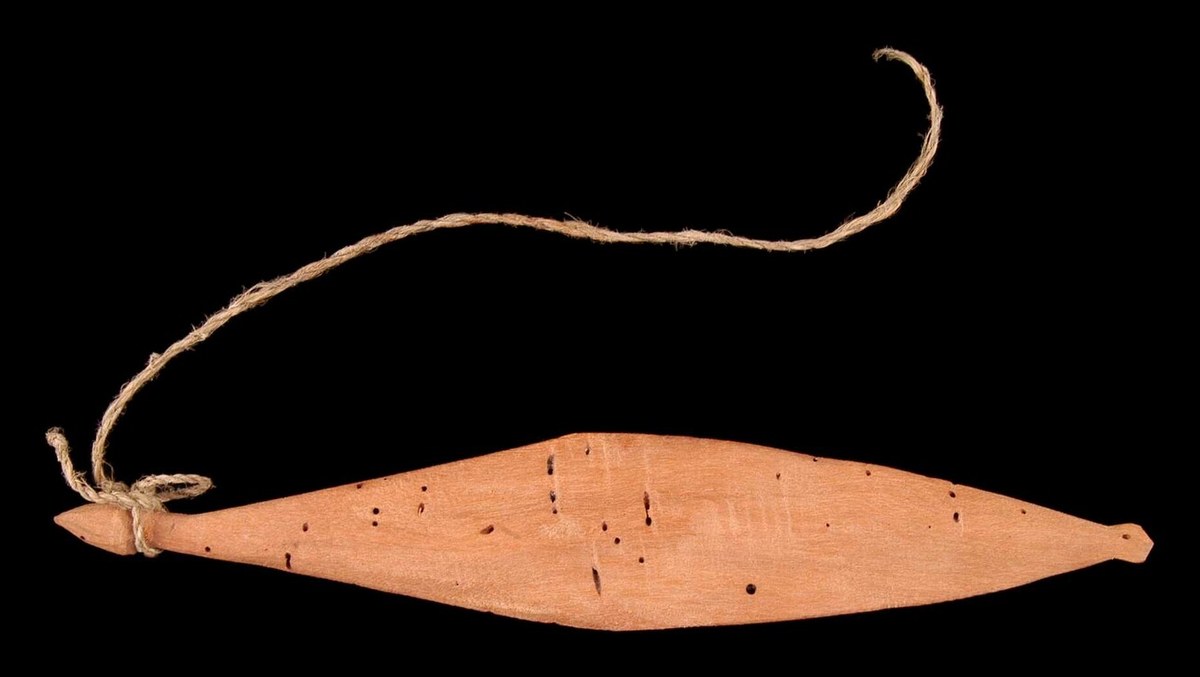
Source term: palo zumbador
palo zumbador: Spanish catalogue term for the cord-whirled free aerophone.
A small board tied to a cord, thrown and set spinning in the air until it hummed — so the palo zumbador of the Nomatsigenga was described in a 1975 Lima interview with the missionary-linguist Harold Shaver and his colleagues, who set down the instruments of three peoples in one typescript: Shapra, Nomatsigenga, Taushiro. In the Pangoa and Sonomoro valleys of Peru's Selva Central, the Nomatsigenga — the name holds matsigenga, 'person': roughly 'my own people' — had long been subsumed with their Asháninka kin under the colonial label Campa; Shaver later wrote their dictionary.
Consiste en una tablilla amarrada a una cuerda que, lanzada y haciéndola girar en el aire, zumba.
It consists of a small board tied to a cord which, thrown and made to spin in the air, hums.
Instituto Nacional de Cultura, Mapa de los instrumentos musicales de uso popular en el Peru (1978), p. 462.
Particulars
- Object
- A small board on a cord.
- Function
- Not recorded.
Source
Instituto Nacional de Cultura, Mapa de los instrumentos musicales de uso popular en el Perú (1978), p. 462, entry 5, citing Elizabeth Hinson, Harold Shaver and Neftalí Alisea, Instrumentos musicales shapra, nomatsiguenga y taushiro (typescript, Lima, 1975)