No. STEWART1941-003
Tasiget-tuviwarai wimo'to, toy and wind-maker
United States · Winnemucca and Spanish Spring valleys and the Truckee River east of Reno, western Nevada · North America · Great Basin
Weather / fertility magic
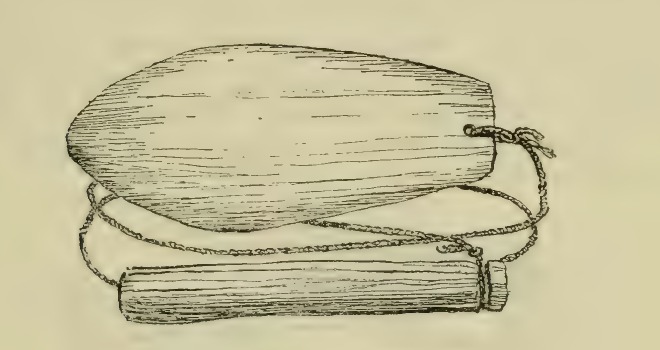
wimo'to
Source term: bull-roarer (wimo'to)
wimo'to: the Northern Paiute word for the bullroarer; in Surprise Valley it was kwi'mo.
Northeast of Reno, in Tasiget country, the wimo'to did two jobs at once: children swung it for the noise, and it was swung to bring the wind. Further east the two uses come apart, and bands that used the roarer on the weather kept it out of children's hands; here they were one thing, one instrument answering to both.
Particulars
- Object
- A wooden whirrer; not described further.
- Function
- Swung both as a children's toy and to make the wind blow.
Source
Omer C. Stewart, 'Culture Element Distributions: XIV, Northern Paiute,' Anthropological Records 4:3 (1941), pp. 363, 401 and 403