The Bullroarer Atlas

NAMER-001 - museum specimen

Tsimshian

Canada - Lower Skeena and Nass rivers, northern BC coast - North America - Pacific Northwest Coast

Sacred / spirit

A Nuu-chah-nulth bull-roarer from Vancouver Island — a lens-shaped wooden blade lashed by cord to its swinging handle rod, collected in 1912;...
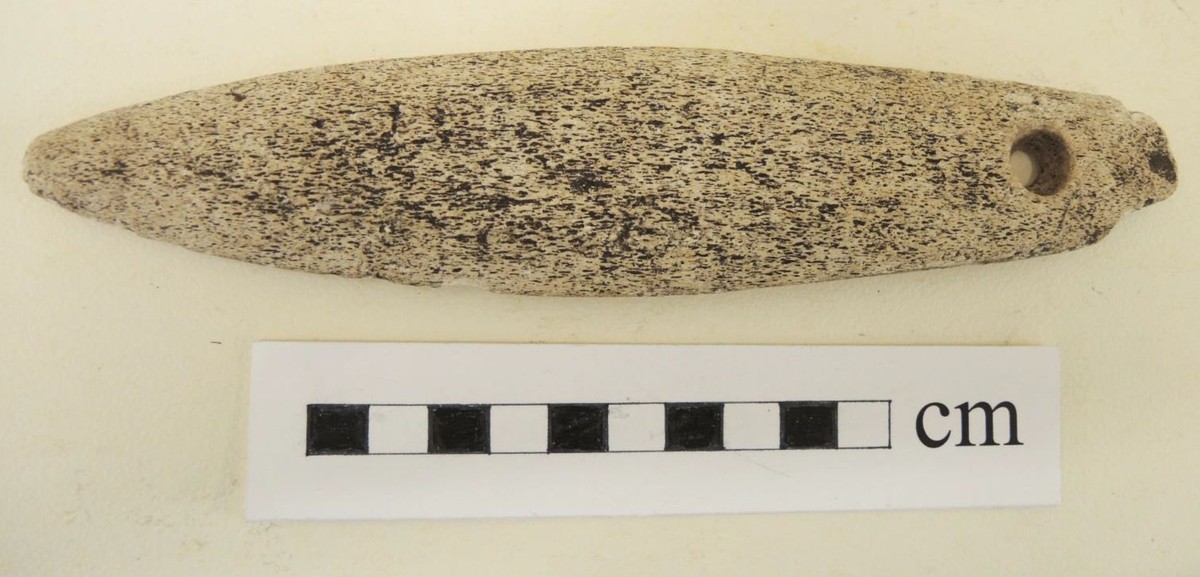
Representative image. A Nuu-chah-nulth bull-roarer from Vancouver Island — a lens-shaped wooden blade lashed by cord to its swinging handle rod, collected in 1912; the Tsimshian pair documented here, held at the American Museum of Natural History, has never been photographed. Royal BC Museum 2138 (Nuu-chah-nulth, coll. Charles Newcombe, 1912); photo Grant Keddie / RBCM Image source

A pair of wooden Tsimshian bullroarers in the American Museum of Natural History were called "Thunderbird twirlers." Whirled on a cord in dances, they were said to produce a sound like the rustling of a bird's wings. They entered the museum's collection sometime between 1869 and 1890.

They were referred to as "Thunderbird twirlers" and "used in dances to produce a sound like the rustling of bird's wings".

Keddie, Bullroarers in the Indigenous Collections of the Royal B.C. Museum (2023), on AMNH 16/390BC
Object
A carved wooden slat whirled on a cord to produce a wing-like rustling sound.
Function
Whirled in dances to imitate the rustling of a thunderbird's wings.
Map confidence
medium - approximate territory centroid (mining 2026)
Source location
AMNH 16/390BC

View source Open this point on the interactive map