No. SA-Z1953-004
Apinayé me-galo soul-ghost toy
Eastern Brazil · South America
Play / practical
me-galo
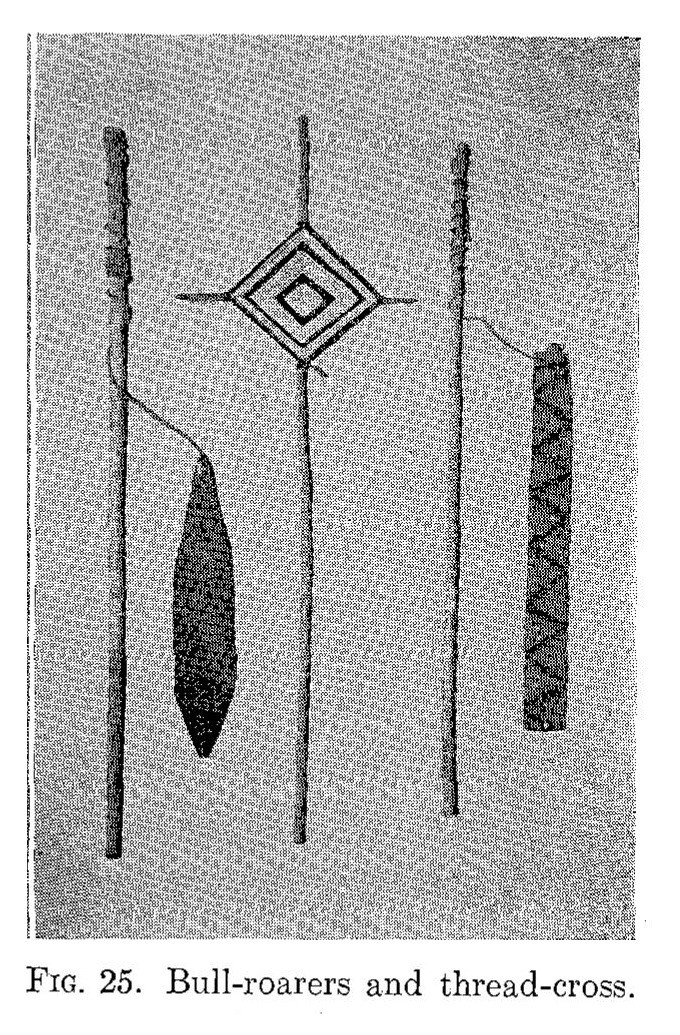
Source term: Schwirrgerät / Schwirrholz / bullroarer
me-galo: the Apinayé name for the toy bull-roarer.
Etymology. me-galo, the name of the Apinayé toy bullroarer, is their word for the soul, ghost, shadow, and image of a dead person.
Among the Apinayé, the bull-roarer had slipped into the toy basket — but its name, me-galo, is the one word for soul, ghost, shadow, and the image of the dead. The Apinayé dead linger at cemeteries and old village sites until a second death turns them into animals, tree stumps, or termite hills. Among the neighbouring Sherente, whose usage the Apinayé name recalls, the link is explicit: their bullroarer is 'the howling of Hieparo-wawe,' lord of the will-o'-the-wisps, whirled in the woods to make the demon appear. In the Apinayé fire myth, an ogre named for the me-galo tries to pass himself off as a lost boy's father before wrestling him into his carrying-basket.
Like the Eastern Timbira, the Apinaye call the soul, ghost, shadow, and image by a common term, me-galo; the Apinaye further apply the word to the bull-roarer, which recalls Serente usage.
Nimuendajú, The Apinayé (1939), p. 140
Particulars
- Object
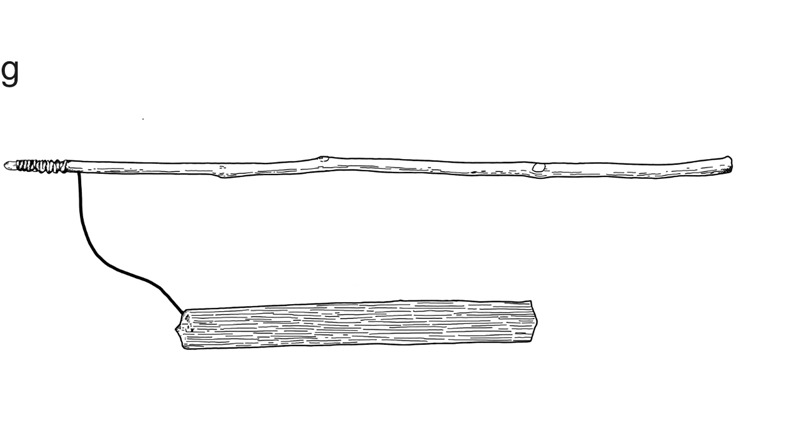
- Nimuendajú's own Apinayé example survives complete in the Nationalmuseet, Copenhagen — H.2998, a wooden blade 40.5 centimetres long, still corded to its separate wooden shaft.
Source
Curt Nimuendaju, "The Apinaye," trans. Robert H. Lowie, ed. R. H. Lowie and J. M. Cooper (Washington: Catholic University of America Anthropological Series No. 8, 1939)