No. SWA-PECOS-001
Pecos Pueblo Kidder bull-roarer
United States · Pecos Pueblo, New Mexico · North America · Southwest
Function not recorded
Archaeological datec. 1100–1540 ADPrecontact Pecos Pueblo horizon; object not directly dated.
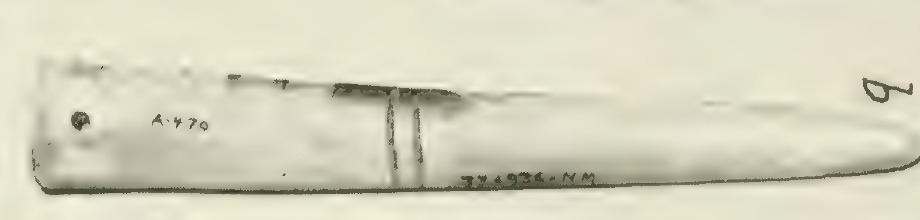
Source term: bull-roarer
Wood rarely survives in Southwestern deposits and such pieces were never numerous, so the single wooden bull-roarer from Room 75 at Pecos Pueblo, unearthed in A. V. Kidder's long excavation of the site, stands nearly alone for the region: by Donald Brown's count only three excavated bull-roarers are known from the prehistoric Southwest, every one of them wood.
One bull roarer was found at Pecos (Kidder 1932:293), another in cliff dwellings in the Verde Valley (Bourke 1892:477), and a third in a cache at Chetro Ketl (R. Gwinn Vivian, personal communication). All were made of wood.
Donald N. Brown, "The Distribution of Sound Instruments in the Prehistoric Southwestern United States," Ethnomusicology 11, no. 1 (1967): 71-90
Particulars
- Object
- A single wooden bull-roarer from Room 75 at Pecos Pueblo.
- Function
- Not recorded.