No. MUS2026-007
Kamia roarer in toloache country
United States · Rincon Reservation, San Diego County, California (NMAI place field) · North America
Function not recorded
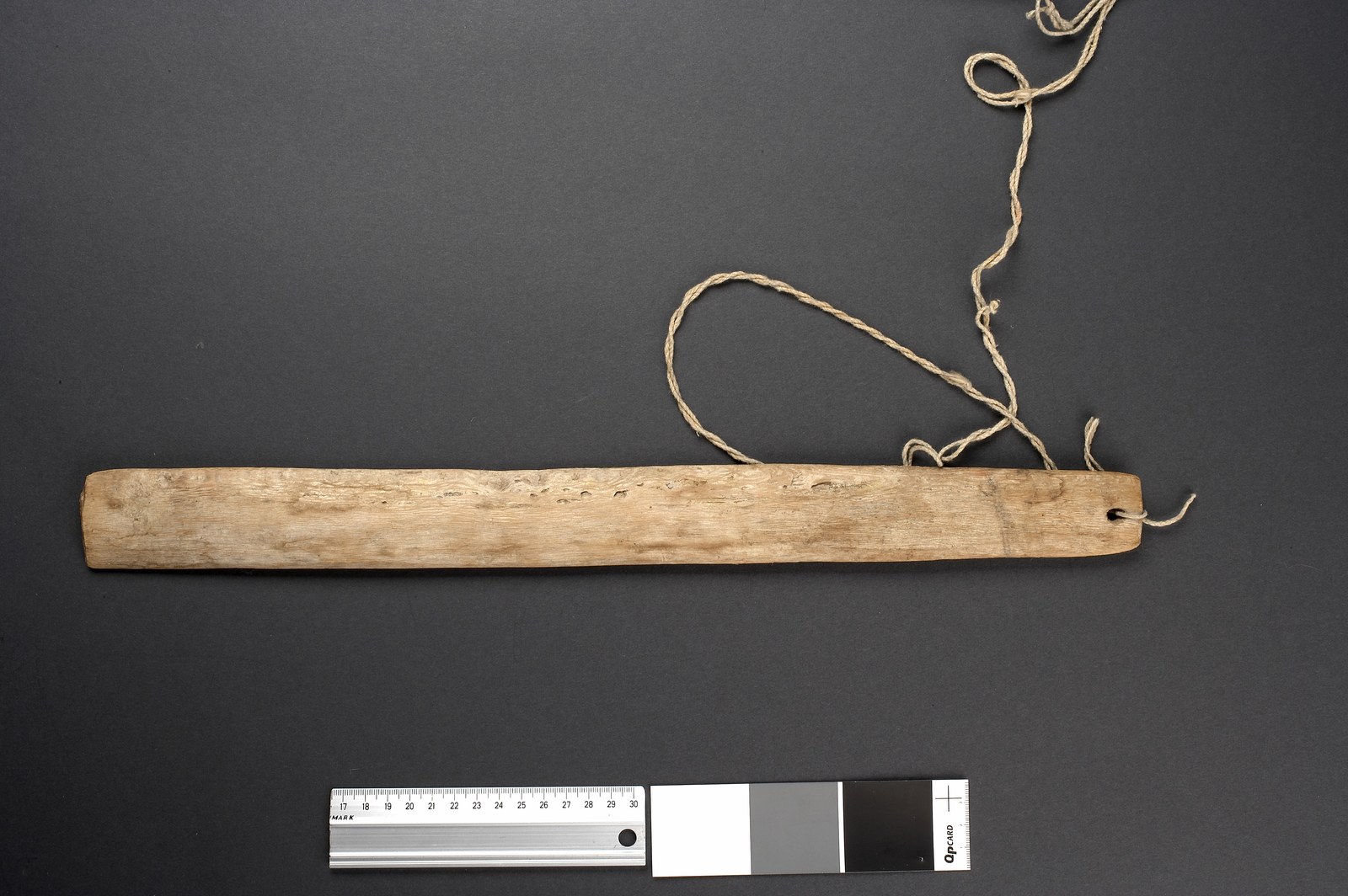
Source term: bull-roarer
The Smithsonian's National Museum of the American Indian holds a bull-roarer of the Kamia, the desert division of the Kumeyaay who raised maize, beans, and teparies on the floodplains of California's Imperial Valley, and withholds its image as a culturally sensitive object. Among the Kumeyaay the ceremonial sound-makers were gourd and turtle-shell rattles and reed flutes, and the boys' initiation centered on the toloache rite, in which they drank a datura infusion, fasted, and danced until the drug brought on a vision meant to guide them for life. A Kamia man of the KwoL clan, questioned in the mid-1930s, remembered the bullroarer among his people as a toy rather than a ceremonial call.
Particulars
- Object
- Bull-roarer of the Kamia (Kumeyaay), in the collection of the Smithsonian's National Museum of the American Indian (NMAI).
- Function
- Museum-withheld as culturally sensitive; no use recorded for this specimen. Mid-1930s Kamia (KwoL) testimony reported the bullroarer as a toy.
Source
Smithsonian National Museum of the American Indian, 6/5508