No. LOEB1932-002
Coyote Rock ghosts of the Southern Pomo
United States · California, Sonoma County, Russian River valley (Healdsburg) · North America
Sacred / spirit
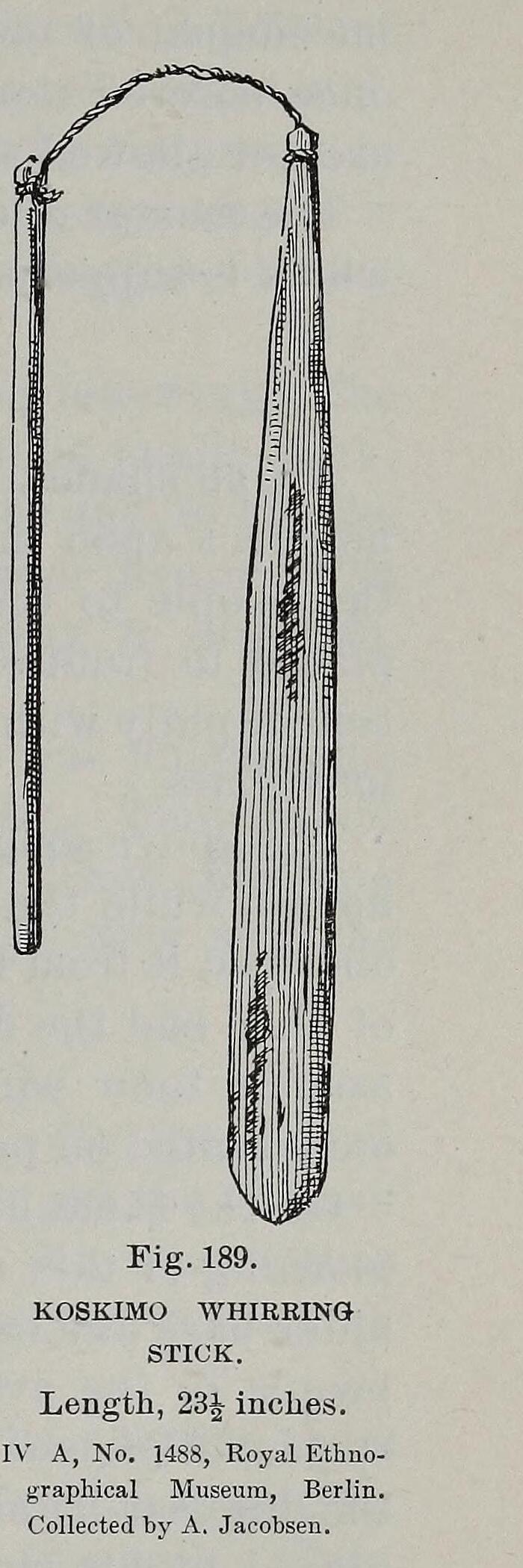
Source term: bullroarers
dowi kabe hebi, 'coyote rock get-him': the Southern Pomo winter Ghost ceremony; hilatui: the ghost impersonators; haten: the foot drum. Gallinomero: older name for the Southern Pomo of the Russian River.
For four nights each winter the Southern Pomo ghosts, the hilatui, came running down from the hills to the dance house, some with fire blazing from their hair, carrying long sticks painted black and white. Bullroarers sounded in this rite, beside the foot drum, though by 1930 no one could recall the instruments' own name. The ceremony was dowi kabe hebi, 'coyote rock get-him', the Ghost initiation of the boys. Some said the ghosts brought snakes down with them. Among these people of the Russian River around Healdsburg, Coyote was the only creator: the maker of people, of fire and of the lights in the sky.
Bullroarers were said to have been used, but my informants forgot the name of these instruments.
Loeb, "The Western Kuksu Cult" (1932), p. 102 (Southern Pomo).
Particulars
- Object
- Bullroarers used in the Southern Pomo winter Ghost ceremony; their form and their own name were not remembered.
Source
Edwin M. Loeb, 'The Western Kuksu Cult', University of California Publications in American Archaeology and Ethnology 33(1) (1932): 1–137, pp. 1–2, 101–102