No. STEWART1942-002
Moanunts Ute wind-making bullroarer
United States · Salina Canyon · upper Sevier valley, central Utah · North America · Great Basin
Weather / fertility magic
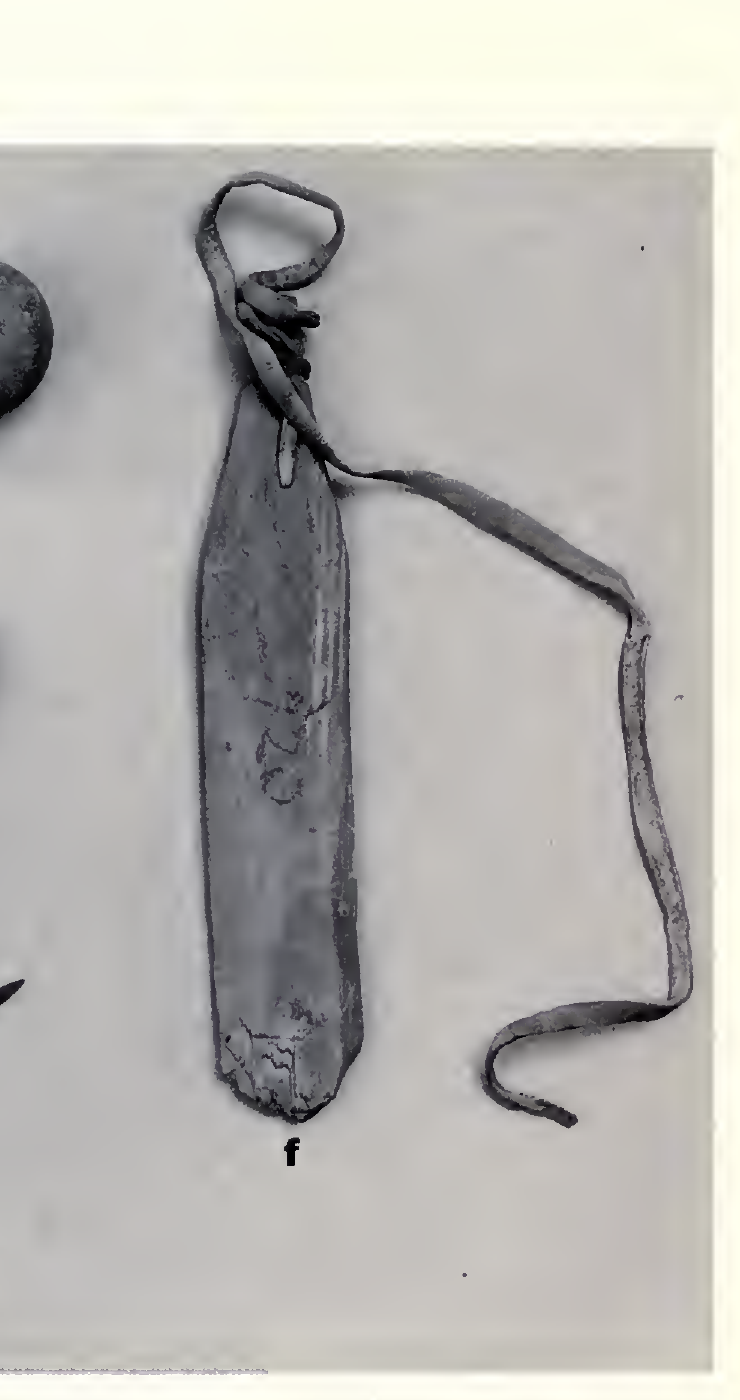
niã'painöpö
Source term: Bull-roarer: whirrer of wood
niã'painöpö: the Moanunts Ute word for the bull-roarer.
Whoever swung the Moanunts whirrer had to be born in summer: only such hands could drive the niã'painöpö to raise a wind or wipe the clouds from the sky. The band took its name from Moavi, 'pass in the mountain' — the gap at the head of Salina Canyon — and lived on both slopes of the mountain, sagebrush valleys below, pine and aspen forest above. Their bull-roarer, a wooden blade swung on a handled string, was no toy in their telling; it was weather work.
Used effectively only by people born in summer.
Stewart 1942:291, element 2802
Particulars
- Object
- Whirrer of wood swung on a string with a wooden handle.
- Function
- Whirled to make wind blow and to clear away clouds; effective only for people born in summer.
Source
Omer C. Stewart, Culture Element Distributions: XVIII, Ute-Southern Paiute, Anthropological Records 6(4) (1942), pp. 236, 291 and 352