No. STEWART1942-008
San Juan Southern Paiute wind-stopping bullroarer
United States · Navajo Mountain country, northern Arizona · southern Utah · North America · Great Basin
Weather / fertility magic
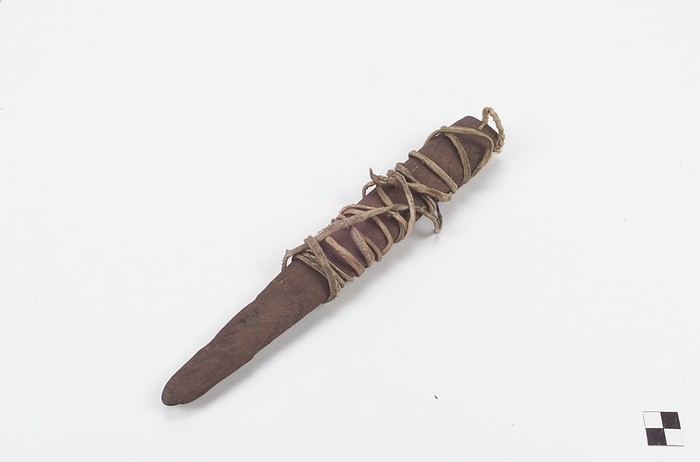
naiyaratinömpö
Source term: Bull-roarer: whirrer of wood
naiyaratinömpö: the San Juan Paiute term for the bull-roarer in Stewart's comparative vocabulary (shared with the Kaibab); no literal gloss is given.
In the slickrock country around Navajo Mountain, a summer-born Paiute could whirl the naiyaratinömpö to still the wind; everyone else swung it for the noise. By Stewart's day the San Juan people were a small band living among Navajo who far outnumbered them — one of them said they were learning a lot about doctoring from their neighbors. Joe Francis, called Nömö'-maots, blind and about eighty, born in the Badaway country south of Lee's Ferry, talked it through at his camp east of Gap Trading Post.
Used effectively only by people born in summer.
Stewart 1942, p. 291
Particulars
- Object
- Whirrer of wood; the handled-string rig of the Ute bands was denied.
- Function
- A toy; also whirled to stop wind, effective only for people born in summer.
Source
Omer C. Stewart, Culture Element Distributions: XVIII, Ute-Southern Paiute, Anthropological Records 6(4) (1942), Southern Paiute San Juan list; informants Joe Francis ('Nömö'-maots'), ca. 80, blind, and Dagaibitsi (Many Whisker's Daughter), ca. 70, camped east of Gap Trading Post, Arizona (p. 239)