No. BORMIDA1978-001South America
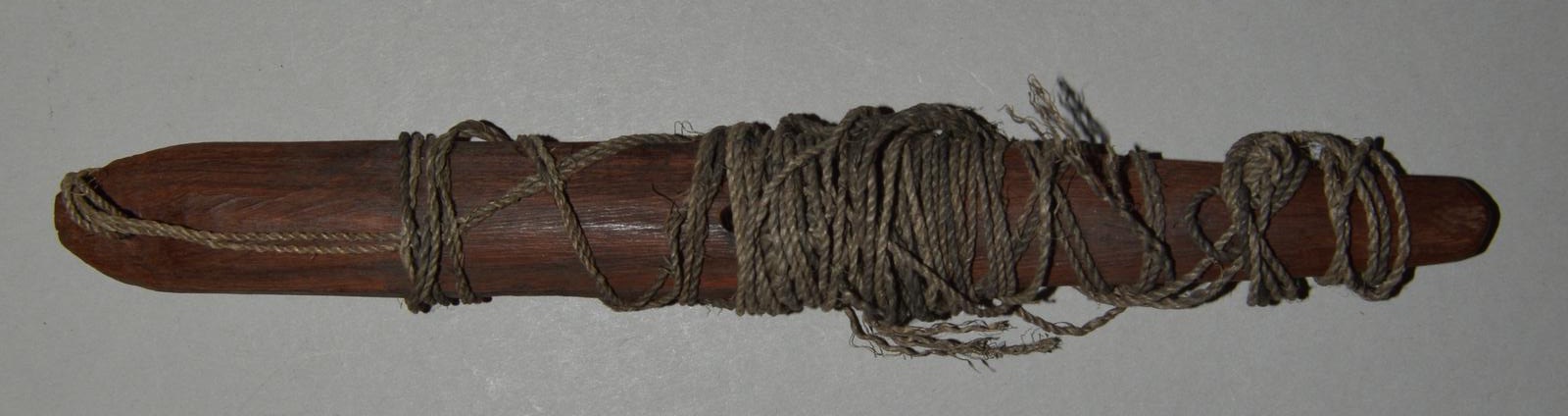
Ayoreo palo zumbador, one of three
Paraguay; Bolivia · Chaco Boreal · South America
Play / practical
- Toy / secular survival
Source term: palo zumbador; zumbador de juguete
The Ayoreo of the northern Chaco kept only three instruments: a square wooden whistle, a single idiophone and the bullroarer. Of the three, the bullroarer had passed wholly into childhood. Among the boys, who slept together and built themselves little huts, a long slat tied at one end was whirled through the air for its familiar roar, while among the adults it had fallen completely out of use.
Los ayoreo poseen tan sólo tres instrumentos musicales: un aerófono (el silbato cuadrangular de madera), el zumbador de juguete ... y un idiófono.
The Ayoreo own only three musical instruments: an aerophone (the square wooden whistle), the toy bullroarer ... and an idiophone.
Bórmida and Califano 1978, reprinted in Zanardini 2003, p. 174
Particulars
- Object
- An elongated slat tied at one end and whirled in the air.
- Function
- A boys' toy, entirely out of use among adults.
Source
Marcelo Bórmida and Mario Califano, Los indios ayoreo del Chaco Boreal: información básica acerca de su cultura (Buenos Aires: FECIC, 1978); reprinted in José Zanardini (ed.), Cultura del pueblo Ayoreo: manual para los docentes (Biblioteca Paraguaya de Antropología 44; Asunción, 2003), pp. 150-151, 174
Nearby in the atlas
 Aguano, Lamisto and Tschamikuro toy bullroarersPeru · Northeastern Peru · Play / practical
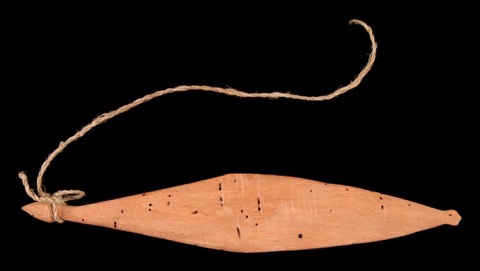 Aymara child's bull-roarer, ChucuitoPeru · Chucuito, Puno — northwestern Lake Titicaca basin · Play / practical
 Bora tsíxtsi children's toyPeru; Colombia · Northwestern Amazon / Peru · Play / practical
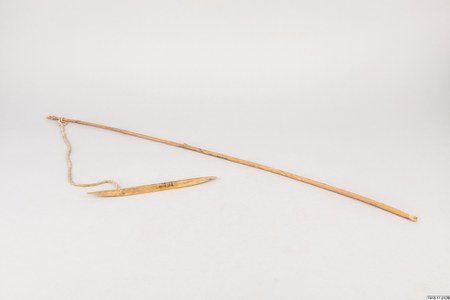 Chacobo toyBolivia · Eastern Bolivia · Play / practical
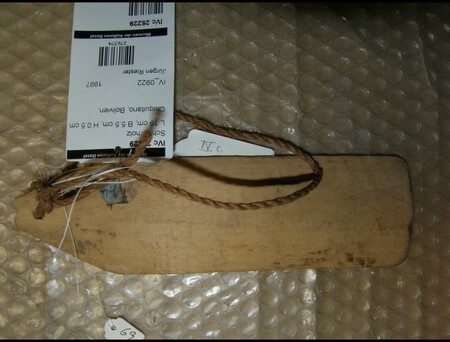 Chiquitano / Churapa bullroarersBolivia · Santa Cruz region, eastern Bolivia · Play / practical
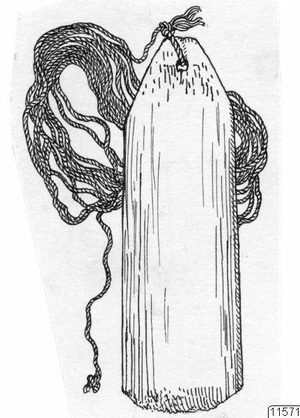 Chiriguano and Chané toyBolivia; Argentina; Paraguay · Gran Chaco / Eastern Bolivia · Play / practical