No. MASSEY1961-001North America
San Julio Basin ironwood bullroarer
Mexico · San Julio Basin · Baja California Sur · North America
Function not recorded
Source term: Bullroarer / wooden bull-roarer
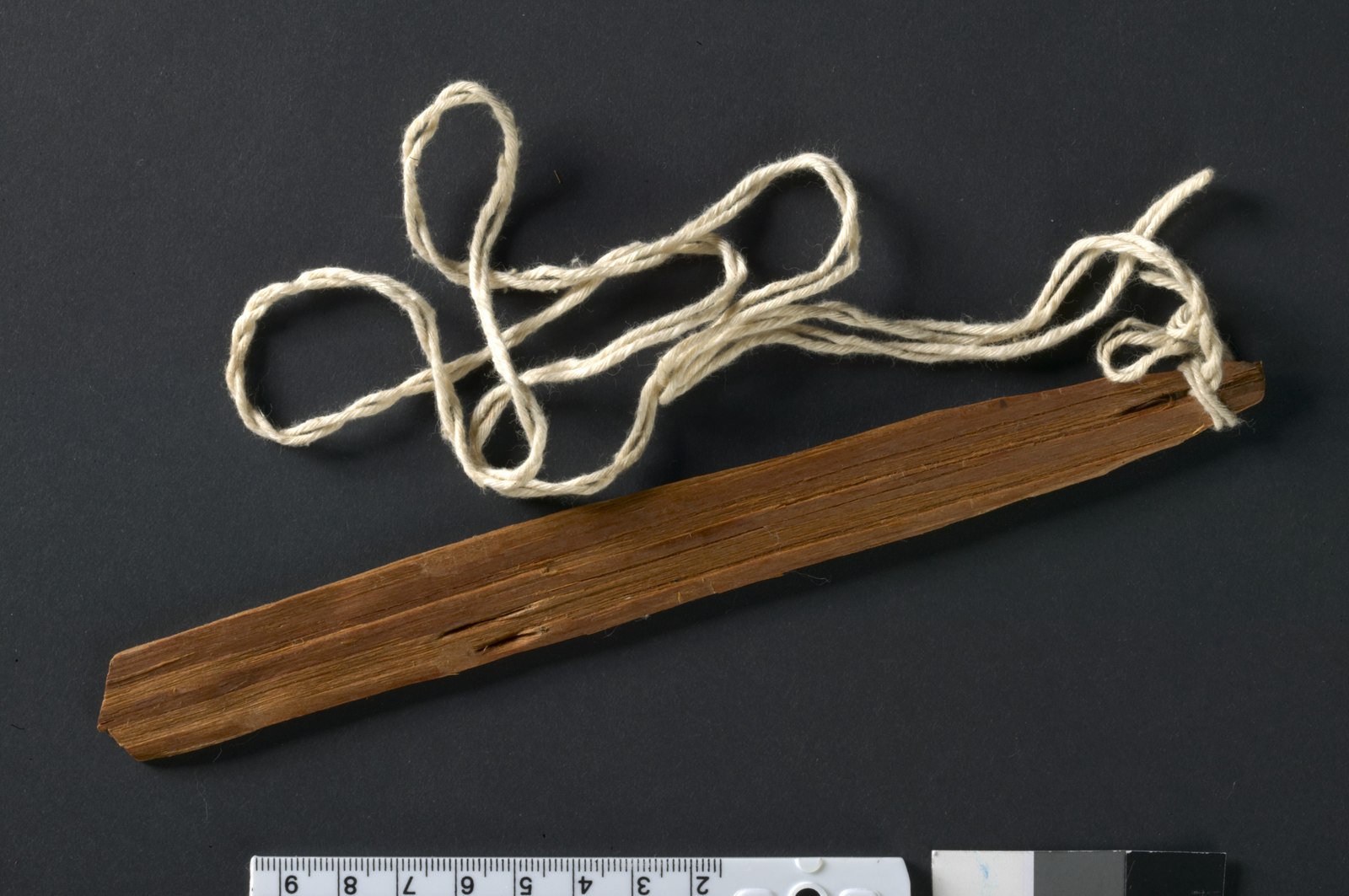
A blade of ironwood twenty-one and a half centimetres long, oval in plan and swelling to a lens in section - the conventional shape, as Massey and Osborne described it - lay on the floor of a cave in the San Julio Basin, east of Comondú in the Baja desert, when Carl Sauer and William Massey collected it in the summer of 1946. The Hearst Museum's catalogue calls it what it looks like: Bullroarer. Nothing dates the object; it came off the surface rather than out of a layer, so 1946 marks only the year it was picked up.
This wooden bull-roarer has a conventional shape; it is a long oval-shaped piece of hardwood which is double-convex or lenticular in cross section and has a length of 21.5 cm.
Massey & Osborne 1961:344
Particulars
- Object
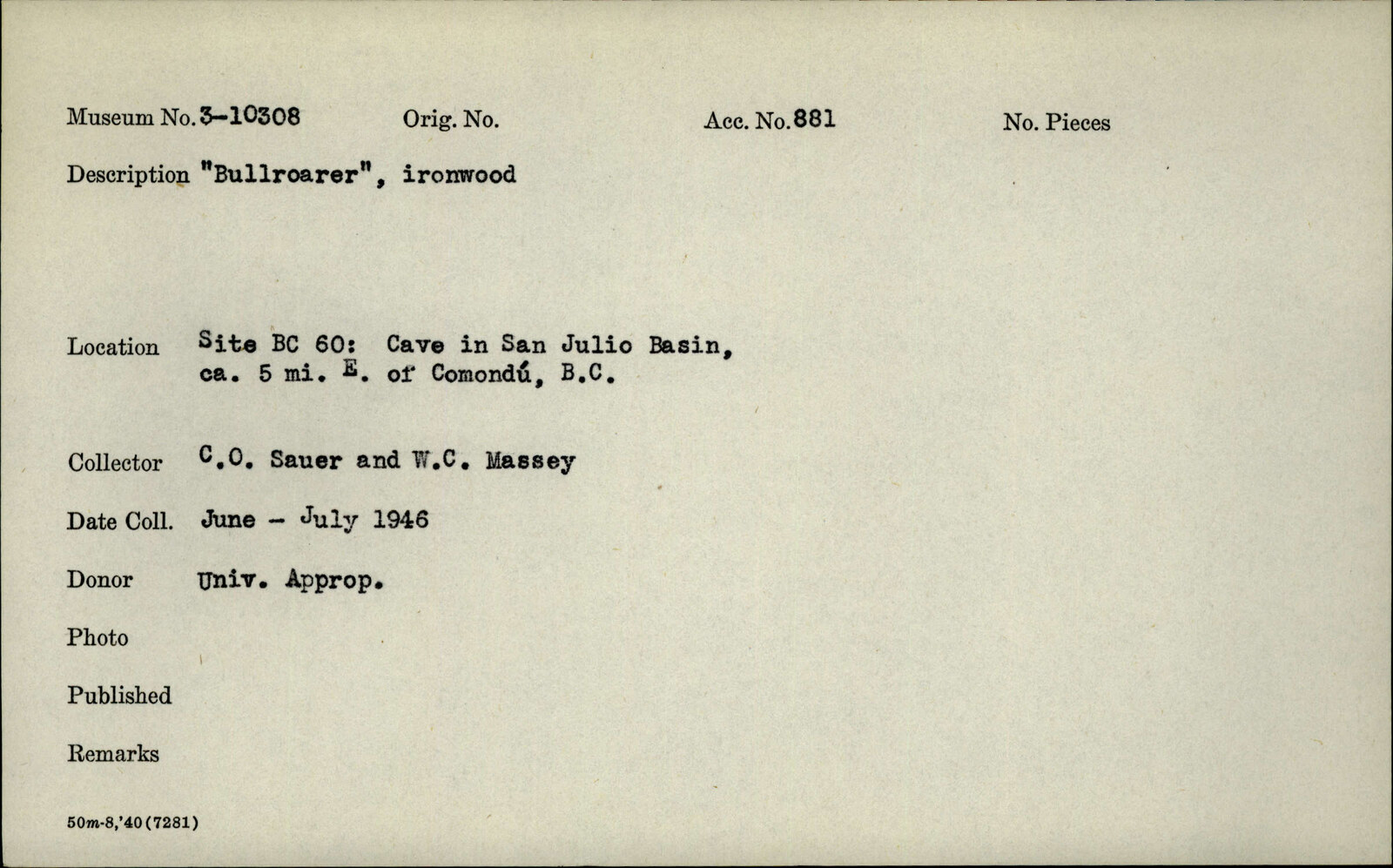
- Long oval ironwood blade, 21.5 cm, double-convex or lenticular in cross section; Phoebe A. Hearst Museum of Anthropology 3-10308, accession 881 (catalogued in 1961 as the Robert H. Lowie Museum).
- Function
- Not recorded.
Source
William C. Massey and Carolyn M. Osborne, A Burial Cave in Baja California: The Palmer Collection, 1887, Anthropological Records 16(8) (1961), p. 344 and footnote 2; Phoebe A. Hearst Museum of Anthropology, object 3-10308, accession 881