No. STEWART1942-010
Antarianunts Southern Paiute bullroarer
United States · Henry Mountains, Garfield County, Utah · North America · Great Basin
Function not recorded
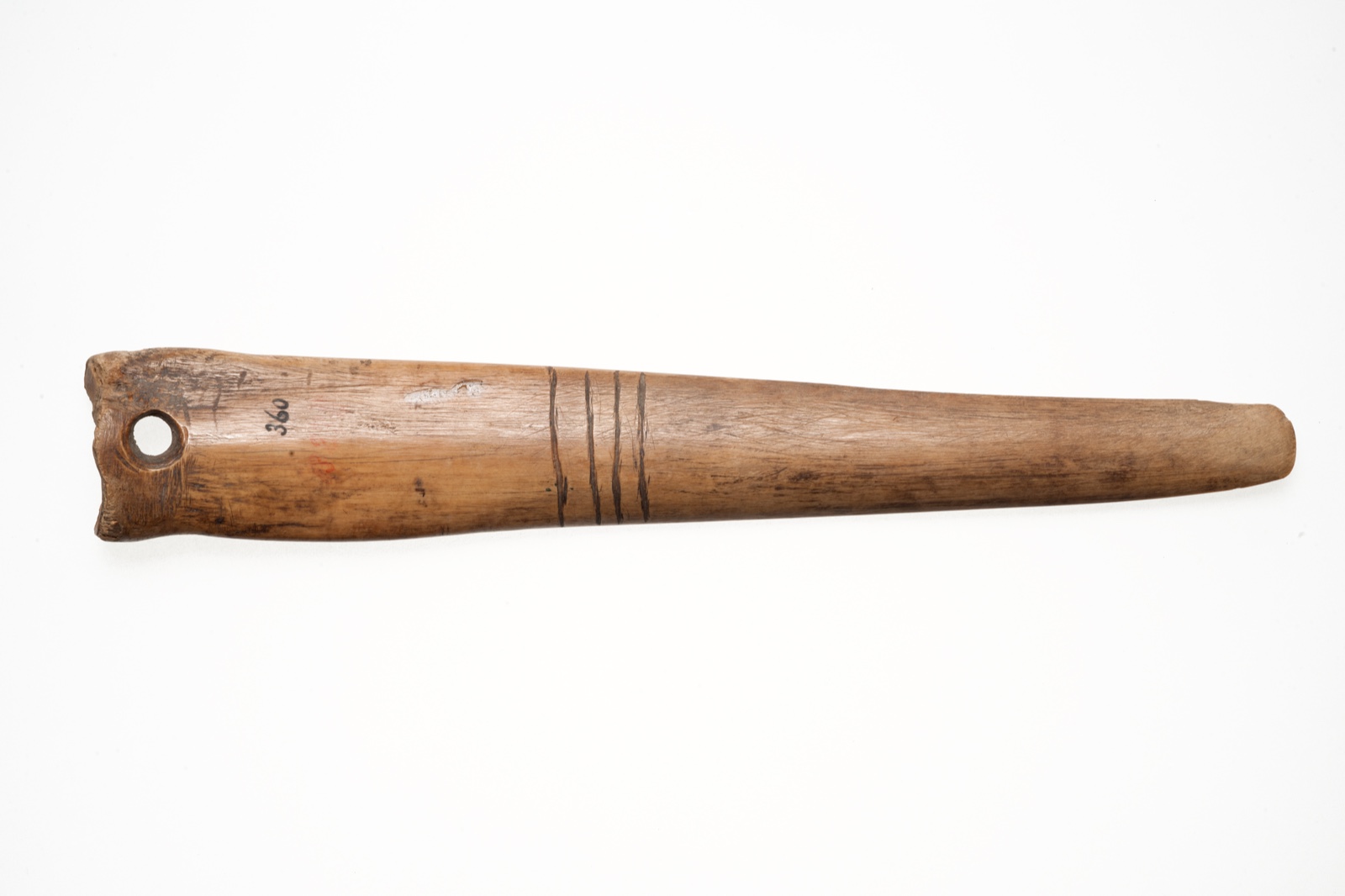
niayaranömpö
Source term: Bull-roarer: whirrer of wood
niayaranömpö: the Antarianunts name for the bull-roarer, close to the Kaibab and San Juan Paiute naiyaratinömpö and carrying the same Numic instrumental ending, -nömpö.
The Antarianunts held the country around the Henry Mountains in southern Utah — bare sandstone, and still, when Stewart wrote, one of the least accessible corners of the state. He knew of no other mention of the band anywhere in print. Rosie Timmican, born and reared there and a young woman when the first white men came through, gave him their word for the bull-roarer, niayaranömpö, and said her people had both a wooden one and one cut from mountain-sheep horn. Both, she said, were recent. What it was used for she did not say, and she would not talk much about doctoring either.
Particulars
- Object
- A wooden whirrer and a mountain-sheep-horn form, both reported as recent.
- Function
- Use not recorded.
Source
Omer C. Stewart, Culture Element Distributions: XVIII, Ute-Southern Paiute, Anthropological Records 6(4) (1942), p. 291, elements 2792-2802; vocabulary p. 352; band and informant notes pp. 237, 239