No. JSTEWARD1941-003
Southern Nevada Shoshoni mountain-sheep-horn bullroarer
United States · Northern Death Valley (Inyo County, California); Beatty and Oasis Valley (Nye County) and Lida (Esmeralda County), Nevada · North America · Great Basin
Play / practical
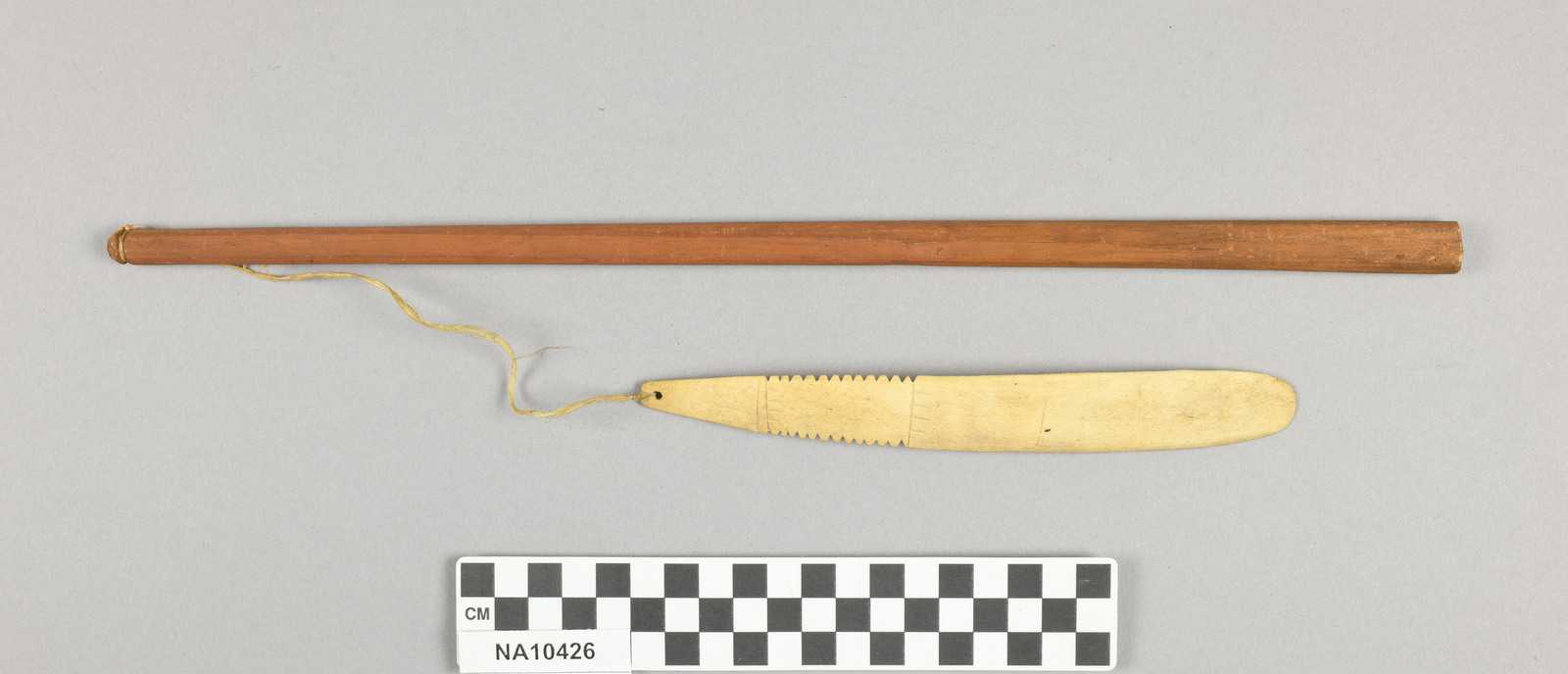
Source term: Bull-roarer
Death Valley's Shoshoni cut a bullroarer from mountain-sheep horn, the only horn blade known among the Nevada Shoshoni, and kept the ordinary wooden slat beside it. Both were playthings; neither was swung to bring the wind. Their neighbours knew the instrument too. At Beatty lived the Ogwe'pi, 'creek' people, whose winter camps stood at springs and along the few miles where the Amargosa runs in Oasis Valley before it dies in the desert; their chief led the rabbit drives and festivals. At Lida five families wintered at the foot of Magruder Mountain, burned its brush each fall so the seed plants would grow better, and crossed to Pigeon Springs for festivals with their Paiute neighbours.
Particulars
- Object
- A whirrer of wood and, at Death Valley, one of mountain-sheep horn, the only horn form among the Nevada Shoshoni.
- Function
- A toy; at Death Valley it was not used to make the wind blow.
Sources
- Julian H. Steward, 'Culture Element Distributions: XIII, Nevada Shoshoni,' Anthropological Records 4:2 (1941), p. 307, element 1870 and sub-elements 1871-1874; informant notes pp. 213-214; also pp. 211, 250, 259-260 View · archived
- Julian H. Steward, Basin-Plateau Aboriginal Sociopolitical Groups, Bureau of American Ethnology Bulletin 120 (1938), pp. 68-70 (Lida), 94 (Beatty) View