No. SANCHEZ1950-001South America
Río de Oro rumbadera
Colombia · Río de Oro, then in the department of Magdalena (now Cesar), northern Colombia · South America · Andes
Play / practical
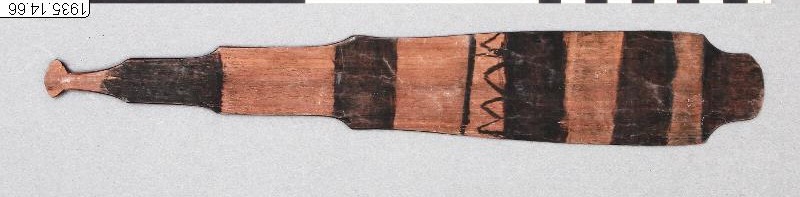
rumbadera
Source term: rumbadera; bramadera
rumbadera: Río de Oro name for the bullroarer; bramadera: the Spanish dictionary word for the toy bullroarer.
In Río de Oro, a town in the hills of northern Colombia, children called the bullroarer the rumbadera. When Francisco Sánchez Arévalo gathered the town's vocabulary for the Instituto Caro y Cuervo in 1950, he glossed it with the Spanish word bramadera: a thin board tied to a cord and whirled through the air until it roars like the wind. He added that the name was common in children's speech, because it was a toy. Next to it in his list stands the runcha, a spinning top made from half a wooden spool, another of the town's homemade playthings.
RUMBADERA. Bramadera. Común en el habla infantil, por ser un juguete.
Rumbadera: bullroarer. Common in children's speech, because it is a toy.
Francisco Sánchez Arévalo, Thesaurus 6(2) (1950), p. 247
Particulars
- Object
- A children's bullroarer called rumbadera, glossed bramadera; construction not described.
Source
Francisco Sánchez Arévalo, "Notas sobre el lenguaje de Río de Oro," Thesaurus: Boletín del Instituto Caro y Cuervo 6(2) (1950): 214–252, at p. 247