No. GIFFORD1940-006
A roarer women might watch
United States · Cimarron, New Mexico · North America
Play / practical
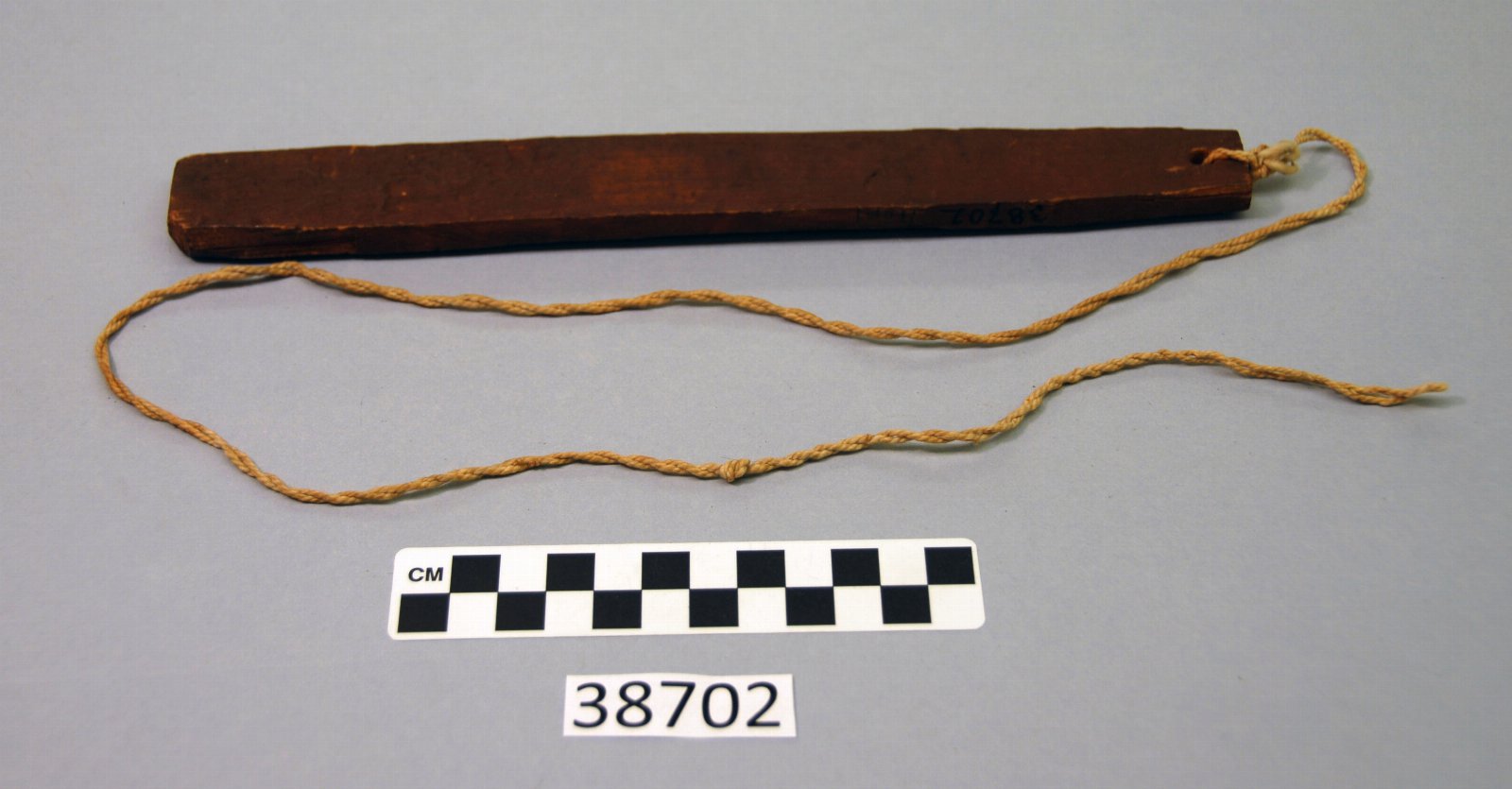
Source term: bull-roarer
The Jicarilla Apache of northern New Mexico were two divisions: the Olleros of the mountains and the Llanero, the plains-side people, who followed buffalo out onto the eastern grass and wintered in the Cimarron country. The Llanero — Gusgayi — put the bullroarer in the hands of men and boys as a plaything, and women were free to watch it swung. Elsewhere the instrument was a shaman's property, hidden from onlookers. Here it was fifteen inches of wood on three feet of cord, and nobody had to look away.
Particulars
- Object
- Wooden blade about 15 by 3 inches, whirled on a cord about three feet long.
- Function
- Used as a toy by men and boys; women were allowed to see it in use.
Source
E. W. Gifford, 'Culture Element Distributions: XII, Apache-Pueblo,' Anthropological Records 4:1 (1940), pp. 58-59 and 151-152