No. NAMER-009
Mesa Grande Diegueño bullroarer
United States · California · San Diego County · Mesa Grande Reservation · North America
Sacred / spirit
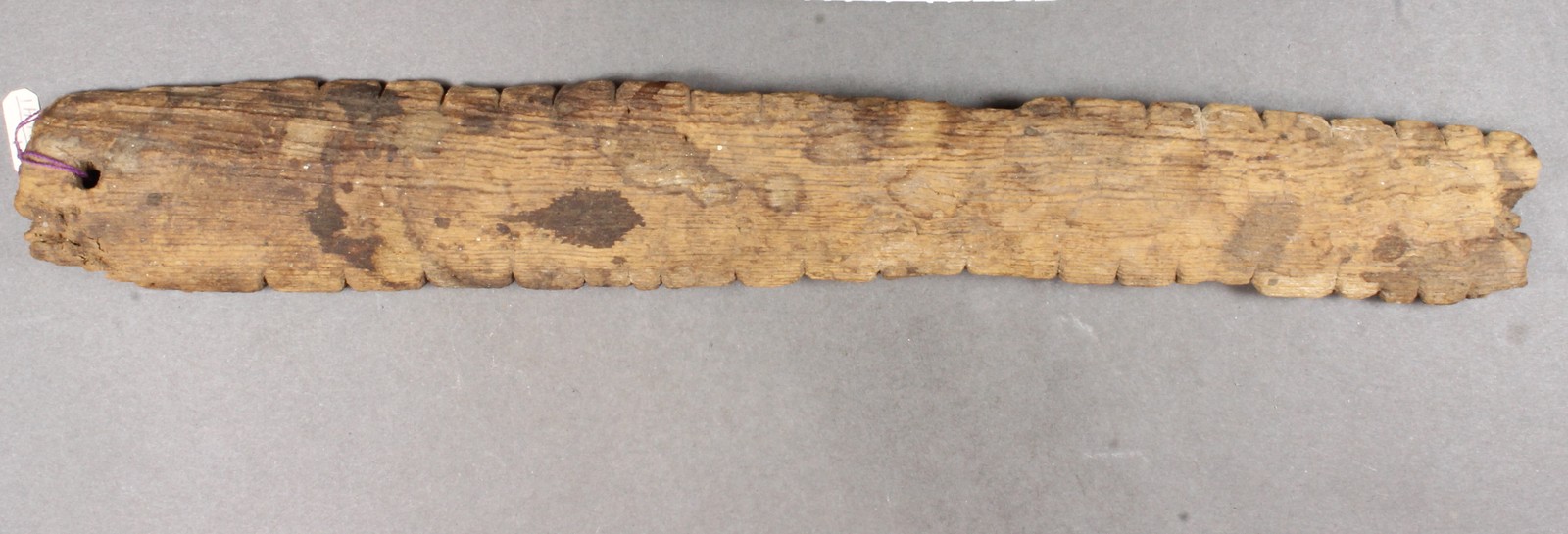
Source term: Bullroarer
A bullroarer made by the Mesa Grande Diegueño of the Mesa Grande Reservation, on the high plateau of northern San Diego County, California, held by the National Museum of the American Indian as catalog 6/5507. The museum withholds its photograph as culturally sensitive. Among the Diegueño the bullroarer — a smooth, narrow piece of greasewood on a short twisted rope of milkweed fibre, called air — was swung three times by one of the old men as the signal for the people to assemble. When a toloache initiate died, the same signal gathered them for the Feather ceremony, the mortuary rite held on the afternoon before the Clothes-Burning, and for the Whirling dance that followed. The shamans also used it as a curative instrument.
When swung rapidly around the head of the performer it gives out a deep booming or roaring sound.
T. T. Waterman, The Religious Practices of the Diegueño Indians (1910), p. 282.
Particulars
- Object
- A Mesa Grande Diegueño bullroarer from the Mesa Grande Reservation (NMAI 6/5507).
- Function
- Summons to ceremonial gatherings, including the mortuary Feather ceremony; also a shaman’s curing instrument.
Source
Smithsonian National Museum of the American Indian, catalog 6/5507; Mesa Grande, Mesa Grande Reservation, San Diego County, California; T. T. Waterman, The Religious Practices of the Diegueño Indians, University of California Publications in American Archaeology and Ethnology 8:6 (1910), pp. 282, 307-308