HOUWALD1990-001 - ethnographic attestation
Mayangna uwauwau, the bush telegraph
Nicaragua - Mosquitia interior (Río Coco, Waspuk and Bocay rivers; Río Patuca in Honduras) - Mesoamerica - Central America
Play / practical
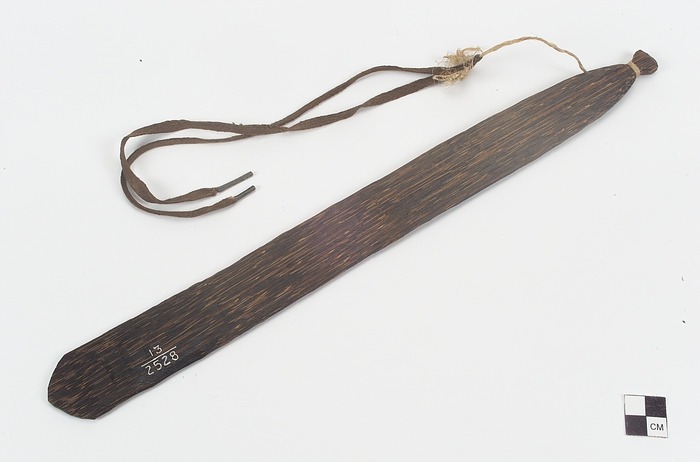
uwauwau
Source term: Schwirrholz
uwauwau: the Mayangna (Sumu) name for the bullroarer.
Long before transistor radios reached the forest villages, the Mayangna are said to have sent word through the trees by sound. Their uwauwau was a length of liana with a wooden weight at one end, swung round like a sling until it rose into a swelling, singing whistle; tied to a stick, it looked like a whip. It belonged with the older music of the Sumu villages, the flutes and drums, the tapan rattles, wind instruments made from turtle shell and crab claws, and small clay ocarinas shaped like birds.
Früher soll das Instrument auch als eine Art "Buschtelegraph" gedient haben. Vielleicht war das der Weg, Nachrichten zu übermitteln.
The instrument is said once to have served as a kind of "bush telegraph" too. Perhaps that was the way messages were passed on.
Houwald, Mayangna = Wir (1990)
- Object
- A liana cord weighted at one end with a piece of wood and swung like a sling until it gives a swelling, singing or whistling tone. The cord could also be tied to a stick, so that the whole looked like a whip.
- Function
- Said to have served formerly as a kind of bush telegraph, sending messages through the forest.
- Source
- Götz Dieter Freiherr von Houwald, Mayangna = Wir: Zur Geschichte der Sumu-Indianer in Mittelamerika (Wegweiser zur Völkerkunde 34; Hamburg: Hamburgisches Museum für Völkerkunde, 1990), chapter on musical instruments
- Source location
Page references
Internet Archive scan leaf 414 (printed page not yet confirmed)
- Source confidence
- low to medium
- Location note
- Musawás on the Waspuk River (Bonanza, RACCN), the largest Mayangna village and their customary capital; Houwald names no village for the instrument.
Regions: The Americas · North America