Jaguar allies, ancestral visitors and the food they are owed
Across Amazonian forests, headwaters and adjoining Orinoco and Guianas worlds, a whirled voice makes relations audible. It summons jaguar allies, remembers an ancestor, announces a visiting family or speaks the Sun’s marriage law. Food, tobacco, mourning and instruction answer these presences; children also keep the craft of sounding wood alive.
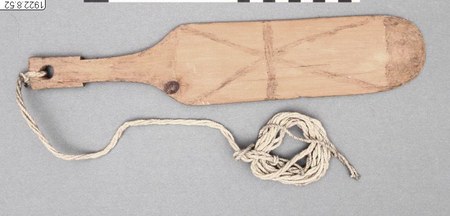
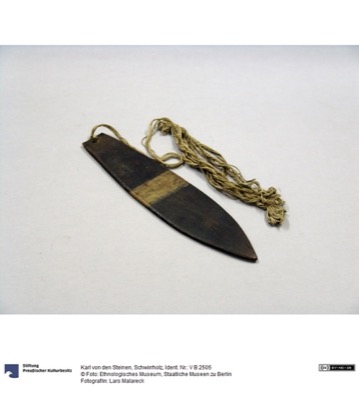
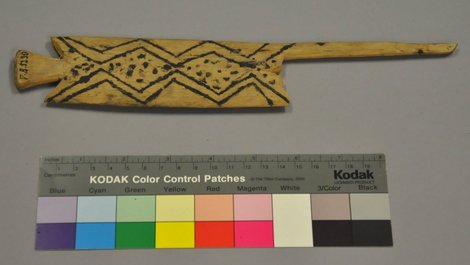
In the Matsigenka night, the bullroarer’s swelling rumble resembles the Master of Thunder. Spotted cats hurry to help the shaman who is their ally. Its engraved signs belong to sangenari, a repertoire that also names the jaguar: the instrument gives the power a voice and a visible body. Elsewhere in Amazonia the approaching presence is an ancestor, a fish or a howler monkey. Whirling wood establishes a relationship, and that relationship calls for an answer. The sound can bring help, require a meal, remember a death or teach whom one may marry. 10
A Matsigenka man named Daniel compared the Master of Thunder’s markings to a tape recorder. Unlike an ordinary notebook, whose writing lay silent, those signs could speak and teach. Thunder raised a rock and its voice rumbled; a shaman who heard such voices could return and engrave or paint what he had learned. The sounding board joins this larger art of making a power’s signs perceptible. Its nocturnal voice calls the spotted cats as allies, while its marked surface carries the same field of knowledge. Listening and looking are routes into one relationship with an animate world. 10
This account follows the Amazonian forest and its eastern Andean headwaters, including the Upper Xingu and the Tocantins–Araguaia savanna margins. Its northern reach names the Orinoco, its adjoining llanos and the Guianas rather than pretending that all these places share one river basin. The useful connection is a cultural practice: wooden, cane or calabash sounders enter relations with beings who hear, approach and respond. The Upper Xingu’s multilingual ceremonial world supplies a particularly detailed case, while the Vaupés, Peruvian montaña and Orinoco have their own named partners and obligations. 10, 9, 4, 1
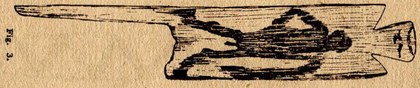
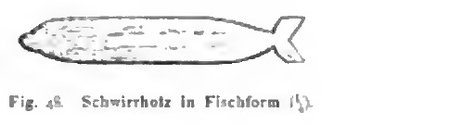
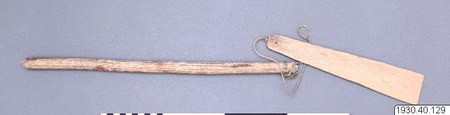
Among the Xipaya of the Curuá–Iriri country, former participants remembered a dance that lasted from dusk to dawn. The shaman sat motionless all night on a small bench beside a carved statue, his helper nearby. Two great bamboo flutes sounded, their free ends supported by women called the demon’s wives. After midnight another instrument joined the singing and flutes: Warī warī sámį, whose name joins continual turning to a male ancestor. Nimuendajú understood it, from uncertain recollections and a drawing, as a round-oval sounder on a cord. The last qualified shaman had died, leaving the rite in memory. Paddle-shaped children’s boards could still be handled openly. Remembered ancestral ceremony and ordinary play occupied the same community. 6
On the Madeira, a Caripuna keeper refused scissors offered for a long board. He asked an older man, who paced around the burial grounds imitating its howl and explained that it accompanied lamentation for the dead. The failed purchase makes the obligation tangible: this voice belonged to mourning, and its custodian could not treat it as freely exchangeable wood. Xipaya remembrance and Caripuna lament bring absent relations within hearing. What matters is the occasion and the people responsible for making that relation present. 3
In the Desana account developed by Reichel-Dolmatoff with his principal informant, the Sun Father transgressed the order he would require of humans: he committed incest with his daughter. Afterwards he repented and instituted the prohibition, establishing marriage outside one’s own group. Before social rules prevailed, threatening forest beings and aggressive horseflies embodied a dangerous world of unregulated sexual approaches. Killing the horseflies marked the coming of order. The bullroarer, nurá-mee, takes their name, but its whirled voice now announces the power of the Sun and exhorts people to obey the law of exogamy. 9
The old disorder was commemorated in a rite in which men blew tobacco smoke over bodies understood as infested by those beings. Renouncing the disorder restored their relation to the Sun. The sound therefore carries a rule whose force depends on a remembered violation: the creator’s own failure gives the prohibition its urgency. The circling blade makes a remembered danger audible as a present demand: maintain the relations through which society can continue. 9
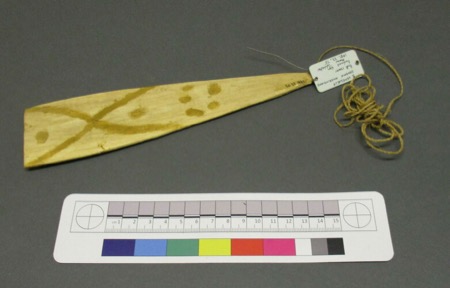
At a Piaroa Warime, all the fires were put out on the first night. Voices approached from the darkness and circled close to the palm walls of the communal house. Among the ensemble was Imu, the howler monkey, sounded by an oblong wooden plate on a thread. In the account of the observed celebration, Imu was a child of Worá, the agricultural mother. The voices formed a noisy family announcing its presence and asking to be fed and given drink: that was why the guests had been invited. By day, a female host answered masked ancestral visitors with the history of her own family and offered food. Sound, remembered kinship and hospitality organized successive encounters. 4, 5
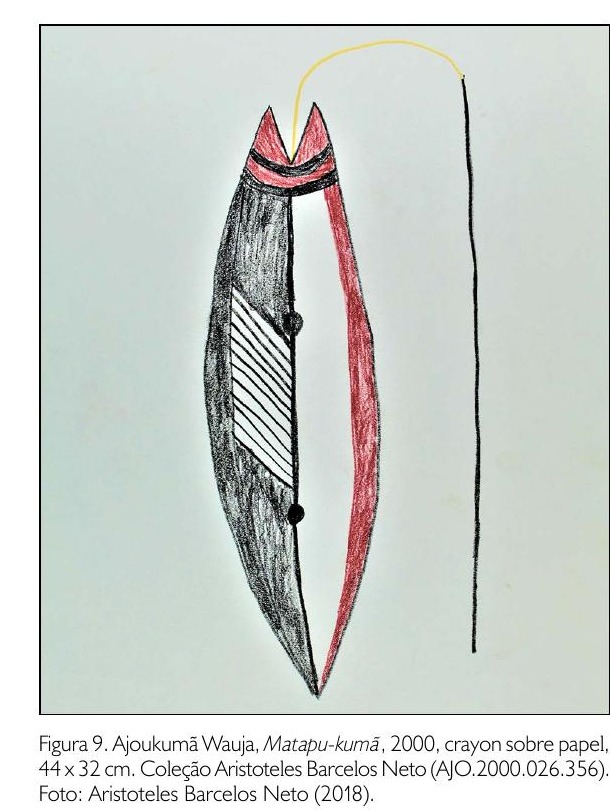
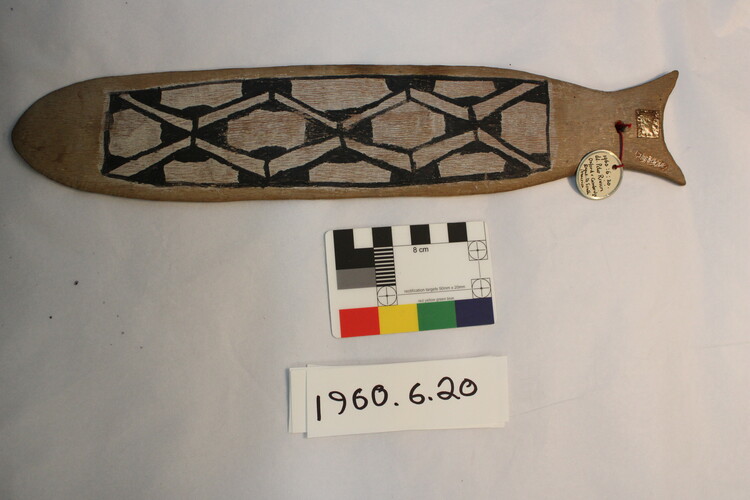
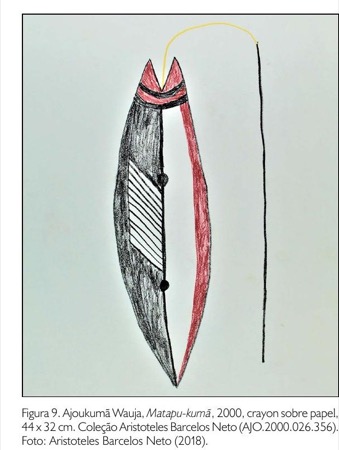
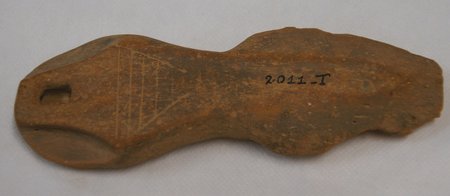
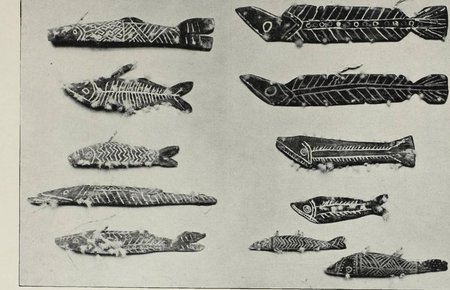
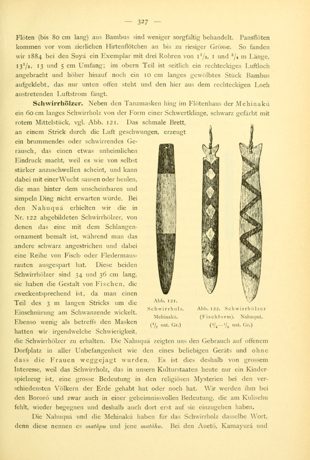
Upper Xingu spirit-fish make a comparable demand in another ceremonial world. Wauja performers carry matapu from the village centre to houses of spirit masters and receive payments; a sponsor subsequently puts a lit cigarette mouth to mouth with a performer. At a Mehinaku pequi festival, two men whirl a pair of boards together. When the boards stop, women bring roasted fish, porridge and beiju. Braida’s account also recounts illness after too many boards were made for sale, followed by festivals owed in return for a cure. The voice brings an obligation that continues after the noise ends. 1, 2
The Kamayurá story of Yanama gives exchange a mythic depth. He obtained a bullroarer from dogfish for red toucan feathers, then traded it to the pequi tree for knowledge of making oil. Sound, fruit and instruction pass between named partners. Together these scenes give the regional resemblance substance: an arriving being has desires, a host has duties, and the encounter makes something happen. Piaroa guests want drink, Wauja performers receive tobacco, Mehinaku spirit-fish require meals and Yanama acquires knowledge through a bargain. 8, 4, 1, 2
At the Tocantins margin, Xerente specialists learned with a board kept in a lidded, elongated calabash. Pupils whirled the howling of Hieparo-wawe, the night being identified with Mars, and their teacher appeared at an appointed place in the woods. Their instruction also concerned poisonous snakes and curing bites. The encounter turns an audible summons into a means of acquiring expertise. The howling summons carries instruction between a night visitor and the people learning to work with his power. 7
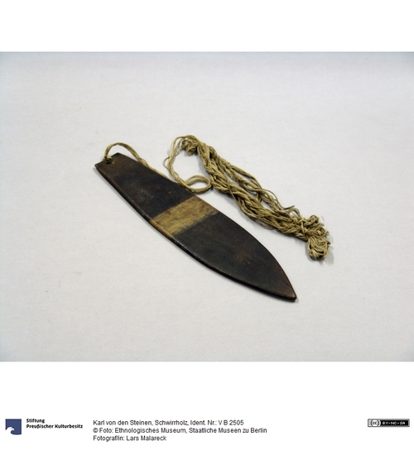
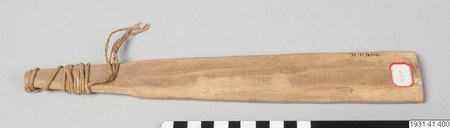
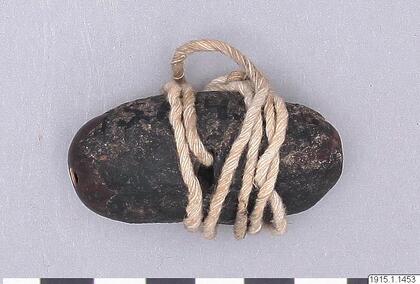
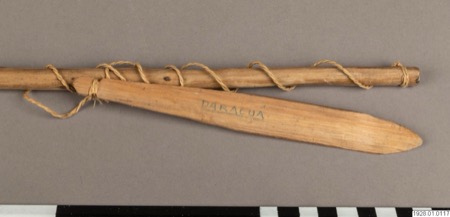
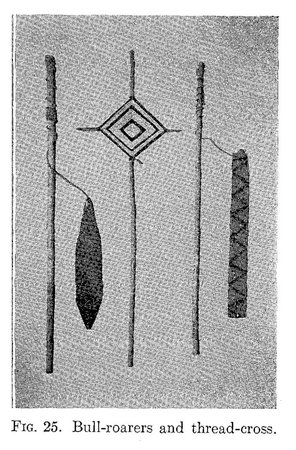
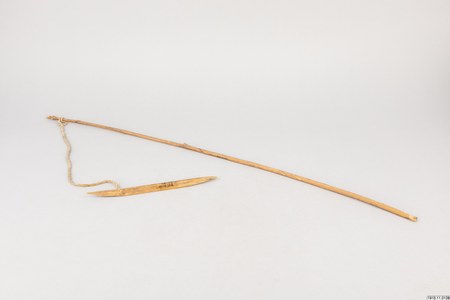
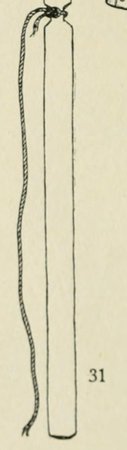
Children’s craft supplies another durable relation. At Santa Anita, Guaraŝug’wä men made a nineteen-centimetre cedar blade on a long totaí-palm cord; boys swung it overhead until its low note carried across the grassland. At Mahekodotedi on the upper Orinoco, a Waika alabaco was recorded as a toy. These are positive uses of skill, wood and moving air. Alongside the Xipaya forefather and the Matsigenka Thunder allies, they show how much a sounding blade can sustain: play and learning, remembered relatives and demanding guests, all made audible by somebody’s hand. 11, 12
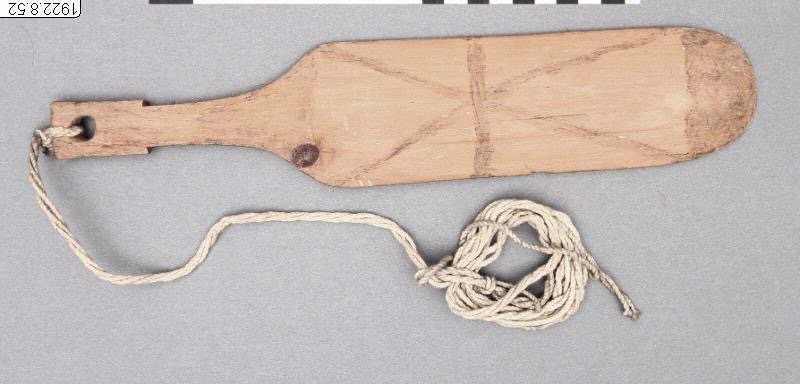
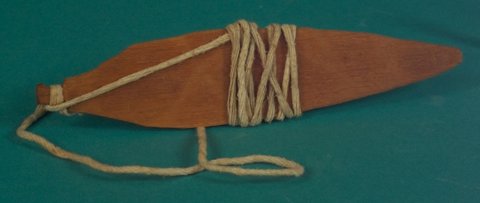
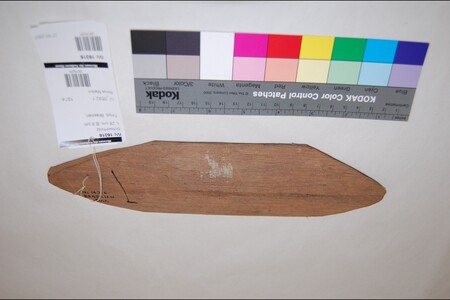
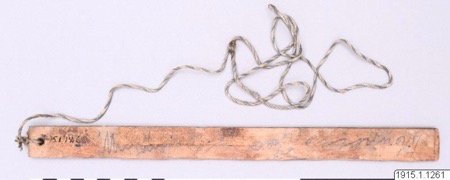
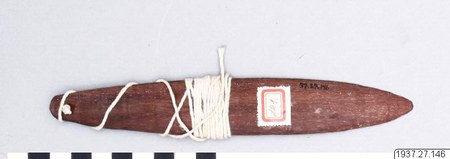
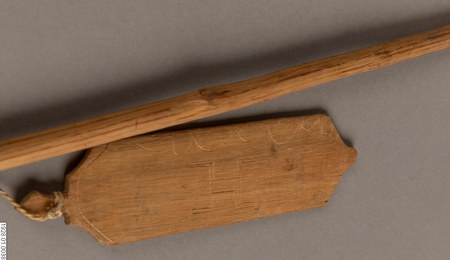
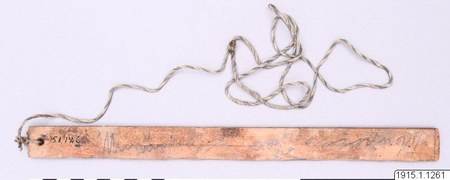
Pour enfant - 'for a child': two of the small red-stained rhombes that came out of Matsigenka country on the Rio Urubamba carry that bare note, one still trailing its long knotted cord. The ethnographer who collected them, France-Marie Renard-Casevitz, supplies the other half of the story:…
Världskulturmuseet, Göteborg / SMVK (1922.08.0052) · CC BY 4.0
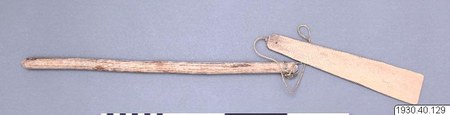
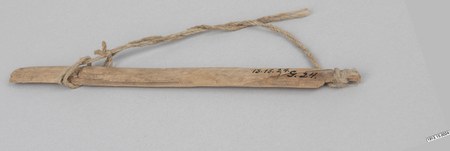
After midnight, in the night-long circle dance of the Zetáβia feast, a new voice joined the singing and the great bamboo flutes: the warī warī sámį — “ceaselessly turning,” joined to the word for an elder of the father’s line, a whirled forefather. It sounded for the cult of the national demon…
In Desana cosmology the Sun Father committed the first sin: incest with his own daughter, at Wainambí Rapids — and women menstruate to this day, the myth says, so the crime is never forgotten. Repenting, the Creator made its prohibition his principal law, and the bullroarer is his voice still…
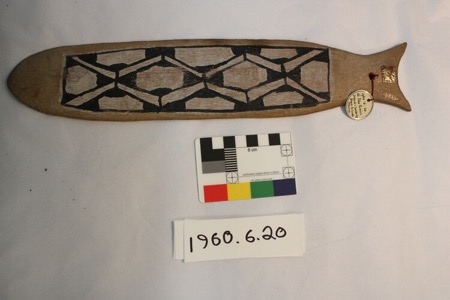
Néprajzi Múzeum / Museum of Ethnography, Budapest, NM 69.41.16
The Piaroa, famed among anthropologists for their gentleness, hold one great masked festival: the Warime. It re-enacts the oldest feast in the world — the meal the demiurge Wajari set before his cannibal father-in-law Kuemoi at the mountain of Pureido, in the age when Wajari was building the world…
Representative — not this record’s object · Piaroa bullroarer, NM 69.41.16.
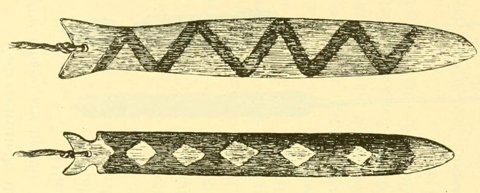
Ajoukuma Wauja, drawing of matapu-kuma (2000), in Aristoteles Barcelos Neto 2021, fig. 9 · CC BY 4.0
During the pequi festival, Wauja performers carry fish-shaped matapu from the village centre to the houses of the guardian-spirit masters and spin them before each house. The painted blades embody fish spirits, made in male-and-female pairs — a smaller one is aripe, 'grandfather,' and miniatures…
In the Kamaiurá origin story, women were the first flute-players until the twins Sun and Moon drove them off with parapara and uriwuri bullroarers—fierce aquatic spirit-beings, mama'é, of fish and serpent essence. Whirled in gendered pairs, the larger blade is female and “conducting,” the smaller…
Printed pp. 105–106: Wauja house-to-house sounding, payments and sponsor’s cigarette; source does not name Piyulaga or claim eyewitness observation of that celebration.
Printed pp. 158–164: daytime hostess/ancestor song, first-night dark maloca, Imu as howler and Worá’s child, musical family asking food and drink. Account specifies the author’s 1988 observed Warime at p. 160 n.14.
Printed p. 313 independently identifies Imu-chuwo’s sounder as an oblong wooden plate attached at one end to a hand-held thread. The adjacent anaconda and jaguar instruments are flutes, not bullroarers.
Printed pp. 85, 89–90: specialist instruction, lidded calabash, Hieparo-wawe/Mars and the summons in the woods; snake knowledge belongs to these pupils.
Printed pp. 28–29, 57–60, 112–116 and 245: Sun’s incest, exogamy law, horsefly beings and the actual nurá-mee bullroarer; xiii–xvi explains the principal-informant basis. Sacred trumpets and stick-rattles remain distinct instruments.
Printed pp. 261–263: Daniel’s speaking Thunder signs, nocturnal bullroarer rumble, spotted-cat allies and sangenari. Children’s specimens are separately attested by museum cards; the older OCR-only daytime footnote is not used.
Printed pp. 170–171, fig. 98: cedar blade, totaí-palm cord, men’s manufacture and boys’ play; pp. 7 and 14–15 identify Santa Anita between Paraguá and Guaporé.