No. MUS2026-191
Xilatzén diable roarer
Mexico · Huasteca · San Luis Potosí · North America
Function not recorded
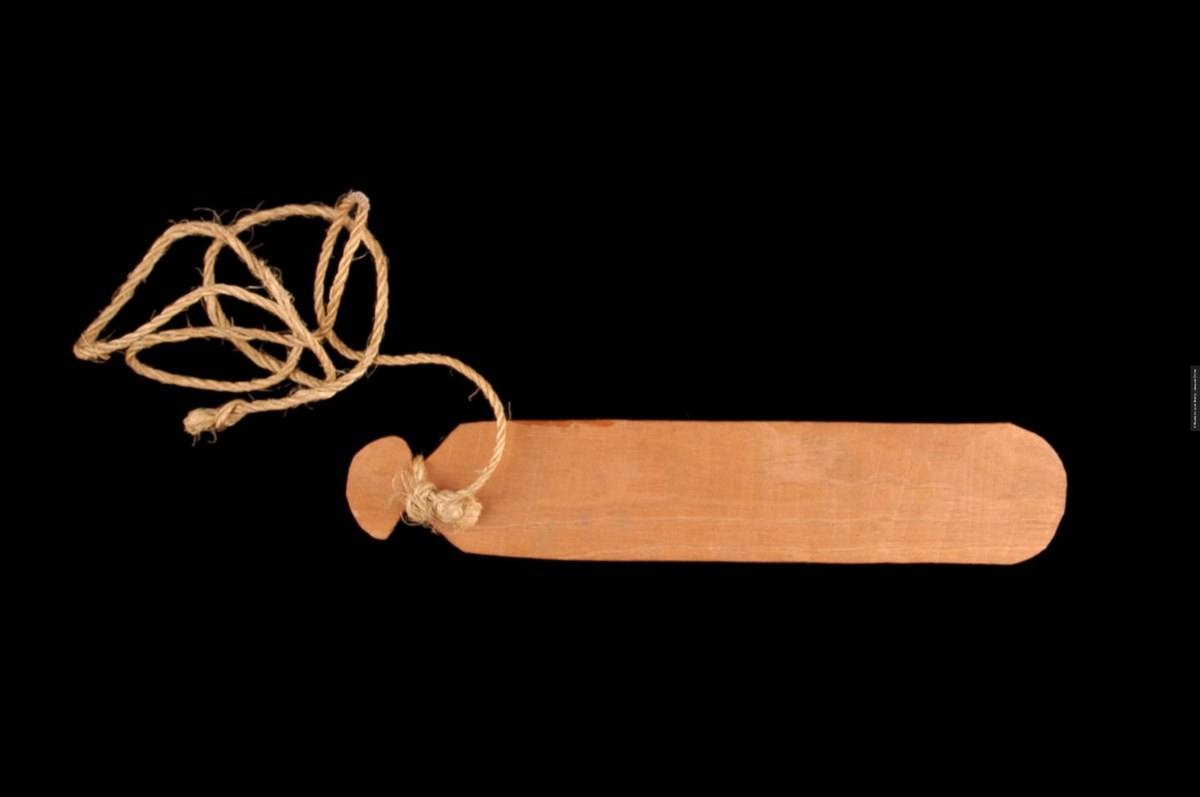
Guy Stresser-Péan, the great ethnographer of the Huasteca, brought this blade out of San José Xilatzén — a ranchería in the hills outside Tanlajás, in country where Tének is still the language of most households — before 1938. Thirty-three centimetres of wood, rounded at both ends, with its henequen cord still knotted through the top: a complete working rig. The Musée de l'Homme ledger entered it as 'diable ou rhomb' — devil or bullroarer — and stopped there; whose hands whirled it, and to what end, went unwritten. Stresser-Péan himself called the village Huastec: his plates from the same 1938 mission caption a new-maize festival and a crystal-gazing cure among the "indios huastecos" (Huastec Indians) of San José Xilatzén, and in his survey of the Huasteca he counts the rombo, the bullroarer, among the ancient instruments the Huastecs still kept alive, with the rattle, the flute, the drum and the teponaztli.
Particulars
- Object
- Wooden bullroarer, 33 x 6.5 x 2 cm, 69 g, with rounded spatulate ends and its henequen (agave) fibre suspension cord tied through the upper end, the rig intact.
- Function
- Not recorded for this piece; Stresser-Péan, who collected it, counted the rombo among the ancient instruments the Huastecs kept alive beside the rattle, flute, drum and teponaztli (Stresser-Péan, Viaje a la Huasteca, §47).
Sources
- Musée du quai Branly – Jacques Chirac, 71.1938.164.352 (ex Musée de l'Homme 38.164.352), from San José Xilatzén, Tanlajás, San Luis Potosí; collected by Guy Stresser-Péan, 1930–1938. View · archived
- Guilhem Olivier (ed.), Viaje a la Huasteca con Guy Stresser-Péan (CEMCA, 2008), Láminas 5–6, §47. View · archived