No. NA-S1952-011
Serrano signal for silence
United States · California · North America
Restricted
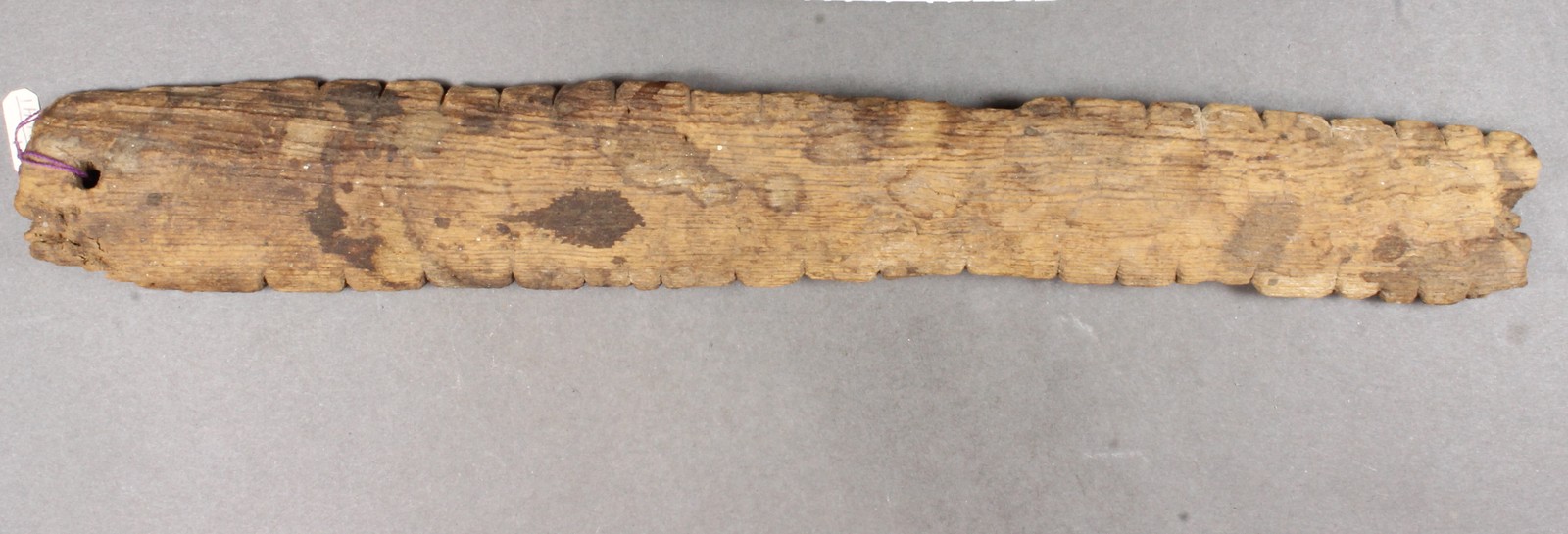
Source term: bullroarer
Silence, among the Serrano of the San Bernardino country, had an instrument. While the strings of sacred feathers hung in the big house during the mourning ceremony, the paha swung a bullroarer inside: a signal that no one might speak, look toward the sound, or by any chance glimpse the whirling slat. Whoever did was tied up with the sacred feathers themselves and stayed bound until his family paid to have him released. On the feather-dance night before, women danced the first half and men the second.
The paha swings the bullroarer in the ceremonial house; this is a signal for silence, and no one must look to see whence the noise comes, or by any chance see the bullroarer. If he does, he is tied up with the sacred feathers, and remains so until his family pay to have him released.
Benedict 1924, 'A Brief Sketch of Serrano Culture,' American Anthropologist 26:376
Particulars
- Function
- The paha swung the bullroarer inside the ceremonial 'big house' as a signal for silence during the mourning ceremony; anyone who looked toward the sound or saw the instrument was tied up with the sacred feathers until his family paid for his release. Also used ceremonially to assemble people.
Source
Ruth Benedict, 'A Brief Sketch of Serrano Culture,' American Anthropologist 26.3 (1924), p. 376; W. D. Strong, Aboriginal Society in Southern California, UC-PAAE 26 (1929), p. 22; P. Drucker, 'Culture Element Distributions: V, Southern California,' Anthropological Records 1.1 (1937), pp. 25 and 29