No. STEWART1941-008
Sawawaktodo-tuviwarai wind-making wimo'to
United States · Middle Humboldt River around Winnemucca, north-central Nevada · North America · Great Basin
Weather / fertility magic
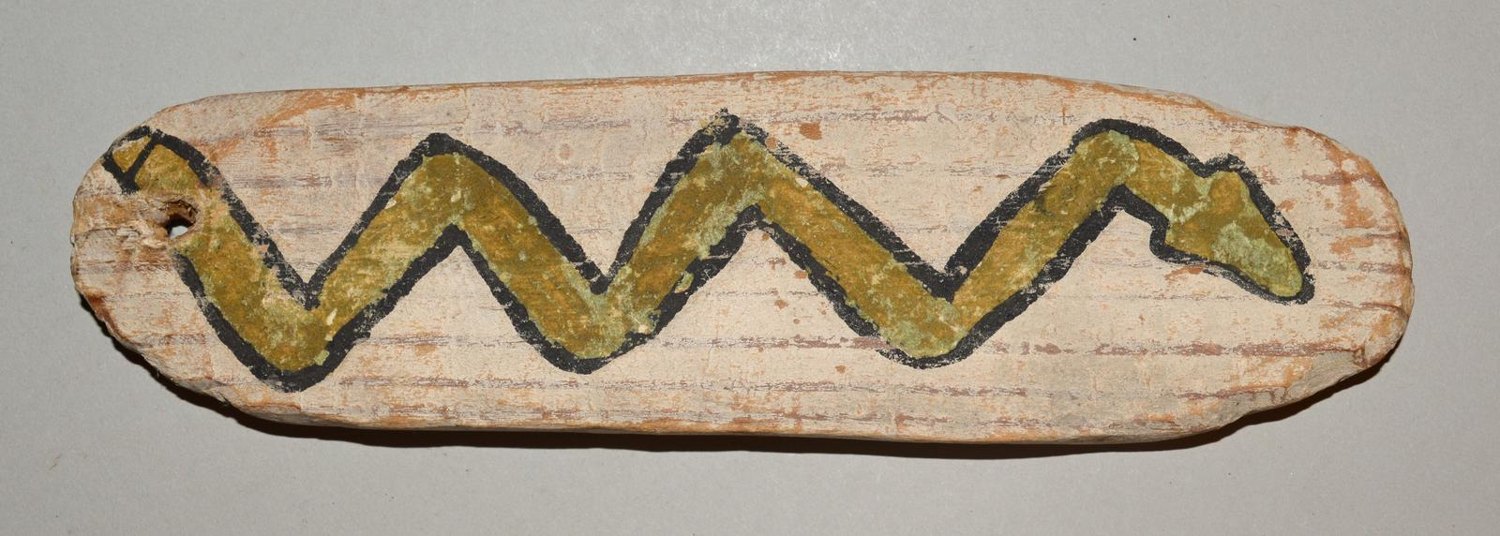
wimo'to
Source term: bull-roarer (wimo'to)
Wimo'to: Stewart's survey-wide Northern Paiute element heading for the bullroarer.
Among the Sawawaktodo-tuviwarai, the 'sagebrush-mountain dwellers' of the middle Humboldt, the roarer was for wind and not for children — the eastern Northern Paiute pattern. Three bands to the north told it the same way: the 'red-butte dwellers' of the Quinn River, the Tago-toka of the Owyhee, and the 'wada-seed eaters' of Malheur Lake.
Particulars
- Object
- A wooden whirrer; not described further.
- Function
- Swung to make the wind blow; toy use denied.
Source
Omer C. Stewart, 'Culture Element Distributions: XIV, Northern Paiute,' Anthropological Records 4:3 (1941), pp. 364, 401 and 403