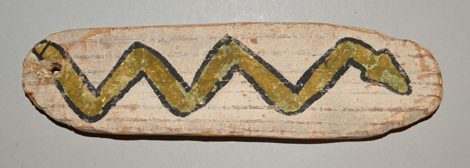
Shared histories · overlapping worlds
Regions
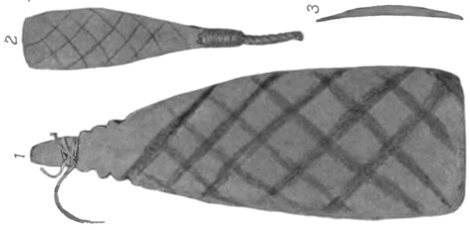
Across the Americas, a whirling board brings thunder, summons spirits and changes what an initiate knows. Across Sahul, it gives ancestral beings a voice. Follow the similarities that make a region.
Begin with a wider world, then explore its regional traditions. These histories overlap: a record can belong to several regions.
Wider worlds
-
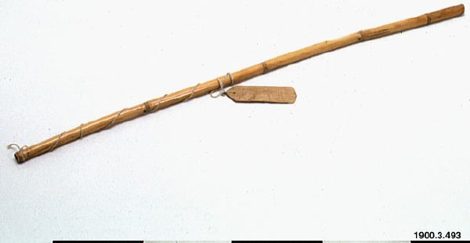
Statens museer for varldskultur / Etnografiska museet (1900.03.0493) · CC BY 4.0
An approaching voice
The Americas
Across the Americas, the circulating blade brings a power into human affairs. It calls weather, announces dancers, makes ancestors audible and moves around the sick. Painted fish receive meals, winter instructors speak with thunder, and children make their own voices. These recurring actions connect a hemisphere of particular traditions.
Explore on the map -
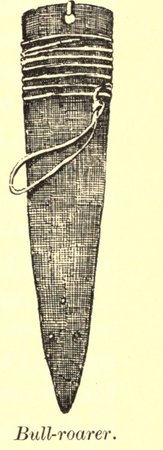
The Franciscan Fathers, St Michaels, Arizona (1910) · Public domain
A voice put to work
North America
From the American Arctic through Mexico and Central America, the bullroarer puts moving air to work. It calls travel weather, turns back rain, closes a healing session, teaches winter knowledge and summons songs from the sea. Children and adults also make toys whose craft belongs to the same broad history.
Explore on the map -
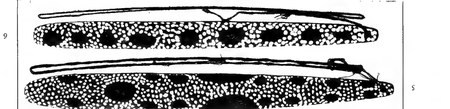
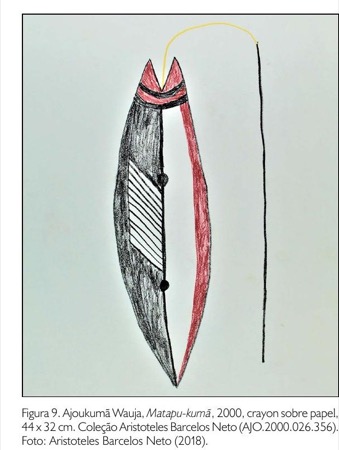
Ajoukuma Wauja, drawing of matapu-kuma (2000), in Aristoteles Barcelos Neto 2021, fig. 9 · CC BY 4.0
Voices that make relations
Amazonia
Across Amazonian forests, headwaters and adjoining Orinoco and Guianas worlds, a whirled voice makes relations audible. It summons jaguar allies, remembers an ancestor, announces a visiting family or speaks the Sun’s marriage law. Food, tobacco, mourning and instruction answer these presences; children also keep the craft of sounding wood alive.
Explore on the map -
Finnish Heritage Agency / Suomen kansallismuseo (K7145:6) · CC BY 4.0
A sound put to work
Europe
Across Europe, the whirling blade carries a useful disturbance: it frightens animals, answers threatening weather and fills the days when church bells fall silent. Children give it the voices of witches, engines and aircraft. Ancient mystery texts and decorated archaeological blades widen this history, while each use retains its own place and occasion.
Explore on the map -
The wind has a voice
Siberia
Across Siberia, whirling sound makes wind and living voices approachable. Mansi and Khanty names ask for wind; Chukchi and Enets forms echo a feather; Even children recognise and reproduce an owl’s speech. Weather work, herders’ tools, children’s learning and musical performance share this practice of giving the surrounding world an audible reply.
Explore on the map -
University Museum of Bergen (E 7772), photo Stine Dornfest, via DigitaltMuseum · CC BY-SA 4.0
A voice that makes a presence
Africa
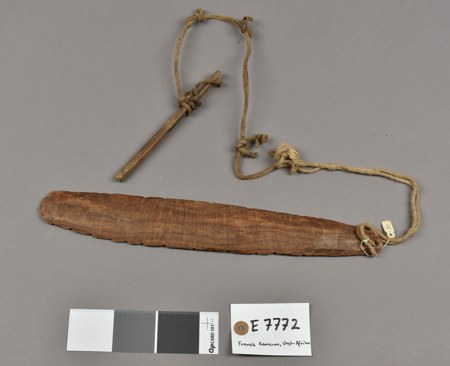
Across Africa, a circulating voice repeatedly turns a being into a presence people must answer: a bush creature, an ancestor, a divinity, a swarm or a rain bird. Kept in groves, houses and forges, the instruments enter streets, schools and fields, carrying obligations through generations and seasons.
Explore on the map -
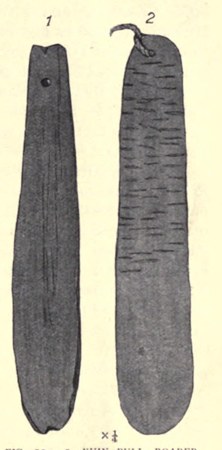
S. C. Roy, Oraon Religion and Customs (1928), illustration 16 · Public domain
A voice with a proper place
South Asia
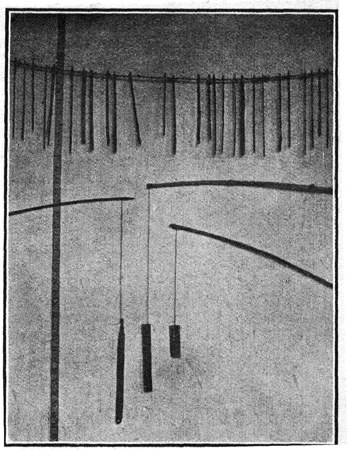
South Asian bullroarers move between children's hands and places with collective obligations. Naga fields welcome a crop guard while a village may forbid its entry; Tripura's enclosed Ker observance gives a bamboo voice its moment; Oraon dormitories keep strings of blades, and Santal boys carry them toward a flowering grove. These practices connect a broad family through the management of consequential sound.
Explore on the map -
Pitt Rivers Museum, University of Oxford (1902.88.100)
At the edge of the field and forest
Southeast Asia
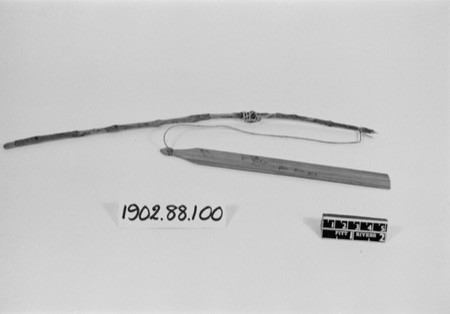
Across mainland and island Southeast Asia, the whirling blade works where cultivated ground meets animals, weather and spirits. Rice-field duets guard the harvest; a tiger's apparent voice frightens elephants or draws a tiger nearer; children turn bamboo into sound. Particular customs connect a wide repertoire of work, play and powerful voices.
Explore on the map -
A. W. Howitt, The Native Tribes of South-East Australia (1904), Fig. 37 · Public domain
Ancestral sound across a continent
Australia
Across Australia, the whirled board repeatedly joins an ancestral being to a living ceremony: it summons people, announces a presence and passes into a novice’s hands. From Cape York’s snake-name to Gippsland’s grandfather, these traditions make sound a form of inherited authority, with distinctive local stories and rules.
Explore on the map -
Christian Döhler and Nakre Abia, frame at 01:18 from the recording 'tci20120914 - Frfr a Kifikifi', Rouku, 14 September 2012 · CC BY-NC 4.0
The unseen being made audible
New Guinea
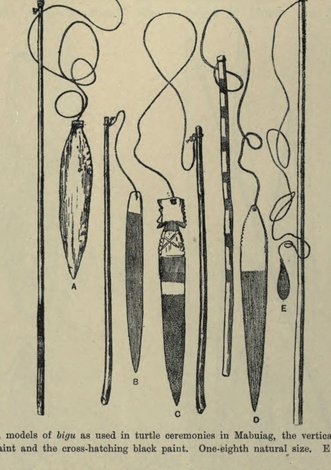
Across New Guinea, a whirled blade can speak for a particular ancestor, a swallowing giant or the dead gathered in a ceremonial house. Initiation reveals its source; origin stories explain who first owned it. The same guarded sound can nourish gardens, settle disputes and give a clan its public voice.
Explore on the map -
Haddon (ed.), Reports Cambridge Anthrop. Exped. Torres Straits IV (1912), Fig. 237 A-D · Public domain
Ancestral voices across the old continent
Sahul
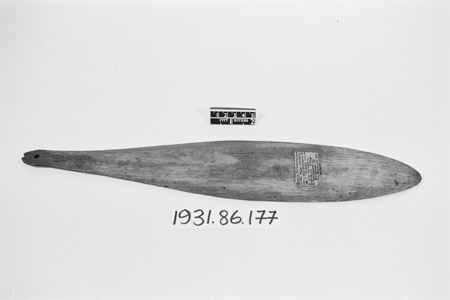
Across Australia and New Guinea, a whirled blade can make an ancestor present, turn a novice into an initiate and embody a right inherited from the first owners. Sahul brings these traditions into one view: voices with names, guarded revelations, and instruments whose stories explain who may hold them.
Explore on the map -
Pitt Rivers Museum, University of Oxford (1931.86.177)
The voice behind the mask
Melanesia
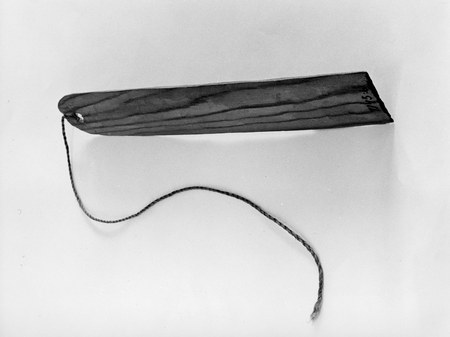
From New Guinea through the Bismarck and Solomon islands to Vanuatu, a whirling instrument lets an unseen being speak. The voice belongs among masks, flutes, houses and the food that supports their ceremonies. Names, initiation and custody give this shared practice its local force; children’s toys and mourning sounds belong to the same larger world.
Explore on the map
Regional traditions
-
Wereldmuseum / NMVW (RV-362-38) · CC BY-SA 4.0
Storm, medicine and assembly
American Southwest
Cloud terraces, lightning paint and sounding wood give storms a portable body across the American Southwest. The blade moves toward springs, around patients and ahead of dancers. Pueblo, Diné, Apache, Yuman and O’odham accounts show how the same circulating voice also gathers mourners and passes into children’s hands.
Explore on the map -
C. K. Meek, The Northern Tribes of Nigeria (1925), vol. II, fig. 94 · Public domain
A presence that takes the street
West Africa
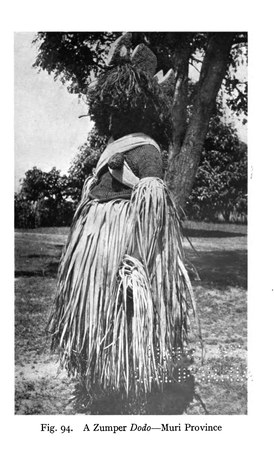
Across West Africa, the roarer gives a hidden being an audible office: it clears a path, summons a society, announces the dead or makes a divinity speak. Forest schools, ancestral graves and sacred forges hold related arrangements of voice and custody, renewed in distinct local institutions.
Explore on the map -
© Pitt Rivers Museum, University of Oxford (acc. 1910.1.185)
The forest teaches through voices
Central Africa
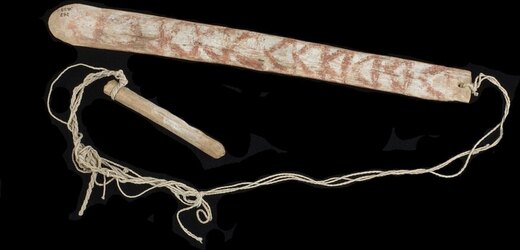
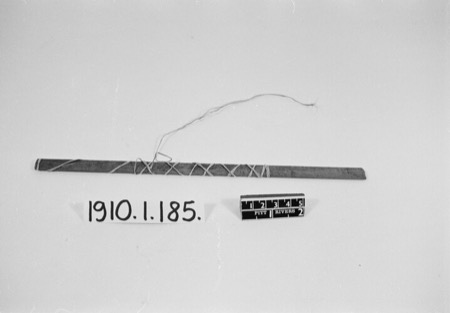
From Cameroon’s ancestral shrines to Congo forest schools, named voices approach people in seclusion and give elders, beasts and ancestors a material presence. Roarers sound with whistles, pipes and masks; learning their source changes a novice’s place in a community. The same craft also serves children, dancers and hunters.
Explore on the map -
W. H. I. Bleek and Lucy C. Lloyd, Specimens of Bushman Folklore (1911), plate 19; drawing by H. Werdelmann · Public domain
Giving abundance a voice
Southern Africa
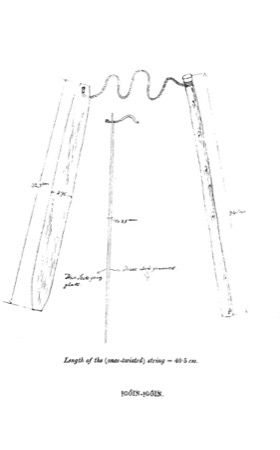
Across Southern Africa, whirling sound acts on growth: bees and honey, weather and crops, and children becoming adults. San swarm voices and rain-beast imagery meet Owambo Big Birds and the lion voices of Angola and Zambia. Children also carry the craft in toys, protection and clapping songs.
Explore on the map
Look more closely
Closer studies
-
Spencer, Native Tribes of the Northern Territory (Macmillan, 1914), Plate II · Public domain
The approaching ancestral voice
Northern Australian Kunapipi / Gunabibi
Across the Roper, Arnhem Land and Daly River ceremonial worlds, named sacred boards announce ancestral presences and bring novices into guarded knowledge. Kunapippi, Gunabibi and Karwadi link revelation, custodianship and transformation; their founders, swallowing beings and histories of ownership remain locally distinct.
Explore on the map -
A. W. Howitt, The Native Tribes of South-East Australia (1904), fig. 29 · Public domain
Thunder with a name
Southeastern Daramulun initiation networks
From the south coast and Monaro to Wiradjuri and Kamilaroi ceremonial country, Daramulun’s voice joins the bullroarer to initiation. Messengers bear the instrument, novices hear it approach, and elders reveal it beside ancestral images. The being’s name connects rites whose instrument-names and performances remain local.
Explore on the map -
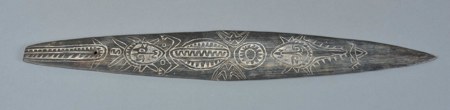
Ethnologisches Museum, Staatliche Museen zu Berlin (VI 29955); photo Anika Niemeck · CC BY-NC-SA 4.0
The dead who swallow the boys
Huon Gulf balum
Around the Huon Gulf, the roarer speaks as an ancestor and a being that swallows boys at circumcision. Bukaua balum, Kai ngosa and Tami kani join instrument, spirit and initiation. Named blades remember particular dead people; related firewood-discovery stories explain how men came to guard the voice.
Explore on the map -
A forest institution heard across the village
Upper Guinea Poro
In the Poro forests of Liberia, a bullroarer could give a hidden official a voice, announce his approach or clear a path for boys under instruction. Gbunde and Ge accounts place it among other manufactured spirit sounds, within institutions that made hearing, seeing and knowing privileges acquired by degrees.
Explore on the map -
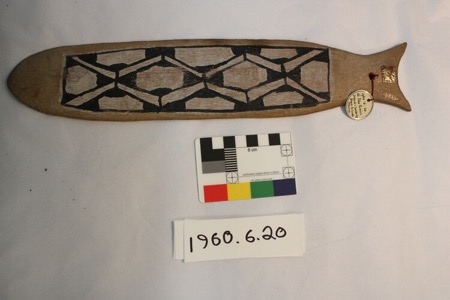
© Pitt Rivers Museum, University of Oxford (acc. 1960.6.20)
Fish, fruit trees and a shared ceremonial world
Upper Xingu
Across the Upper Xingu, bullroarers link fish-shaped bodies, shared names and the pequi harvest. Mehinaku, Wauja, Kamayurá and Trumai accounts place them in exchanges among people, spirits and fruit trees, while older Nahukuá demonstrations and painted toys show the same instrument moving through public village life.
Explore on the map -
© The Trustees of the British Museum, Am1891,0612.21 · CC BY-NC-SA 4.0
Thunder along the trail, at the spring and in the kiva
Hopi Snake–Antelope
In specifically documented Hopi Snake–Antelope ceremonies, bullroarers join lightning frames, rain-cloud forms and journeys for water. Walpi, Mishongnovi, Oraibi and Shipaulovi accounts place the sound in warriors’ hands and along ceremonial routes, making thunder part of a prayer for corn, rain and the flourishing of living things.
Explore on the map