No. MUS2026-264
Upper Xingu painted toy blade
Brazil · Upper Xingu River · Mato Grosso · South America · Amazonia
Play / practical
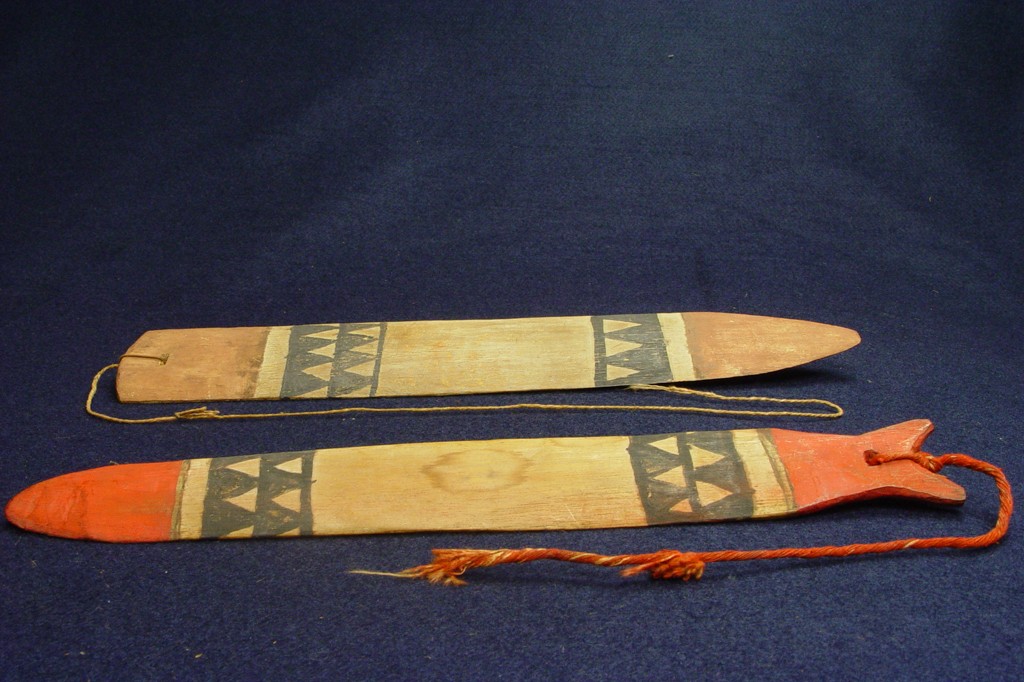
Source term: Bullroarer
In the Upper Xingu the dangerous voice belongs to the flutes, not to this. Karl von den Steinen watched Nahuqua men whirl their roarers on the open village plaza in all unconcern, as they would any everyday tool, and nobody drove the women off; on the Kulisehu the same whirring board went to the children. Forty-five centimetres of wood carries that easy status here — black triangles, some solid and some outlined, marching across both faces, brown stain sealing the ends and edges. Painters there gave other roarers the hissing snake, zigzagged down the blade, much as they gave flutes the fluting monkey.
Particulars
- Object
- Wooden toy blade, 45 × 8.8 cm; brown-stained ends and edges, with black solid and outlined triangles across both faces.
- Function
- A toy.
Source
Penn Museum 58-17-128; Upper Xingu River, Mato Grosso, Brazil; bequest of Harry B. Wright, 1958; catalogued “Toy; Bull-Roarer.”