No. MCKENNAN1959-001North America
Nabesna John's pole-mounted roarer
United States · Alaska · Upper Tanana River · Nabesna · North America · Subarctic
Sacred / spirit
- Toy / secular survival
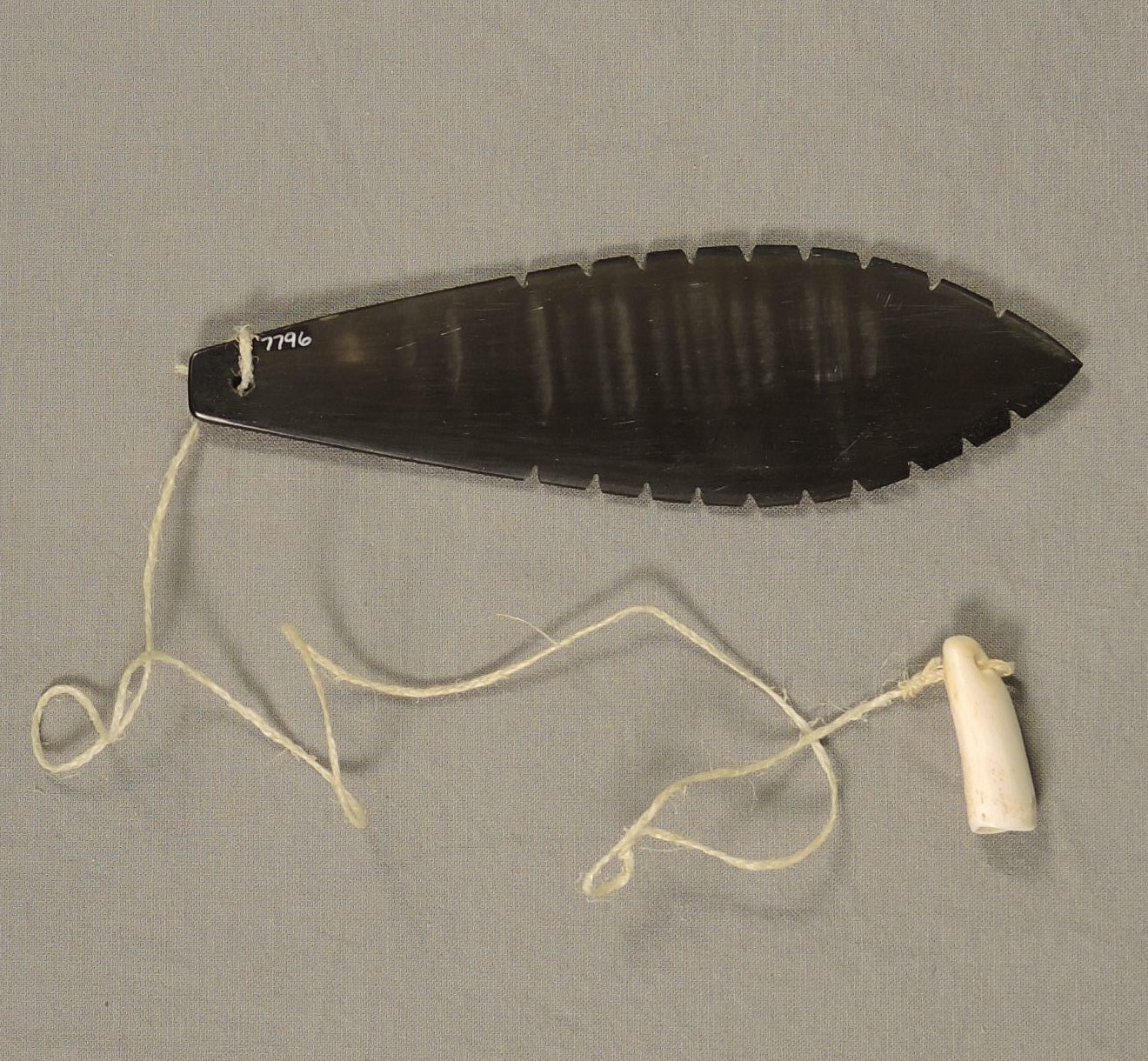
Source term: bull-roarer
For Upper Tanana children, the bullroarer was commonly a toy. Nabesna John gave the same form another life. McKennan watched the shaman mount a roarer on a long stave for seances, whirl it gently as a ceremony ended, and later use it to purify a cabin so a visiting mail carrier would not bring disease spirits inside. The practice, McKennan cautioned, was John’s own.
John purified his cabin with the aid of his bull-roarer
McKennan 1959:154
Particulars
- Object
- Thin ovate wooden board with notched edges, attached by babiche to a handle; McKennan figures the Hood blade (42.41.8528) at 14 × 2 inches, now restrung with nylon. On the seance stave's roarer a swastika was painted on one side and a crude sketch of a moose, John's medicine animal, on the other.
- Function
- Commonly used as a toy; McKennan personally saw the shaman Nabesna John use one on a long pole during seances and to purify a cabin against disease spirits.
Discussed in 2 essays
 The Living Double
 The Wood That Speaks
Source
Robert A. McKennan, The Upper Tanana Indians (1959), fig. 4B and pp. 44–45, 102, 152–154; Hood Museum 42.41.8528
Nearby in the atlas
 Chandalar storm-turning bullroarerUnited States · Alaska / East Fork Chandalar and upper Sheenjek drainages · Weather / fertility magic
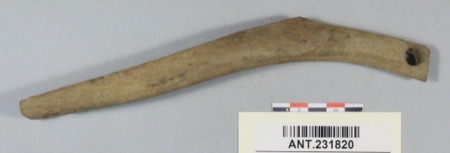 That which speaks, that which blowsUnited States · Alaska, Copper River basin · Function not recorded
- Dividing Point, Alaska antler bullroarer, Yale PeabodyUnited States · Alaska / Yukon-Koyukuk Census Area / Dividing Point · Function not recorded
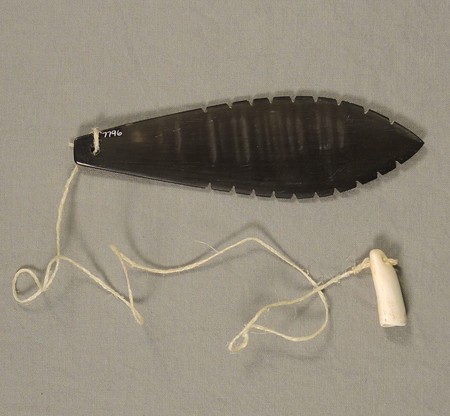 Notniboddhi, the spinning oneUnited States · Middle Tanana Valley: Minto Flats, Nenana and Chena rivers, interior Alaska · Function not recorded
- Nilmile, made by handUnited States · Upper Kuskokwim River: Nikolai and Telida, interior Alaska · Function not recorded
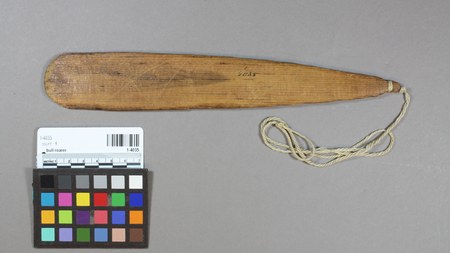 Foothill Yokuts himhimna, doctor's tool and playthingUnited States · Sierra Nevada foothills from Coarse Gold Creek and the Fresno River south across the Kings, Kaweah and Tule rivers to Poso Creek; Madera, Fresno, Tulare and Kern counties, California · Sacred / spirit