Cloud terraces, lightning paint and sounding wood give storms a portable body across the American Southwest. The blade moves toward springs, around patients and ahead of dancers. Pueblo, Diné, Apache, Yuman and O’odham accounts show how the same circulating voice also gathers mourners and passes into children’s hands.
An Oraibi water carrier descends the mesa toward a spring. Before reaching the water he whirls a wooden blade and blows an eagle-bone whistle, announcing himself to Balölökongwuu, the plumed water serpent, and to the Clouds. The offerings and the water he will bring back belong to the Summer Snake ceremony. His prayer embraces corn, other plants, animals and the well-being of living things. Voth learned the spring itinerary from the priest: the sounding instrument already acts beyond the kiva, carrying an address down into the landscape.
That journey exposes a powerful regional arrangement. A bullroarer gives wind, thunder or an approaching presence a body that someone can carry and move. Sound joins painted lightning, storm-touched wood, a circuit of the four quarters or a vessel of water. The action reaches from rain and crops into sickness, the coming of masked dancers and the gathering of mourners. This account follows that repertoire through the Pueblo–Diné–Apache country, the Sonoran desert and lower Colorado, with their southern Californian and Colorado Plateau neighbours. 1, 6, 10, 4
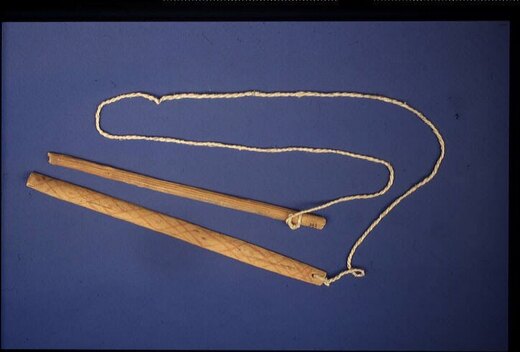
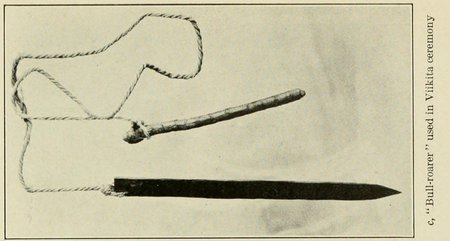
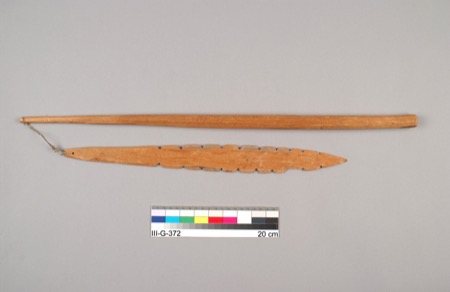
At the O’odham Viikita, sound assembled people as well as weather. Densmore described men signalling with cactus blades on three-foot cords and greasewood handles; sixty or more were sounding when the people entered the enclosure. Their noise resembled thunder and the sounds within clouds. Representations of things desired in abundance were carried in processions. The blade she illustrated was fourteen inches long, painted a solid colour, and kept among the ceremonial articles from year to year. The storm’s voice belonged to a gathering whose desired harvest was given visible form. 4
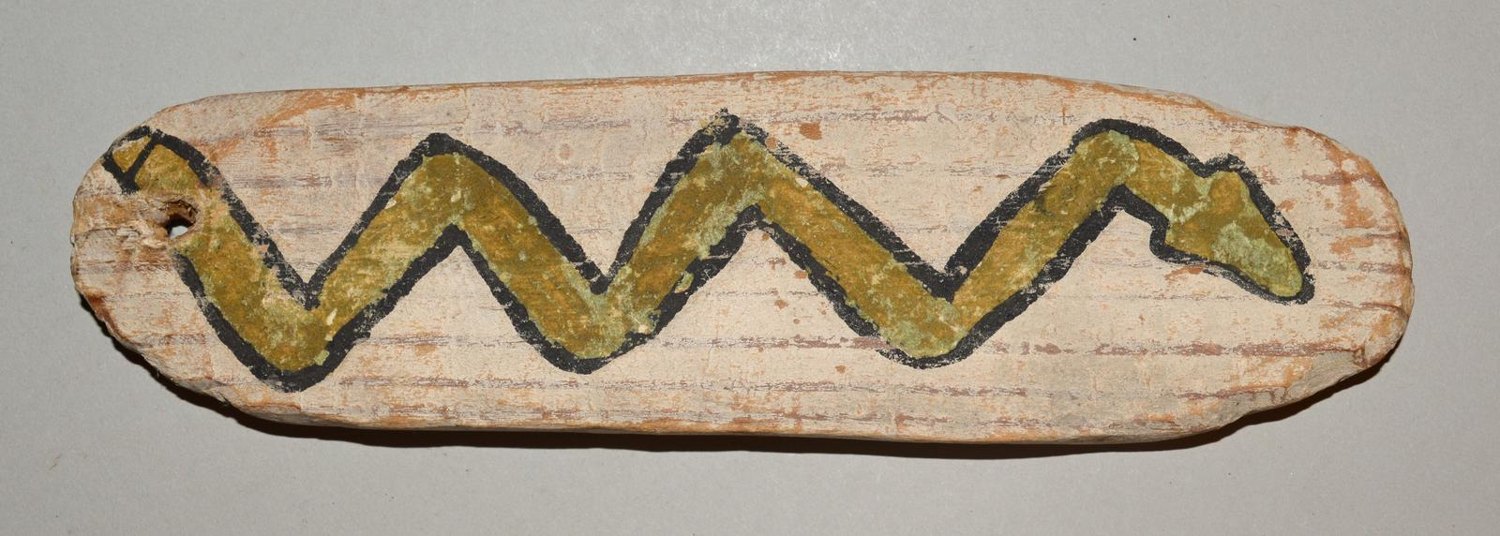
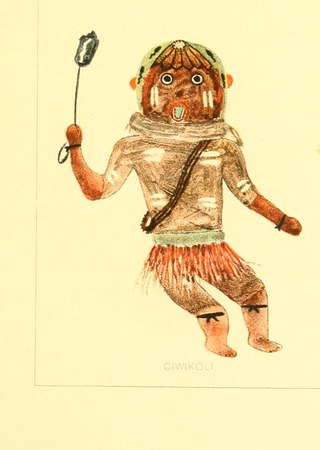
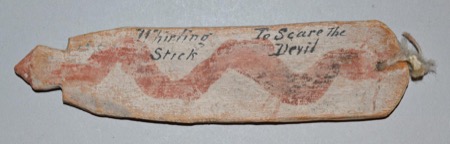
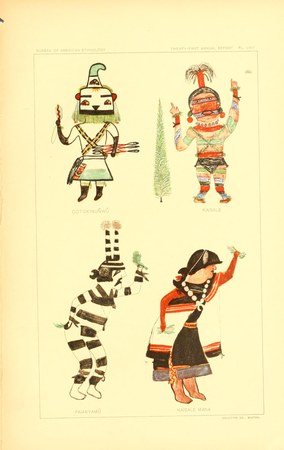
Hopi performers assembled a storm in several media. A cloud-terraced end and painted lightning made the flat board a picture of what its sound brought near. Warriors could wear black lightning marks on their arms; the bullroarer accompanied their ceremonial work. Parsons also described Snake men extending a jointed lightning frame toward the east or the kiva hatch while swinging the rhombus: visible lightning and audible thunder worked together. The same instrument occurs beyond Snake–Antelope, among Flute and Water Serpent ceremonial equipment. Its regional story is larger than one dance. 1, 2, 6, 19
At Zuni, Stevenson explained that whirling the rhombus excited the u’wannami, the rain-makers. At Laguna, Parsons placed it in rain ceremonial and recorded an unexpected second motion: the whizzer stirred suds and served as a sprinkler. A blade that moves air can therefore enter water directly. Calling clouds and scattering their hoped-for gift belong to the same ritual work, although Laguna’s suds-stirring is its own particular practice. 5, 6
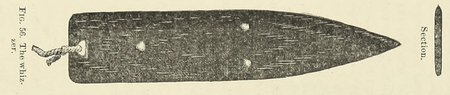
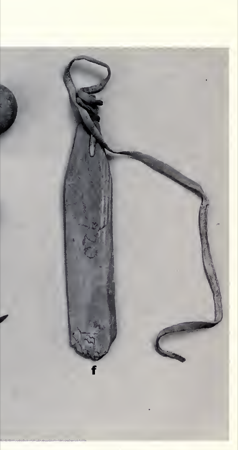
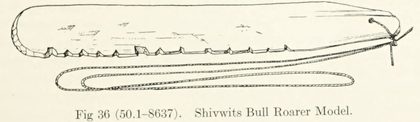
At Zia the háomomo was seven inches of wood, thick at the centre and thin at the edges, on a stout cord and handle. White’s consultants said it imitated thunder. The Fire, Kapina and Giant societies owned one, possibly the Flint society too; the Snake society could borrow the Kapinas’ instrument. Here an audible storm had an institutional address. Ownership and borrowing explain who could supply its voice; White’s statement establishes thunder-making without assigning every Zia sounding a rain-making purpose. 7
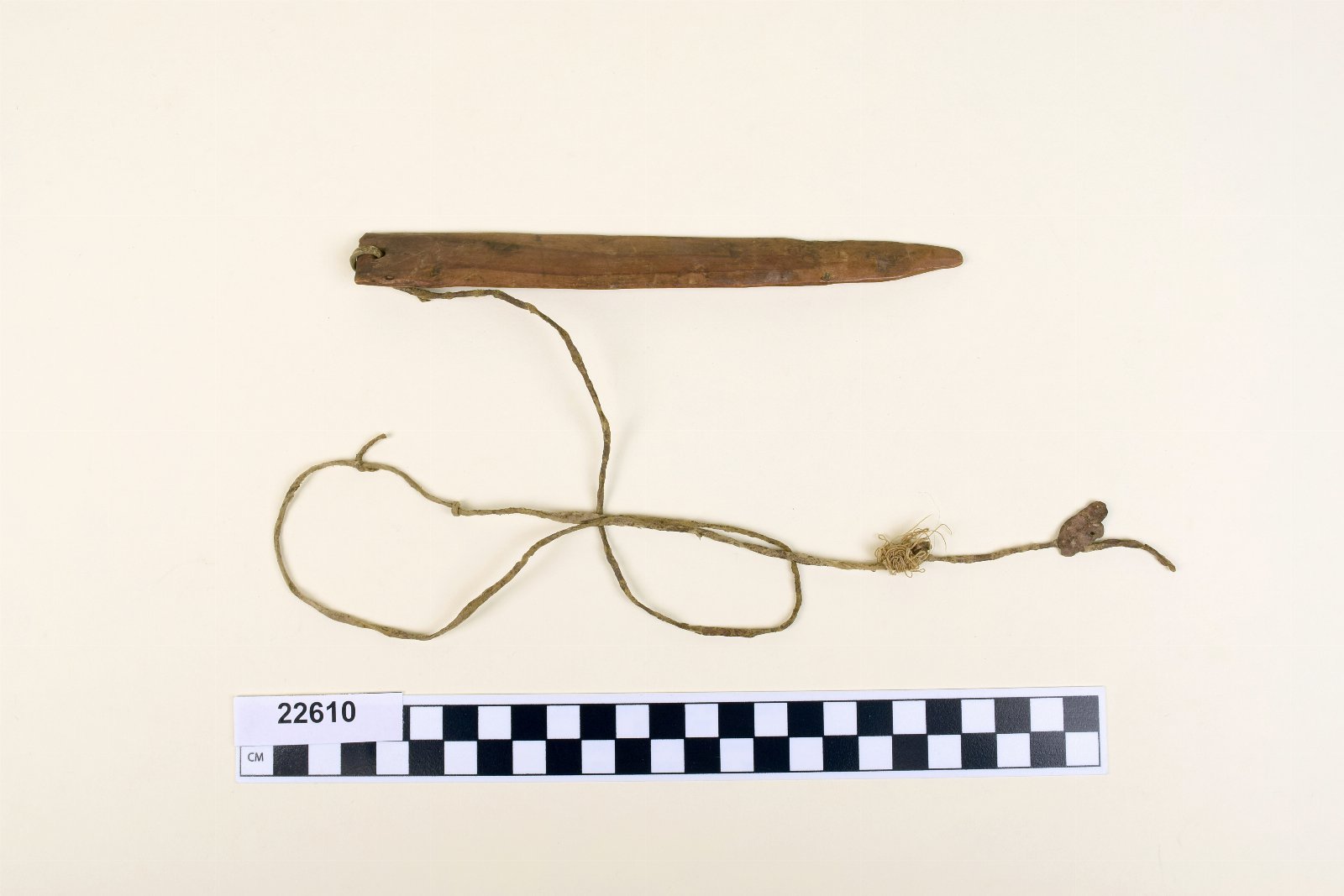
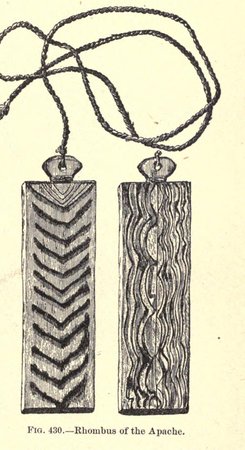
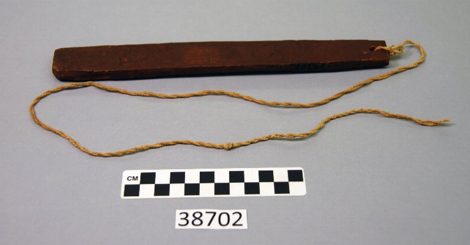
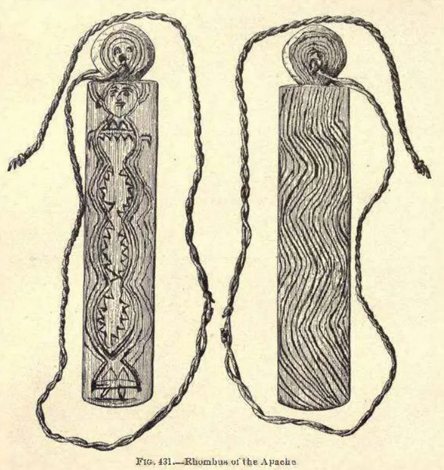
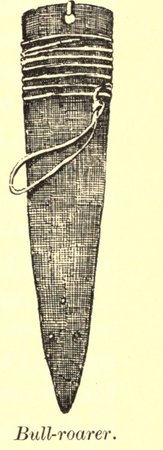
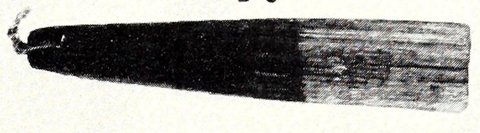
Bourke’s San Carlos Apache board resembled a small human figure: the cord passed through its rounded head. His consultants identified lines on its front as the wind god’s entrails, and the multicoloured marks behind as the god’s hair, meaning lightning. He heard the tzi-ditindi, sounding wood, in a drought procession in 1884. He was less certain of the report that medicine-men made it from lightning-struck pine or fir. The bodily painting is the firmer explanation: a moving slat can make a wind being materially present. 3
Diné chanters gave storm wood another body. Matthews described the tsin-di’ni, groaning stick, as black and sparkling with specular iron ore, with three pieces of turquoise for eyes and mouth. Its pine had to have been struck by lightning. He saw it accompany successive dances of the Mountain Chant, alongside choristers, wands and masked performers. Wood, mineral glitter and a face made the voice’s bearer as carefully as a mask makes a dancer. 8
In a Diné curing description, the thong is prepared in a medicine bowl before an assistant circles the hogan, violently whirling the instrument while everyone inside remains silent. Afterwards the wrapped blade is applied to the patient’s limbs. Motion establishes a surrounding space; contact brings the prepared object to the body. Northern Tonto shamans likewise sounded toward the four cardinal points before entering a patient’s house. Against widespread sickness, a Southern Tonto shaman travelled east, south, west and north, whirling at each turn. 9, 10
Jim amuukyat, a Northeastern Yavapai healer, explained the journey especially clearly. He whirled his i’ikwauwa to send his power ahead to a sick person, then followed and sounded outside the house. Eastern cloud, lightning and thunder signalled recovery. His white-coated lightning-struck pine blade carried a red zigzag on one face and an X for Skatakaamcha’s heart on the other. The weather signs here announce a cure. They show how a storm’s material vocabulary can enter medicine without making the cure a request for rain. 11
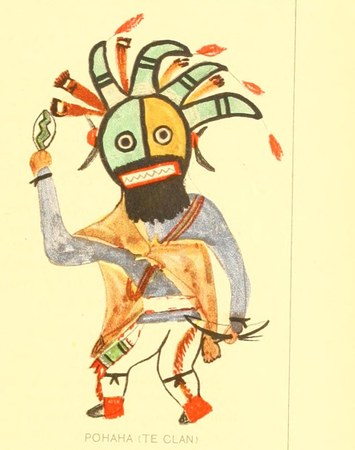
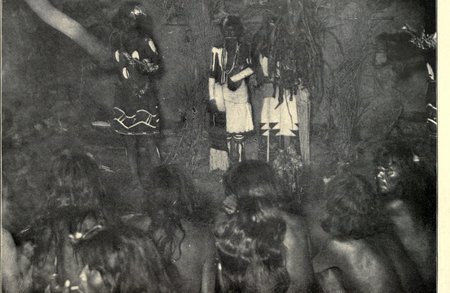
Among the Eastern White Mountain Apache the clown sounded before the masked Gaan arrived, then kept whirling during their dance. The instrument was visible. Gifford’s San Carlos account places the clown beside mountain-spirit impersonators at a night dance to help cure a woman; spectators even retrieved a bullroarer that flew off its cord during another curing performance. Announcement and healing meet in a public event. A sound can prepare people for a spirit’s arrival without concealing how it is made. 10
Further west, three swings could gather people for the dead. Waterman described the Diegueño Clothes Burning ceremony’s assembly signal: the operator sent the blade through the air three times. Its greasewood board hung on milkweed-fibre cord. The mourning gathering and the Apache dancers shared an order of approach—sound first, assembled action afterwards—while the occasions and those entitled to act remained local. 12
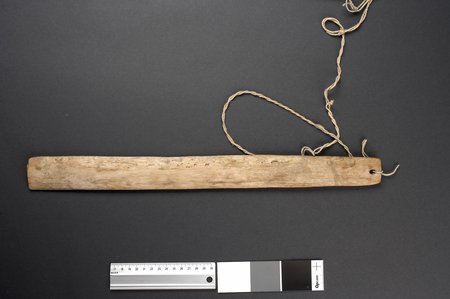
Children belong inside this regional history. Chemehuevi testimony distinguished wooden toy boards from notched mountain-sheep-horn rain instruments. Mohave and Quechan consultants described toys and remembered relatively recent arrival. Gifford’s Shaiahene Chiricahua list specifies an eighteen-inch sotol-stalk blade used only for play; Llanero Jicarilla men and boys played while women could watch. These were positive accounts of what people did with sound, with their own materials and rules. 14, 13, 10
On the northern margin, San Juan Southern Paiute consultants joined toy use to stopping wind, effective in the hands of someone born in summer. The Wimönuntci Ute account placed a similar seasonal qualification on raising wind and clearing clouds. The player’s birth, the material of the blade and the direction of the desired change all mattered. A child holding the instrument need not be outside the weather-working world. 15
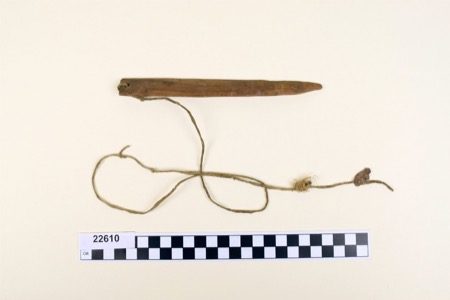
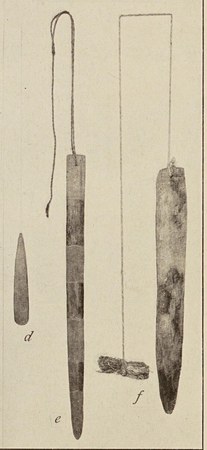
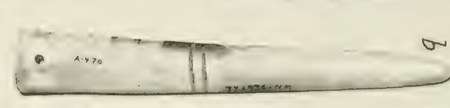
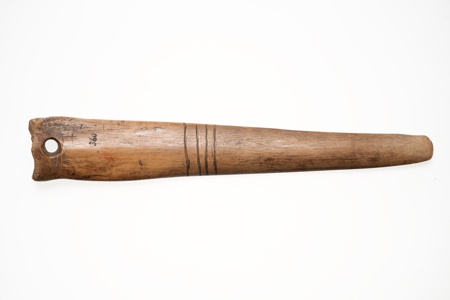
Dry caves preserve another depth of this repertoire. Hough published painted wooden bullroarers among prayer offerings from Bear Creek Cave above the Blue River, comparing their shapes with Hopi and Zuni instruments. At Pueblo del Arroyo, Zuni excavation workers recognized an elk-bone blade as a bullroarer despite its transverse incisions and unfamiliar material. Their recognition supplies a living comparison; it does not establish the Chaco object’s ancient rite. The surviving forms bring older craftsmanship into view while the ceremonies supply the meaning of historically documented blades. 16, 17
Loeb used the Southwest in his wider comparison of bullroarers and ceremonial institutions. The regional evidence supports a strong comparison of its own: people move a prepared voice toward water, a patient, an arriving dancer or an assembled community. The blade’s storm body can serve several of those purposes, and children can learn its craft alongside them. That recurring relation between material, movement and response makes the Southwest an especially coherent part of the American bullroarer world. 18, 6, 10
The Walpi Snake Dance re-enacts Tiyo’s journey to the underworld, where Spider Woman guided him into the kiva of the Snake people and he learned the songs and prayers that bring corn and rain. In 1901 a newly initiated boy no more than five stopped in the procession and sounded a flat wooden…
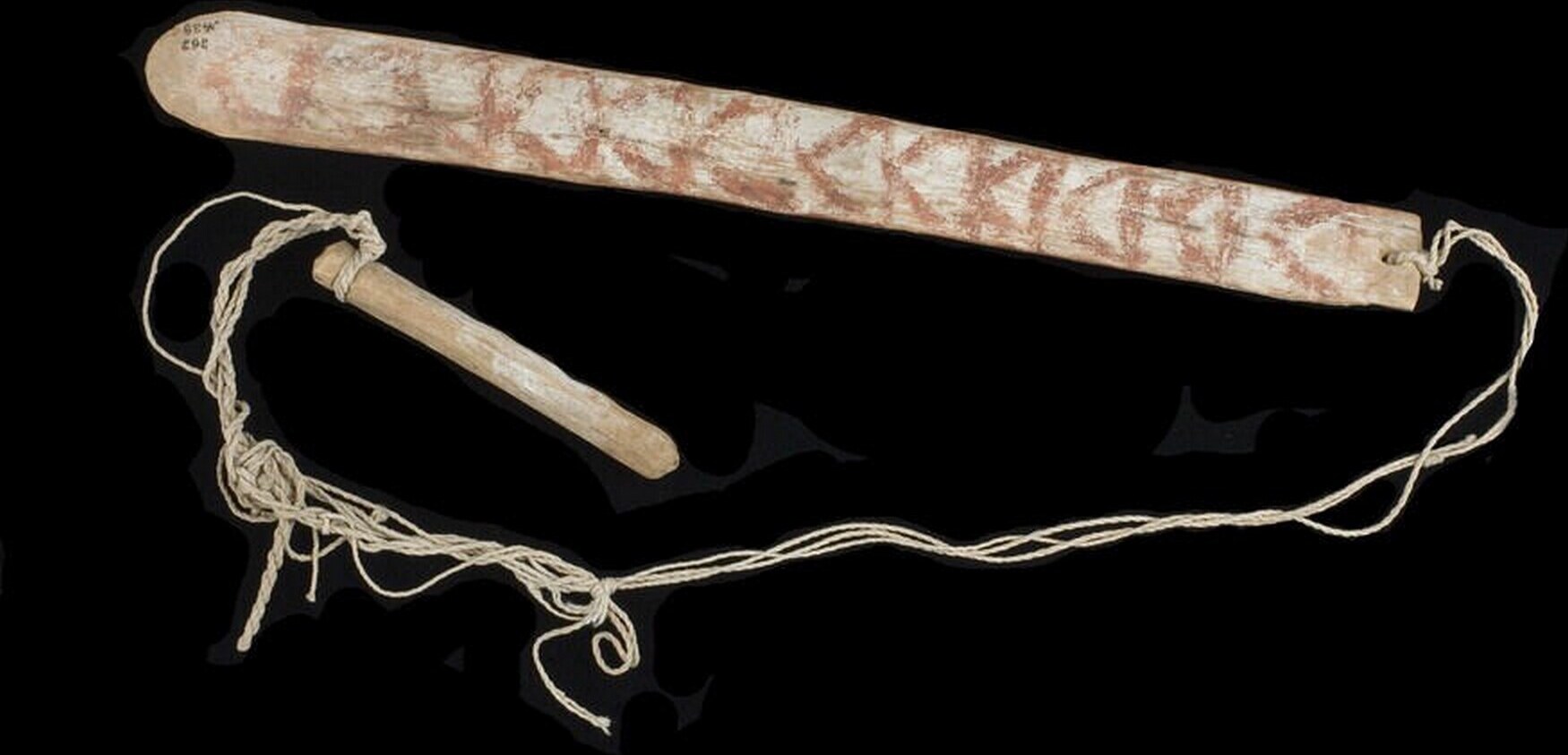
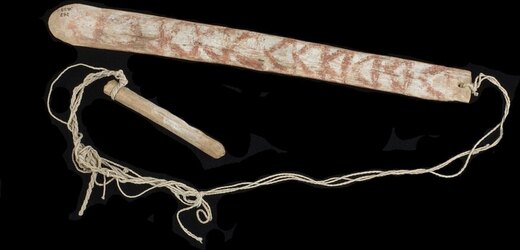
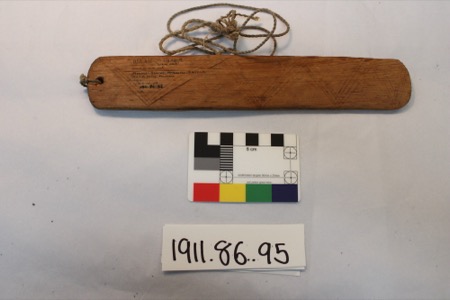
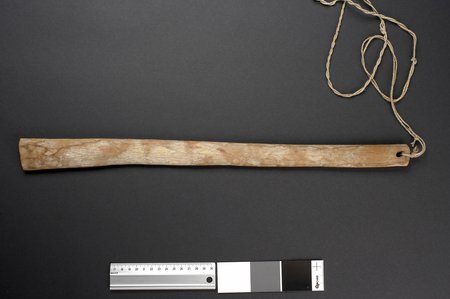
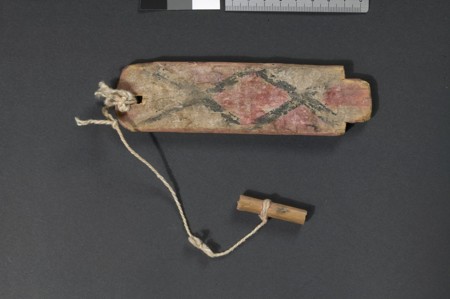
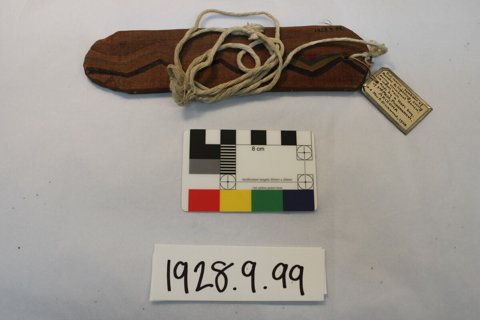
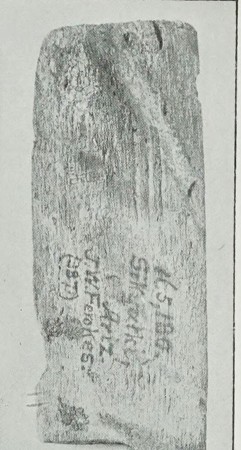
Reddish-brown designs on a white ground run down this wooden blade — curved cross-stripes on one face, a chain of triangles on the other — and its cord still joins it to the short handle that set it humming. The old label on the Papago object said the sound drove away evil spirits. In the wider…
One morning in the early 1880s Frank Cushing heard a deep whirring noise and ran out to find three Bow priests in plumed helmets carrying a ferocious war-god idol down the street, one man twirling a sounding slat behind them, while hundreds of Zuni climbed to the rooftops to bow their heads and…
Laguna stands alone among the Keres pueblos: when Elsie Clews Parsons drew up her great synthesis of Pueblo religion, this was the only Keresan town where the whizzer had ever been noted — and almost the only place east of the mesas, for as she put it, the instrument 'has not been noted among other…
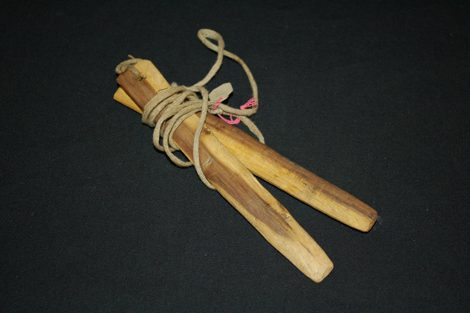
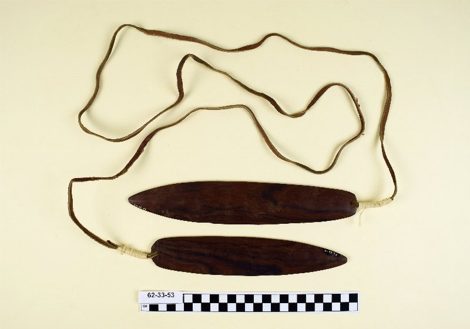
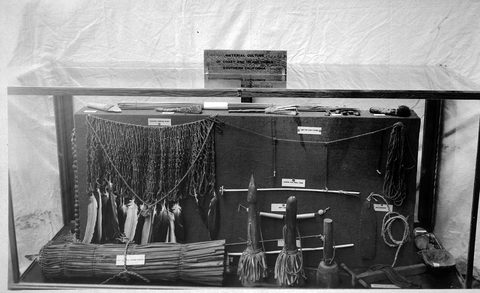
Representative — not this record’s object · Zuni bull-roarers (bundle), New Mexico
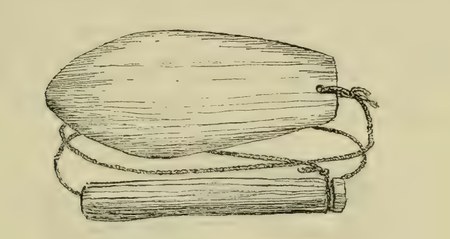
Leslie A. White, The Pueblo of Sia, BAE Bulletin 184 (1962), fig. 50 · Public domain
At Zia Pueblo the háomomo made thunder by hand. Its seven-inch wooden blade was thick through the middle and pared thin at the edges, tied by three feet of stout cord to a wooden handle. Whirled hard, it voiced the storm: Zia informants told Leslie White its noise imitated thunder. These were not…
J. W. Powell / J. G. Bourke (1892) · Public domain
In 1884 the season near the San Carlos Agency in Arizona had been unusually dry and the crops were parched, so the Apache medicine-men arranged a procession, two of its features being a long-handled cross and a rhombus, or bull-roarer. Captain John G. Bourke, who recorded the rite, had first seen…
J. W. Fewkes, Archeological Expedition to Arizona in 1895 (17th Annual Report of the Bureau of American Ethnology, pt. 2, 1898), plate CLXXV, fig. s · Public domain
Printed p. 138, quoted by A. B. Elsasser, Archaeological Evidence of Shamanism in California and Nevada, p. 38: wooden toys versus notched sheep-horn rain instruments.
Printed pp. 284–285: Southwestern weather and toy comparison; diffusion of an initiation complex is a historical proposal, not an inference from every sounding toy.