No. HAD1898-009
Point Barrow Eskimo toy bullroarer
United States · Point Barrow, Alaska · North America · Arctic
Play / practical
Source term: bull-roarer
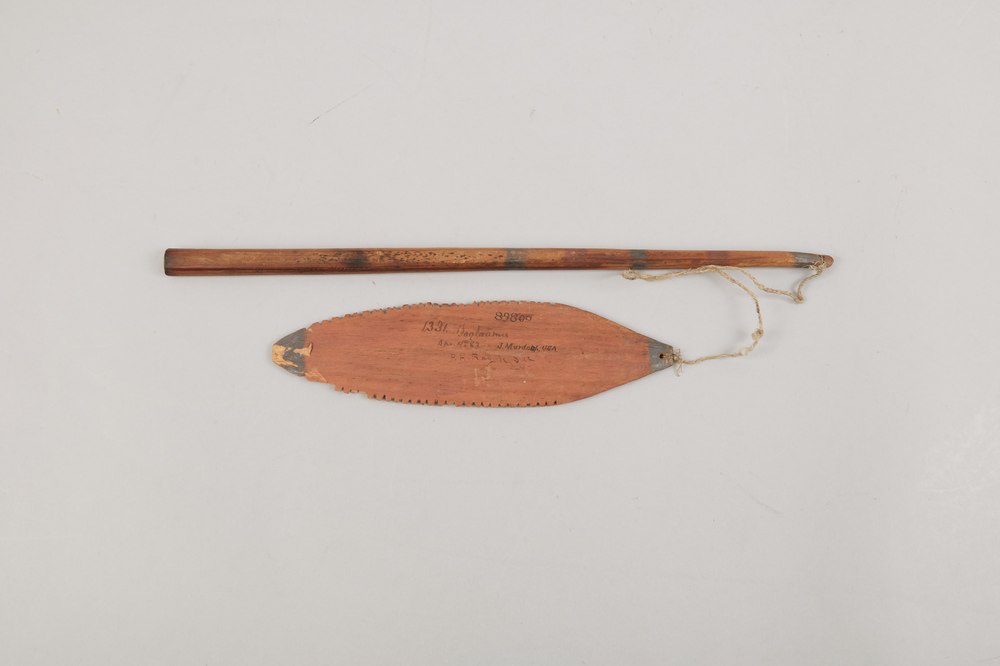
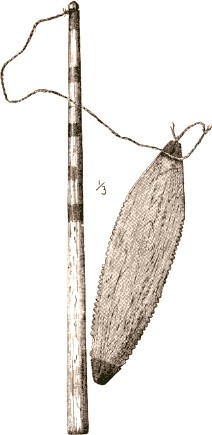
At Utkiavwĭñ, near Point Barrow, the naturalist John Murdoch obtained the well-known "whizzing-stick" the children often played with: a thin board of pine wood, painted with black lead and red ocher and fastened by about a foot of braided sinew to a slender rod that served as a handle. Swung rapidly round, it made a loud, whizzing sound. The Eskimo called it ĭmĭglúta. Murdoch knew the instrument as the one found in widely distant parts of the world and often used in religious ceremonies, but recorded that here it was nothing of the kind: "This appears to be purely a child's toy and has no mystical signification. I never saw one in the hands of an adult." The specimen (no. 89800), collected for the International Polar Expedition of 1881-1883, had been made and brought over for sale by a lad about thirteen or fourteen years old. Alfred Haddon later reproduced the Point Barrow example, citing Murdoch, in his 1898 survey of the bull-roarer.
Particulars
- Object
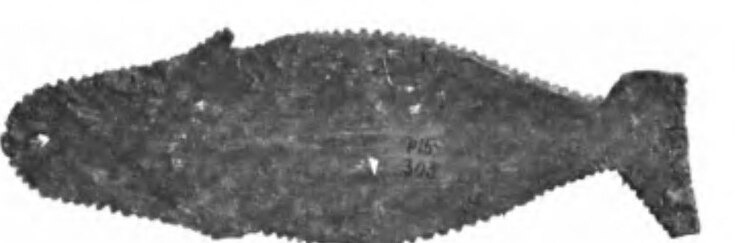
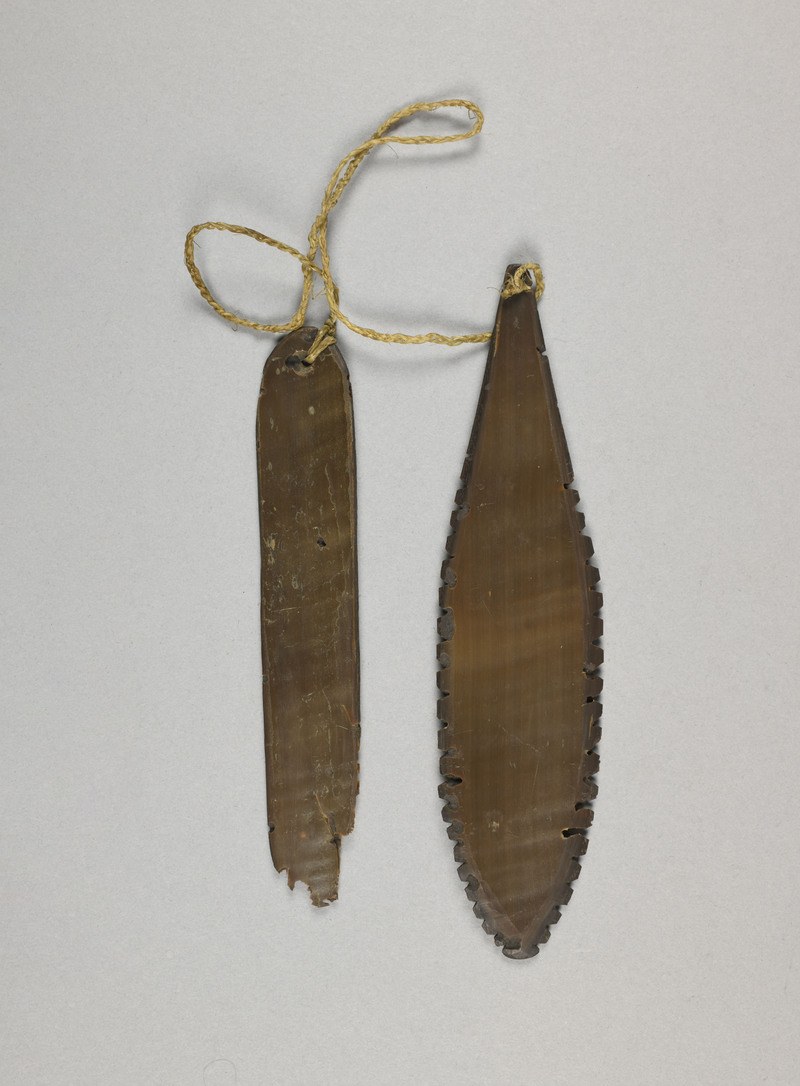
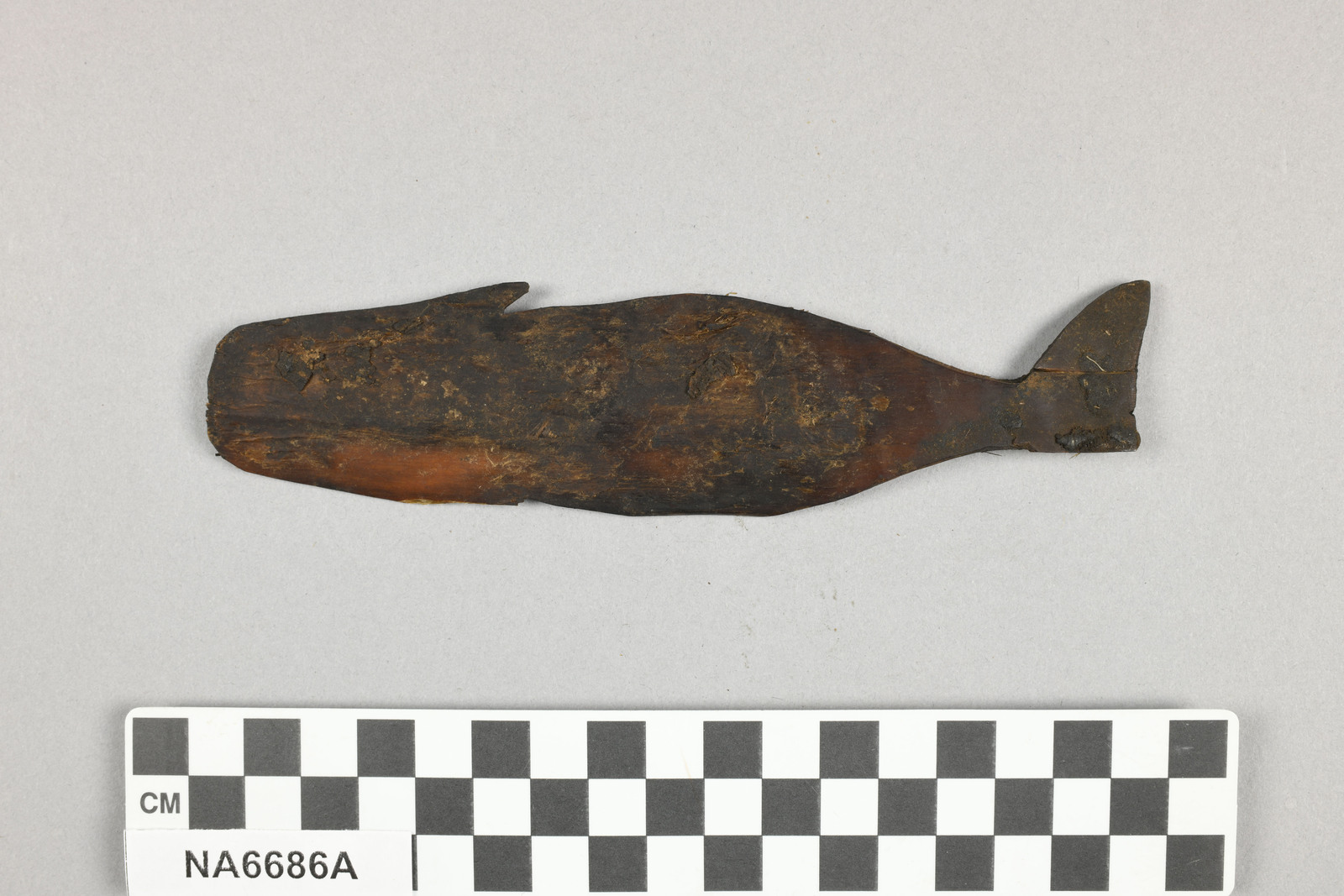
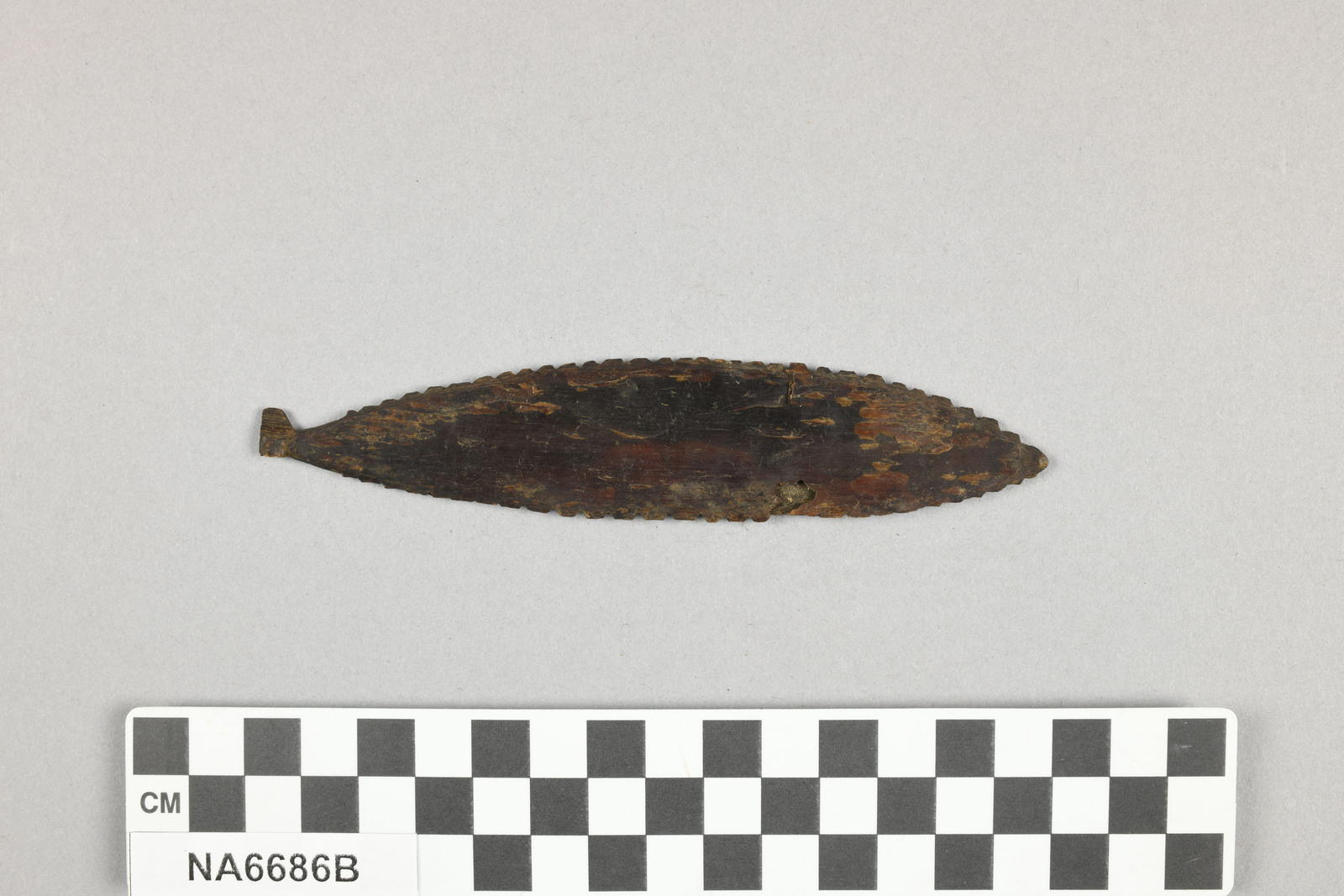
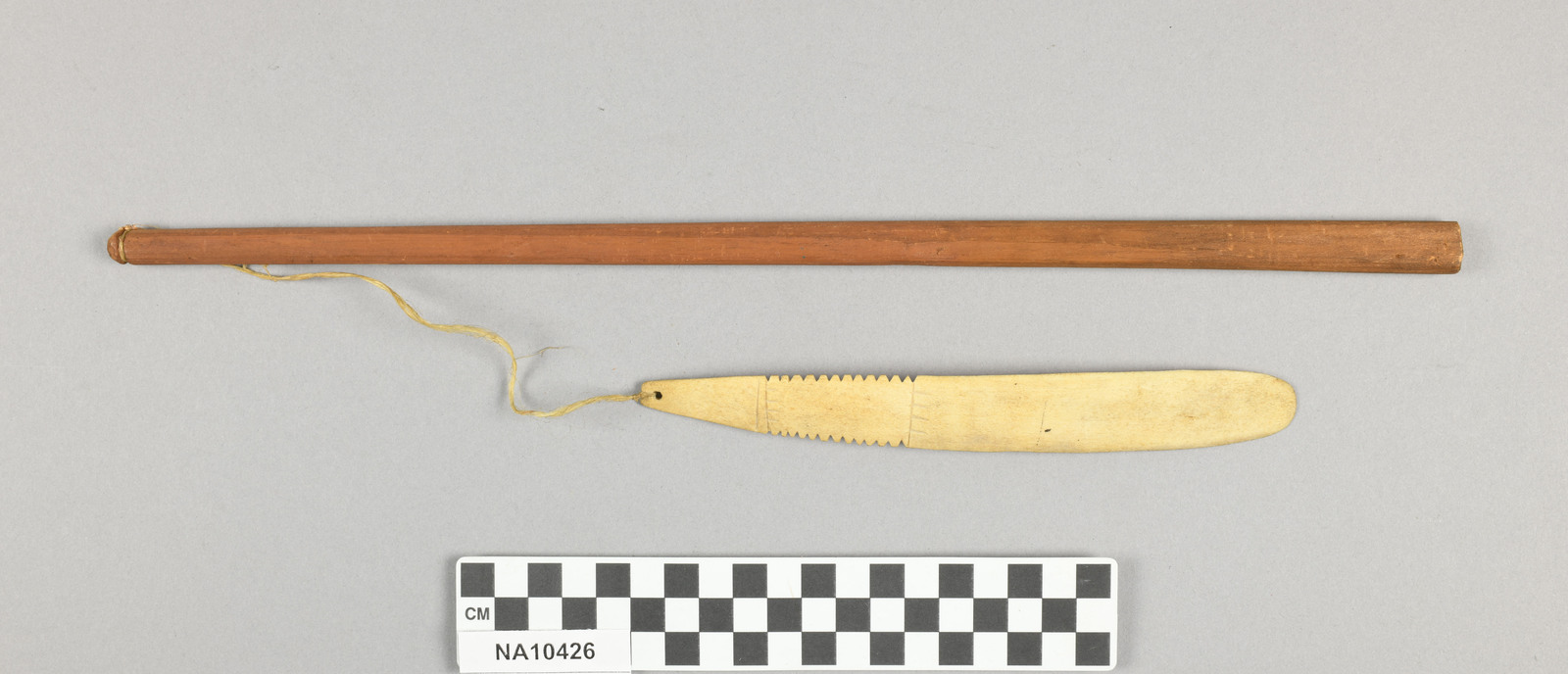
- A thin board of pine, painted with black lead and red ocher, fastened by about a foot of braided sinew to a slender rod handle. Three more blades came from the same place with William Blair Van Valin's 1919 Wanamaker Expedition (Penn Museum NA6686A-B, NA10426): one of whalebone cut to the outline of a whale, a slim notch-edged whalebone ellipse, and a bone blade tied with sinew to a long wooden rod handle.
- Function
- A child's toy.
Source
Murdoch 1892, "Ethnological Results of the Point Barrow Expedition," Ninth Annual Report of the Bureau of Ethnology to the Secretary of the Smithsonian Institution, 1887-88 (Washington: GPO, 1892)