No. JSTEWARD1941-002
Ash Meadows Southern Paiute bullroarer
United States · Ash Meadows, Amargosa Valley, Nye County, Nevada · North America · Great Basin
Function not recorded
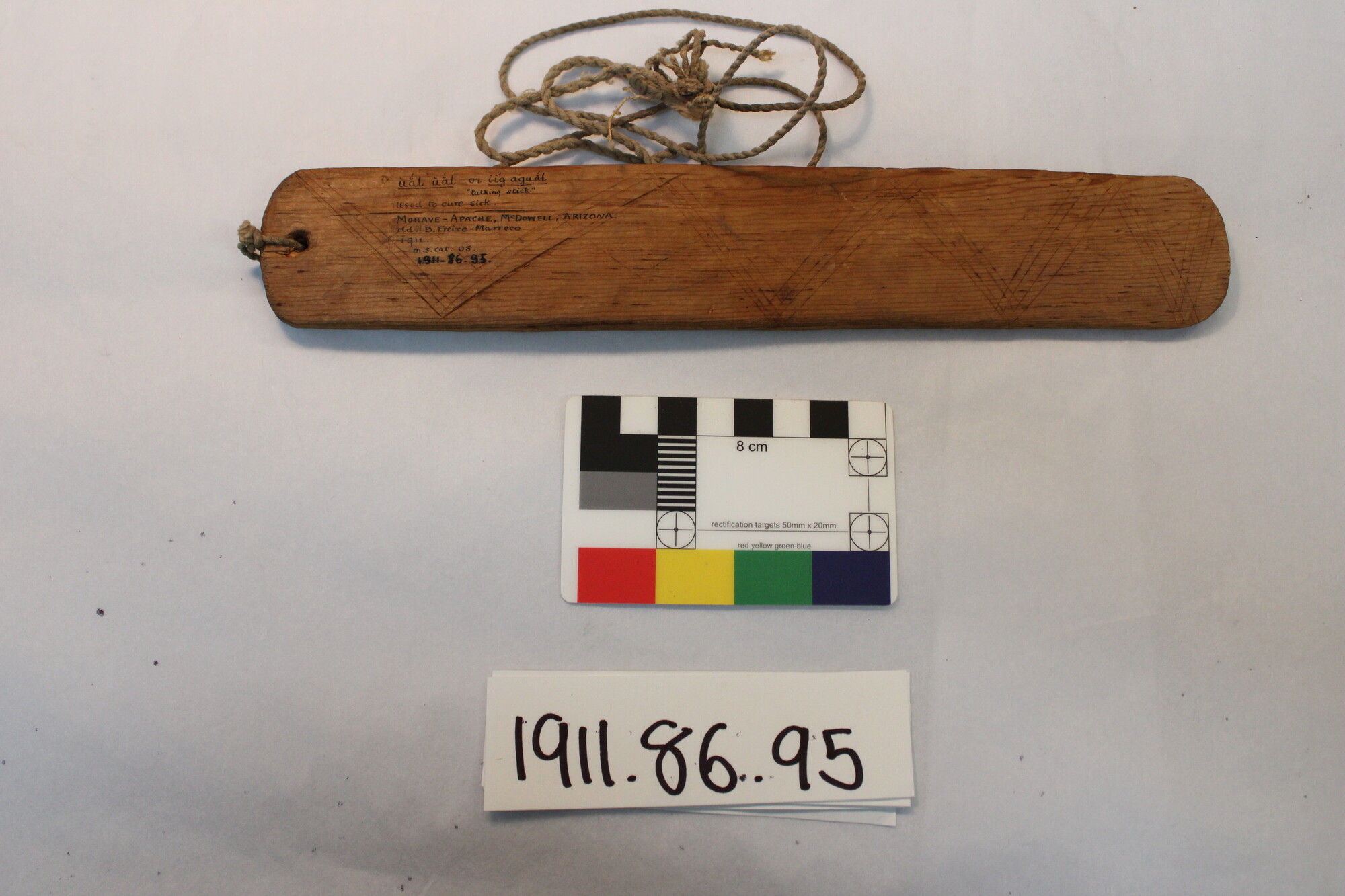
Source term: Bull-roarer
Ash Meadows stood at the northwestern edge of native farming in the desert West. Its Southern Paiute families planted corn, squash, beans and sunflowers in small plots on moist ground by the springs, owned their own groves of mesquite and screw bean, and destroyed a field when its owner died, even with the harvest days away. The bullroarer was known here too. Most of what was remembered of this life came from a Southern Paiute woman raised at Pahrump who spoke little English; her husband passed it on.
Particulars
- Object
- Not described; the Great Basin form is a flat wooden slat swung on a cord from a short handle stick.
- Function
- Not recorded.
Sources
- Julian H. Steward, 'Culture Element Distributions: XIII, Nevada Shoshoni,' Anthropological Records 4:2 (1941), p. 307, element 1870; informant notes pp. 213-214; also p. 231 View · archived
- Julian H. Steward, Basin-Plateau Aboriginal Sociopolitical Groups, Bureau of American Ethnology Bulletin 120 (1938), pp. 182-183 View