No. MUS2026-155
Tarëno roarer of the Paru de Oeste
Brazil · Paru de Oeste-Marapi basin, Tumucumaque Indigenous Park, Pará · South America · Guianas
Function not recorded
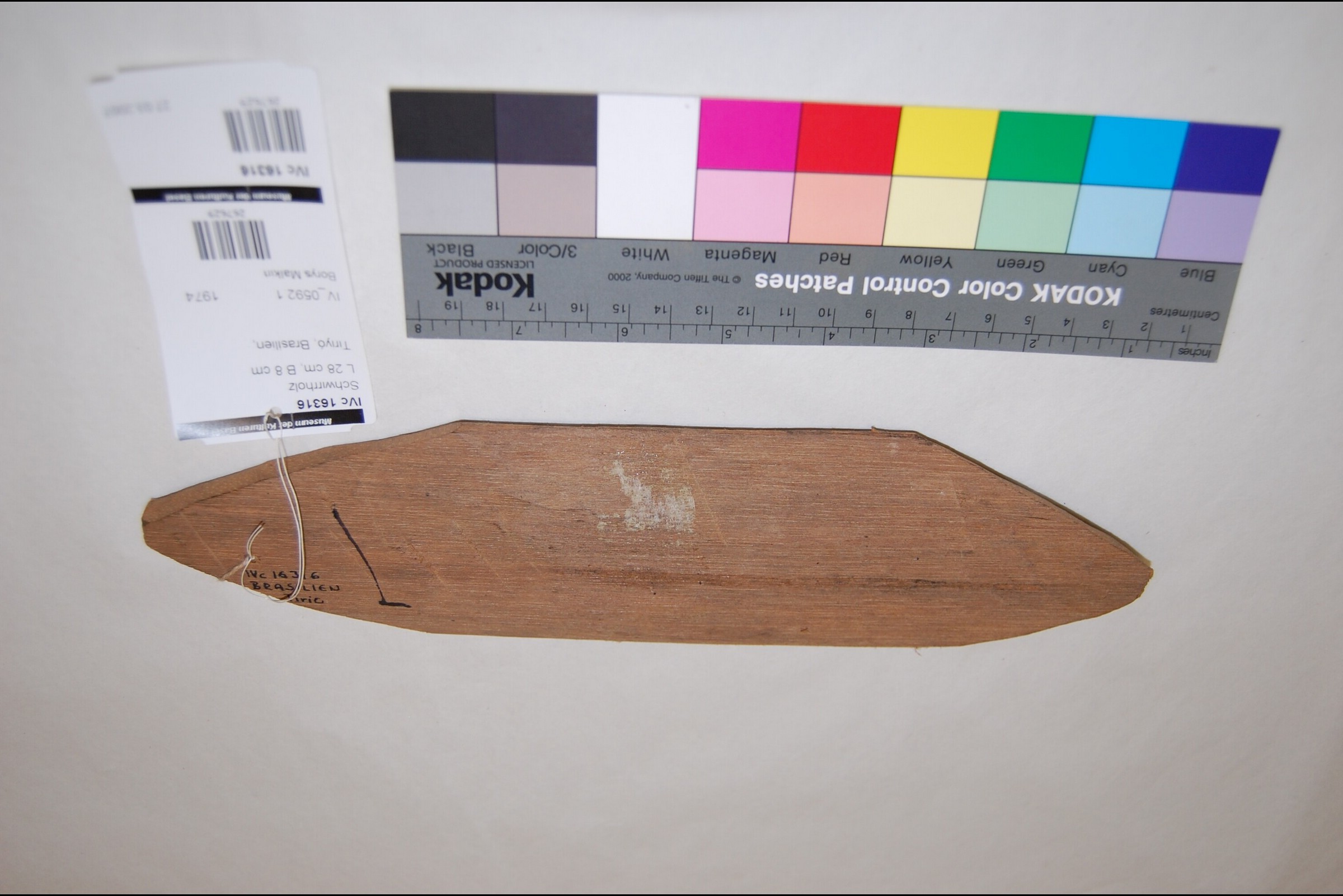
Source term: Schwirrholz
Schwirrholz: German museum-catalogue term; no Tiriyó name is recorded.
A broad wooden roarer, its cord still threaded through the narrowed end, carried out of the Tumucumaque uplands in 1974 — a decade after missions began gathering the scattered communities there into large mission settlements. The people it came from are known on maps as Tiriyó, but they call themselves Tarëno: 'people from here.'
Schwirrholz. Tiriyó. Brasilien.
Bullroarer. Tiriyó. Brazil.
Museum der Kulturen Basel, IVc 16316.
Particulars
- Object
- 28 cm wooden bullroarer board with a cord through its narrowed, pierced end (MKB IVc 16316 photograph).
- Function
- Not recorded.
Source
Museum der Kulturen Basel, object IVc 16316, Schwirrholz, Tiriyó, Borys Malkin collection (received 1974)