No. NA-S1952-008
Luiseno assembly-signal bullroarer
United States · California · North America
Restricted
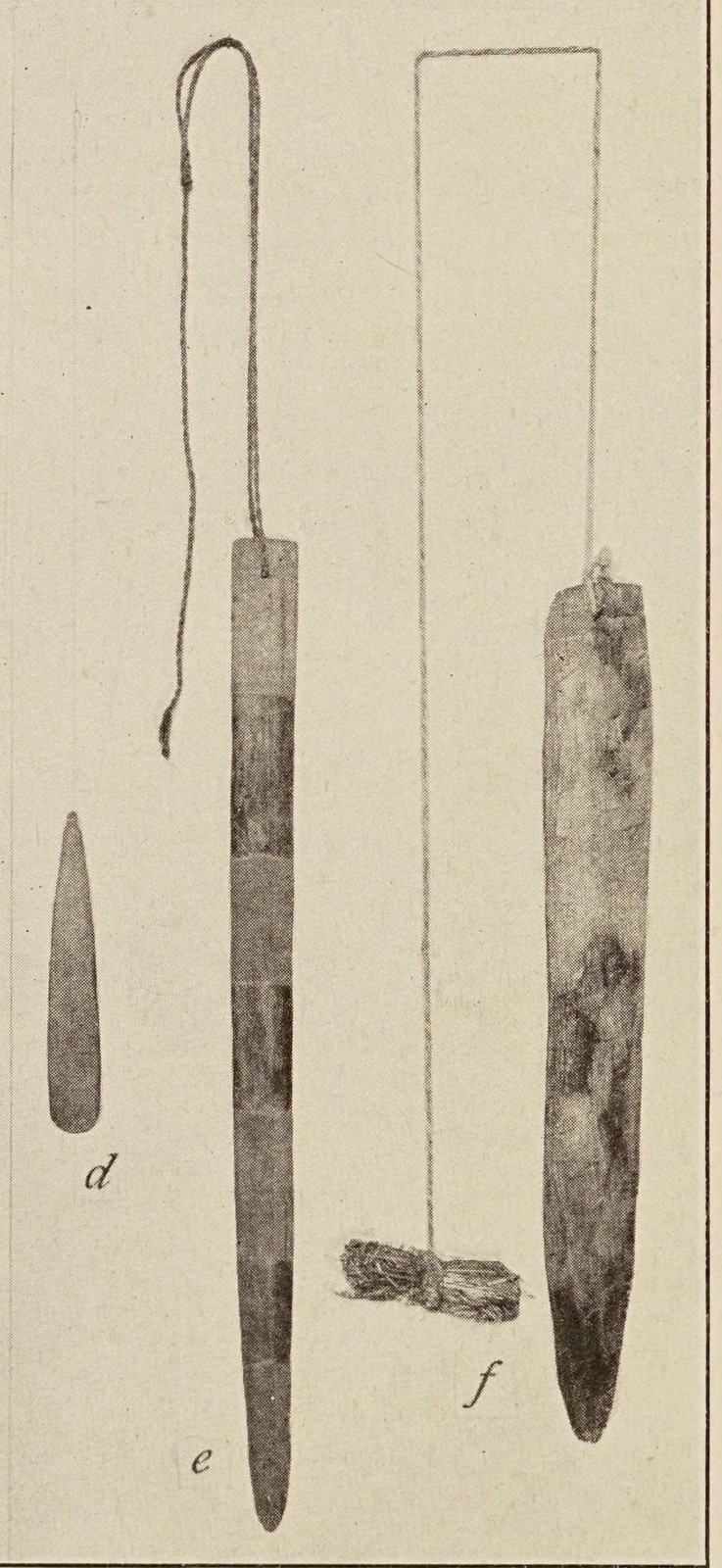
momlahpish
Source term: bullroarer
When the Luiseño of southern California carried the images of their dead around the sacred enclosure, the chief did not call out for the singers to stop: he took up the mumlapish, a flat whirling-board on a string, and swung it three times. Every Luiseño ritual descends from a death — "it was after Ouiot died that they made all the rituals." Ouiot, the great captain of the first people, was bewitched by Wahawut the frog-woman and became the first being to die, promising that in three days he would rise in the east; since his death the spirits of the dead are sent to Piwish Ahuta, the Milky Way. The image ceremony the roarer belongs to is, the neighboring Diegueño held, the first ceremony in the world — older, Kroeber judged, than the toloache religion of Chungichnish that later swept the region with its avenging rattlesnake, bear, and stinging weeds. The whirling-board itself was a public summons: Philip Sparkman recorded the momlaxpish simply calling the people together to feasts.
Instead of telling them to stop singing, he whirls the board three times.
DuBois, The Religion of the Luiseño Indians (1908), p. 101
Particulars
- Object
- A crude flat board, one foot to nearly two feet long, with the cord through a hole at one end.
- Function
- Signal in the Luiseno Image mourning ceremony for the dead.
Sources
- Theodore A. Seder, “Old World Overtones in the New World,” University Museum Bulletin 16(4) (1952), pp. 51–54 View · archived
- DuBois, The Religion of the Luiseño Indians (1908), p. 101
- P. Drucker, “Culture Element Distributions: V, Southern California,” Anthropological Records 1:1 (1937), p. 25, items 924/926