The Bullroarer Atlas — map of attestations
Exploreviews & downloads
More filters
The Bullroarer
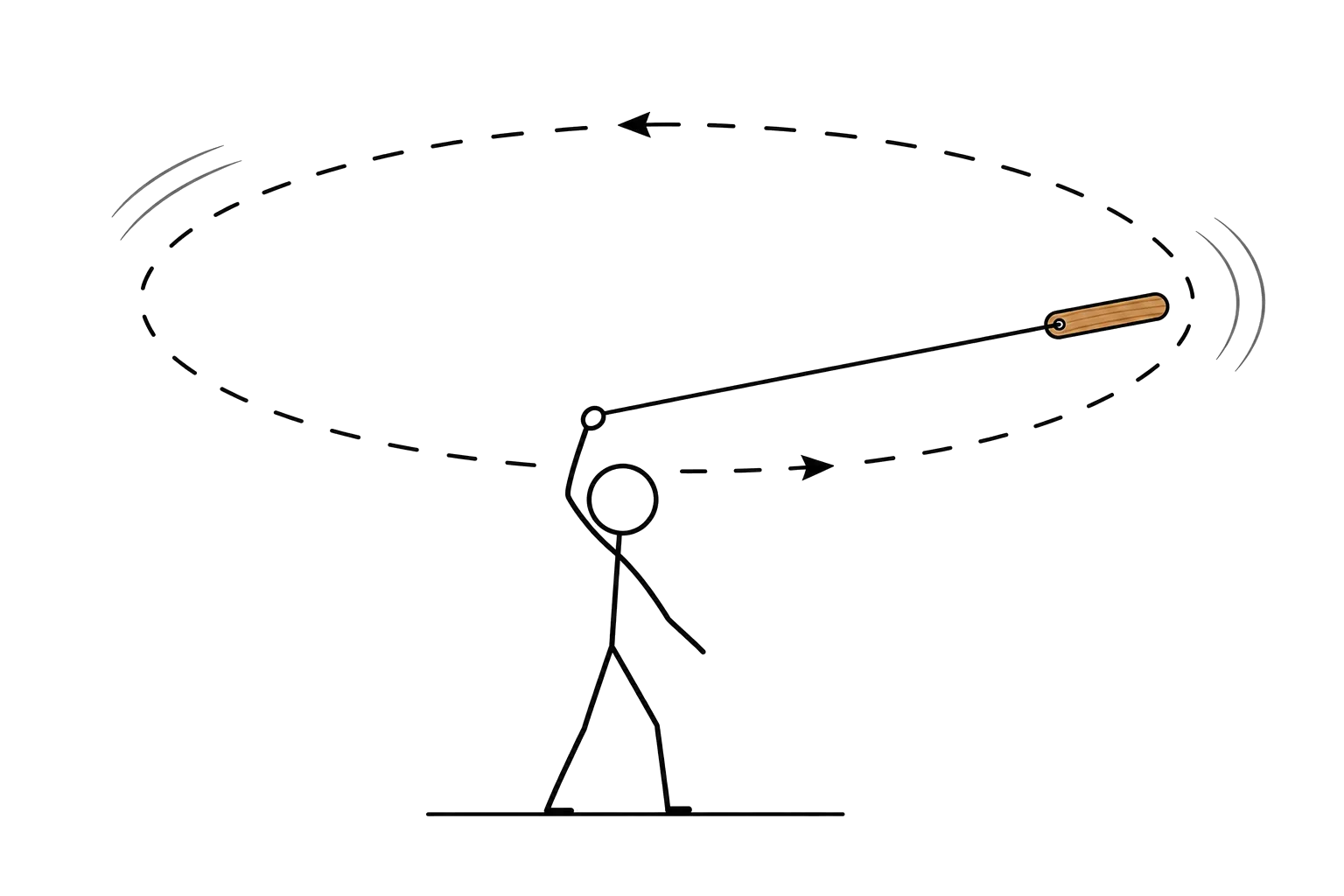
A flat slat of wood, bone, or stone, whirled on a cord until it roars, a pulsing voice that carries for miles. Across the world, people have heard that sound as a god, an ancestor, or a spirit.
“The strangest link among all initiations is the presence of the bullroarer, always bound to the Mysteries and surrounded by the same prohibitions.” Jean Servier, Man and the Invisible (1970)
Browse all records · Essays · About the atlas
Why the bullroarer?
It does not look like much — a slat of wood, bone, or stone on a cord. Yet to study the bullroarer is to gaze at the history of man, from the first religious expression of the Ice Age to the mystery cults of ancient Greece. Wherever it surfaces — Aboriginal Australia, Melanesia, the Amazon, the American Southwest, sub-Saharan Africa, Magdalenian Europe — it carries the same ritual grammar: the voice of a god or ancestor, a secret of initiated men, forbidden to women and the uninitiated, and, in a smaller subset, a myth that women first held the instrument or its wider sacred-sound complex.
The recurrence is too exact for coincidence. As the ethnomusicologist Jaap Kunst put
it, no ethnomusicologist would stand for plurigenesis as regards the bull-roarers…
used for the same purpose wherever and whenever found.
This atlas takes the
diffusionist reading: the bullroarer and its grammar spread in the Paleolithic —
fragments of a single archaic system of thought that helped lay the foundation of human
culture and religion. That argument is the subject of The Eve Theory of
Consciousness.
How to read this atlas
This atlas maps every bullroarer / rhombos / Schwirrholz in the documented literature — a museum object, an ethnographic source, an archaeological find, or a comparative catalog. It is literature-exhaustive, not omniscient: it records what the sources record. Companion to The Eve Theory of Consciousness. Colour shows the recorded role:
- Restricted — initiation, secrecy, taboo, access restriction, or ritual warning.
- Sacred / spirit — sacred, ceremonial, or spirit use without a clear access-restriction signal.
- Weather / fertility magic — rain, wind, crops, increase.
- Play / practical — a plaything, signal, or practical noise-maker.
- Function not recorded — the source attests the object but not its use.
Some objects are coloured restricted on an institutional signal alone: where a museum withholds or flags a bullroarer as culturally sensitive, we treat that as evidence in itself — you do not withhold a toy — even when the ceremony itself is not documented. Locations are approximate culture centroids; every point cites its source and page.
About the author
This atlas is by Andrew Cutler, PhD — author of The Eve Theory of Consciousness and the Vectors of Mind essays on the deep history of the self. It accompanies his argument that self-awareness was a late, diffused cultural discovery, and that the bullroarer is one of its oldest surviving traces. Further reading: The Bullroarer: Much More Than You Wanted to Know · The Eve Theory of Consciousness · The Snake Cult of Consciousness, Two Years Later.