No. JSTEWARD1943-001
Bohogue Shoshoni wiipunonohwi at Fort Hall
United States · Snake River plain about Fort Hall, southeastern Idaho · North America · Great Basin
Weather / fertility magic
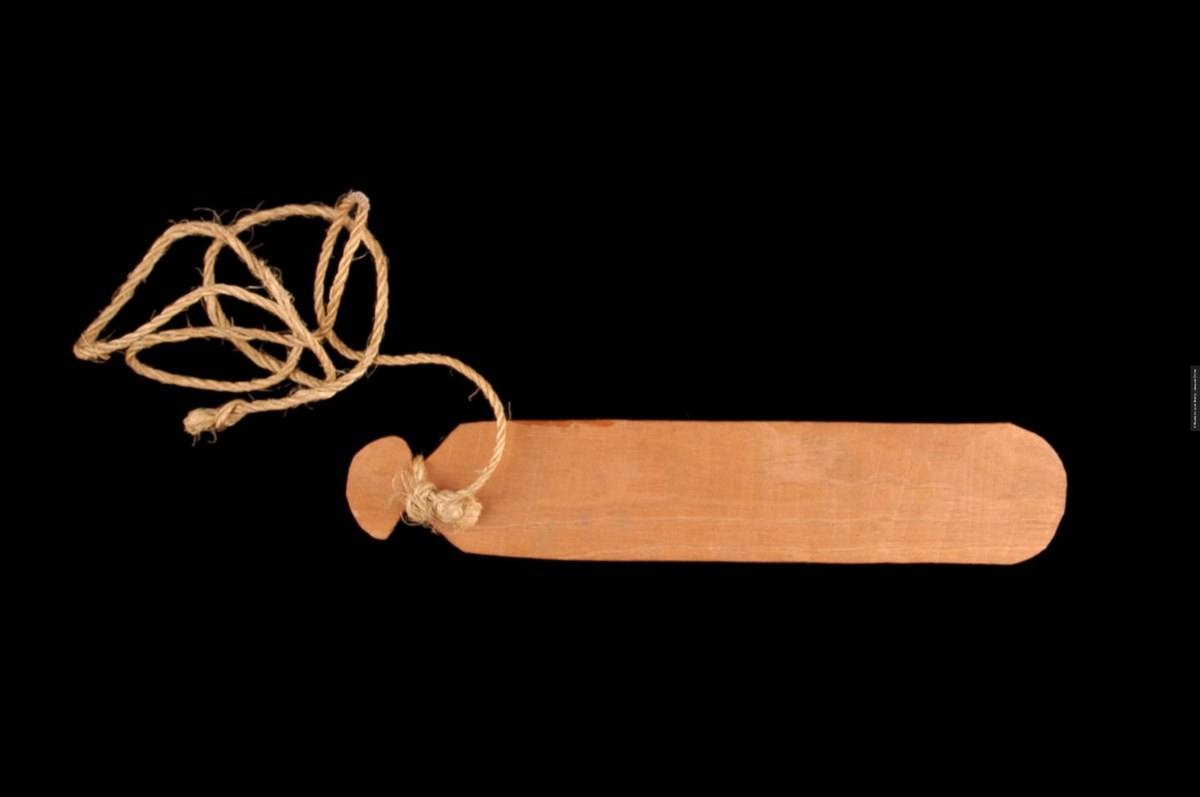
wiipunonohwi
Source term: bull-roarer (wiipunonohwi)
At Fort Hall the Bohogue swung a wooden slat on a wooden handle to bring the warm wind, and let their children swing it as well. They called it wiipunonohwi. Steward translated that 'spinner', but the word does not say spin: it is built from the prefix for acting by means of a long object and the root Sapir records for making a drumming, booming noise. The name is the sound. So is the people's own - bohovi, the sagebrush, and gue, the buttes standing north of the Snake River where they wintered.
Particulars
- Object
- Wooden whirrer fitted with a wooden handle.
Source
Julian H. Steward, 'Culture Element Distributions: XXIII, Northern and Gosiute Shoshoni,' Anthropological Records 8:3 (1943), pp. 264, 333 (elements 1974-1980) and 383