No. MUS2026-195
Shipaulovi Hopi tovolpi, for dance and play
United States · Second Mesa, Arizona · North America · Southwest
Sacred / spirit
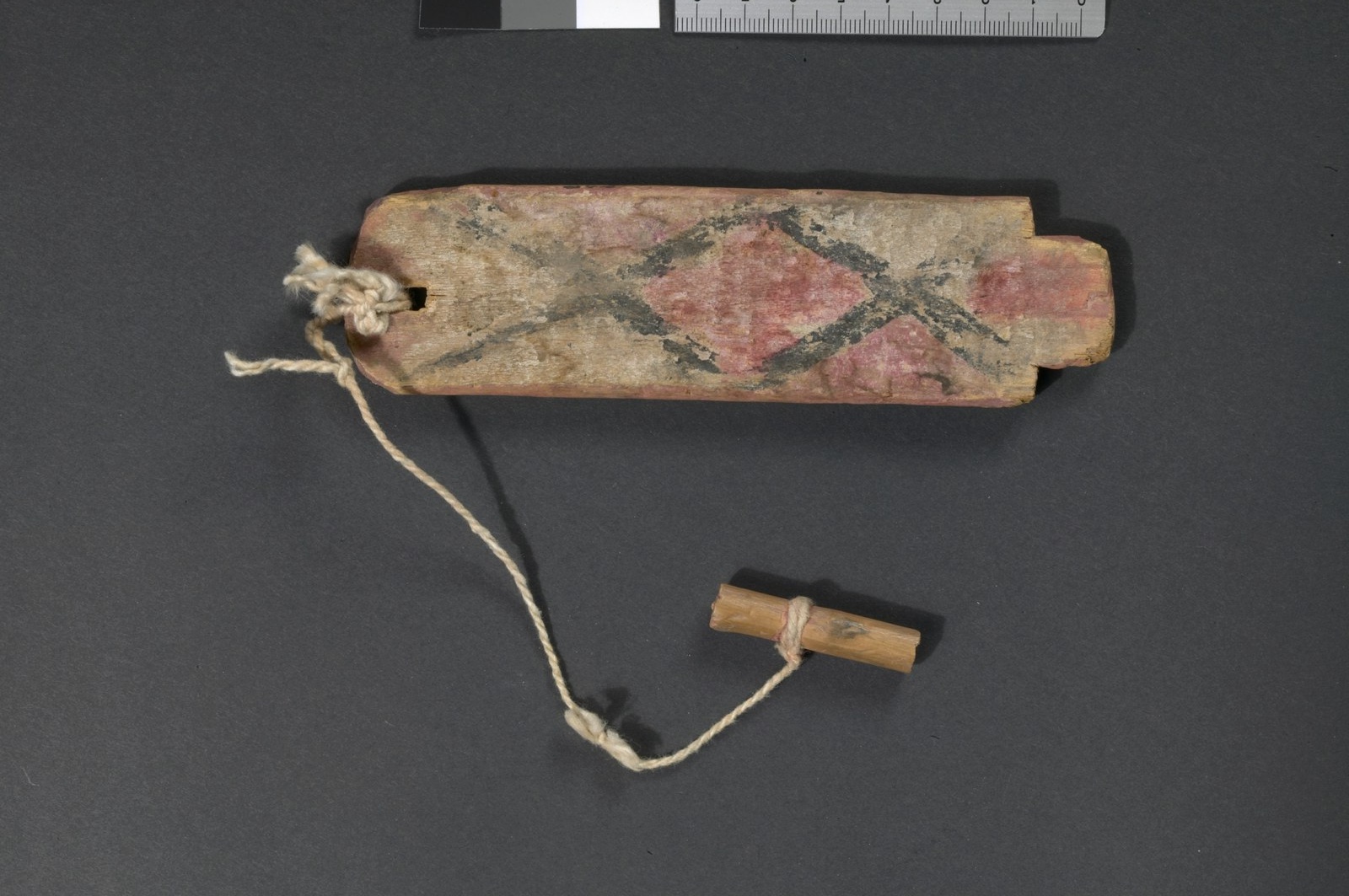
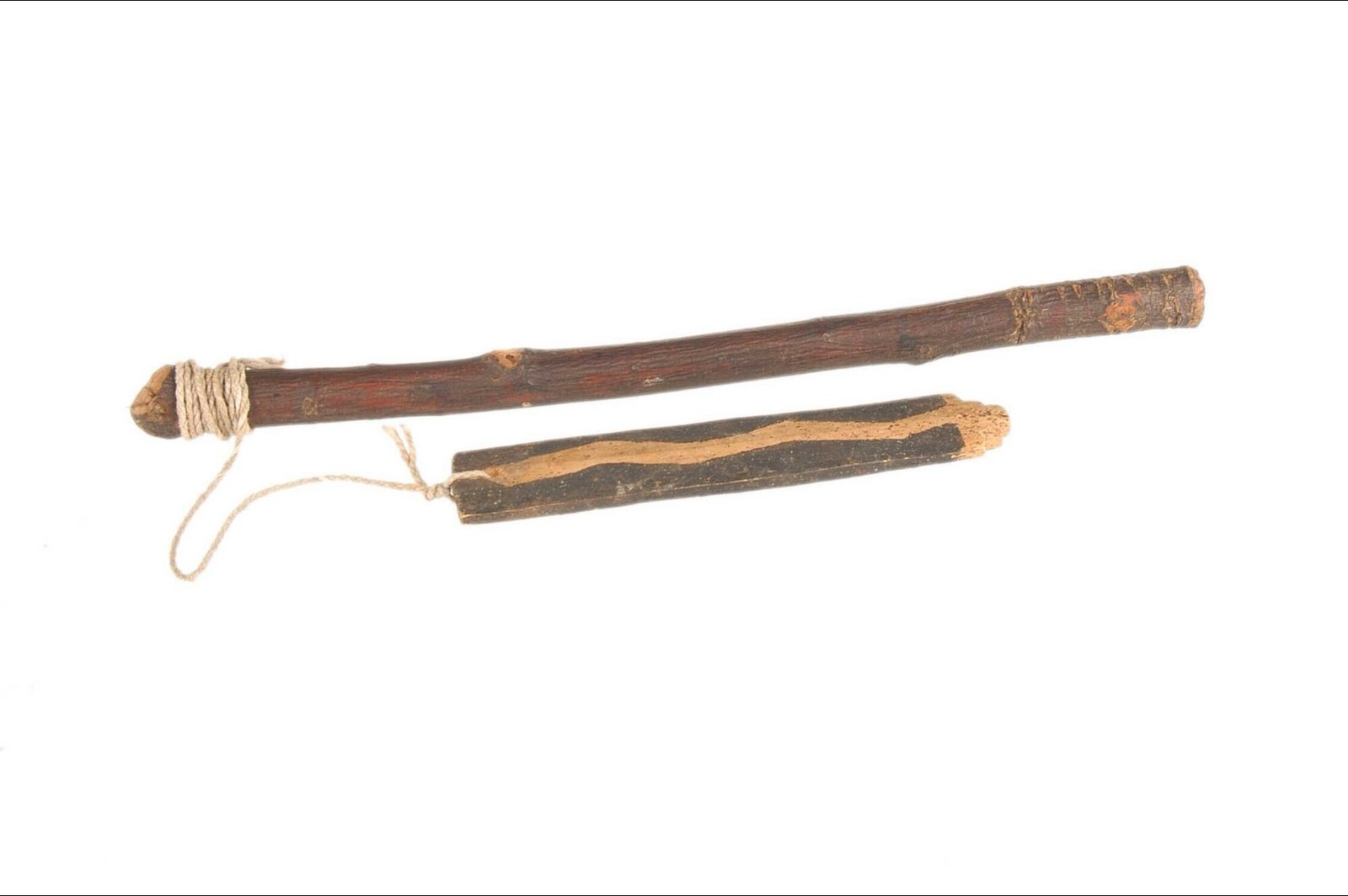
tovolpi
tovolpi — the Shipaulovi form; compare tovokinpi at neighbouring Shongopovi.
Shipaulovi, smallest of the Second Mesa villages, kept its own form of the Hopi bullroarer's name: tovolpi. After the village's Snake race, boys and girls ran up the hill with cornstalks and melons for the crowd to snatch, and behind them came a man dressed as a warrior, in white kilt and antelope skin, twirling a whizzer. The decorated slat that carried the word to Norway crossed between two worlds at home — swung by men in the dances, and by children as a toy — the same humming wood serving the plaza ceremony and the game beside it.
Particulars
- Object
- Decorated wooden slat with one terminal hole, single fibre cord and toggle — Kulturhistorisk museum Oslo UEM13727, acquired via Ole M. Solberg.
- Function
- Used partly by men in dances, partly by children as a toy.
Source
Kulturhistorisk museum, Universitetet i Oslo, UEM13727; J. Walter Fewkes, Tusayan Snake Ceremonies, 16th Annual Report of the Bureau of American Ethnology (1897), pp. 283-284