No. SA-Z1953-038
Maleku (Guatuso) Jafara divinatory bullroarer
Rio Frio basin · northern Costa Rica · Mesoamerica · Central America
Sacred / spirit
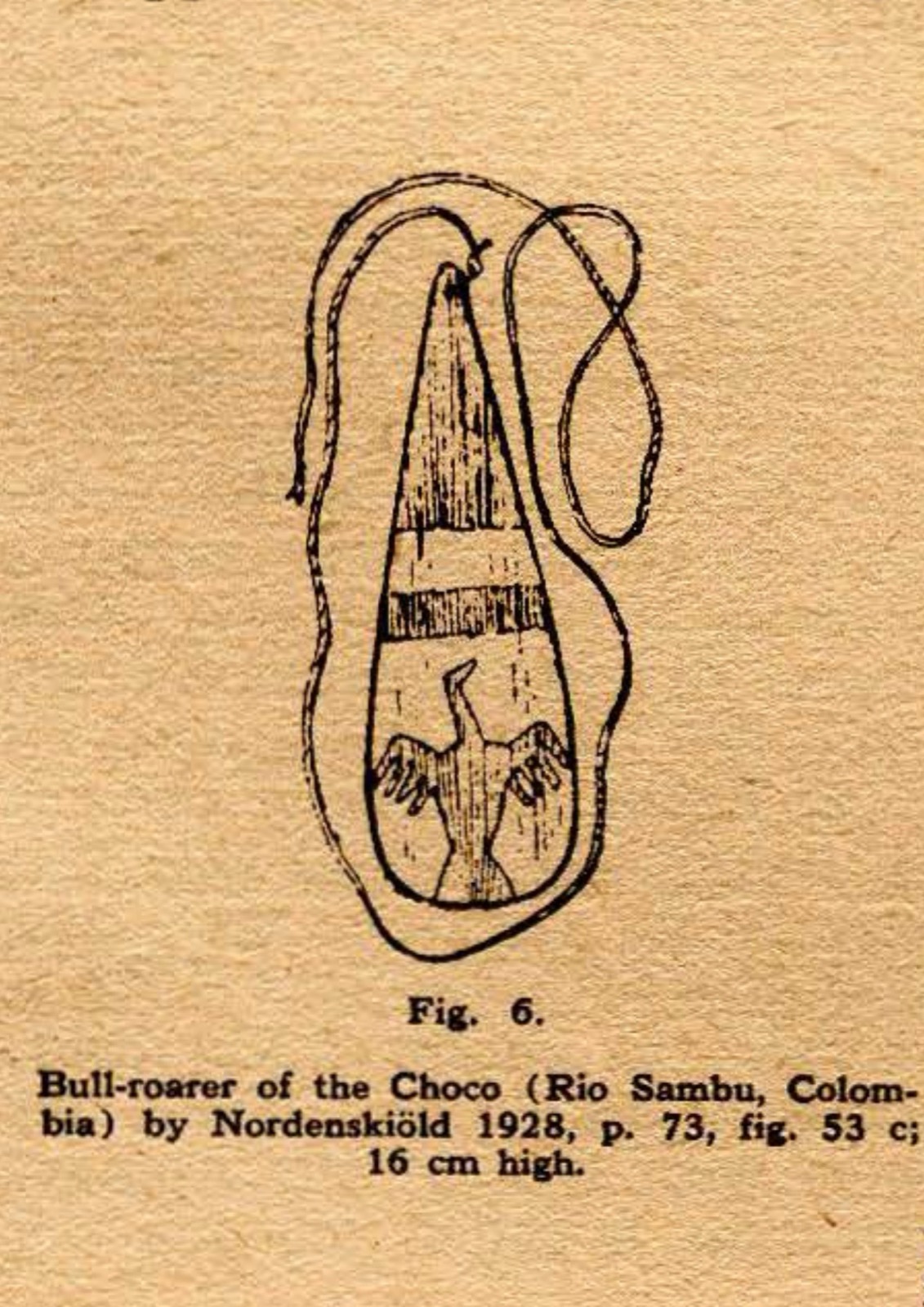
Jafara / Lhafara; sabara
Source term: bramadera / bramador (bullroarer)
Jafara / Lhafara — the name shared by the bullroarer and the female deity whose messages it carried; lh is pronounced like Spanish j. sabara — an earlier recorded Maleku name.
Among the Maleku of Costa Rica’s Río Frío basin, the Jafara was cut from pejibaye wood and tied to a cord of burio fibre. When a seer turned it, its strong voice carried sacred messages from Lhafara, the female deity associated with the waters of Caño Negro.
Bramadera o hablador llamado jafára ... un trozo de madera de pejibaye sujetado por una cuerda de fibras de burío, que al girarse provocaba un fuerte sonido mientras cortaba el aire, permitiéndole al vidente decodificar mensajes sagrados.
A bullroarer or speaker called jafara: a piece of pejibaye wood tied with a burio-fibre cord which, when turned, made a strong sound through the air, allowing the seer to decode sacred messages.
Solís Aguilar, Territorialidades del pueblo originario maleku en Costa Rica (2021), p. 69.
Particulars
- Object
- A piece of pejibaye wood tied with a burio-fibre cord; when turned, it makes a loud sound through the air.
- Function
- Divinatory bullroarer: a seer decoded sacred messages from Lhafara/Jafara through its sound.
Source
David A. Solís Aguilar, Territorialidades del pueblo originario maleku en Costa Rica (MA thesis, El Colegio de Michoacán, 2021), pp. 15-16, 59-60 and 69