No. JSTEWARD1943-003
Promontory and Cache Valley newUkivo, swung for weather
United States · Promontory Point and the lower Bear River, north shore of Great Salt Lake, and Cache Valley, northern Utah · North America · Great Basin
Weather / fertility magic
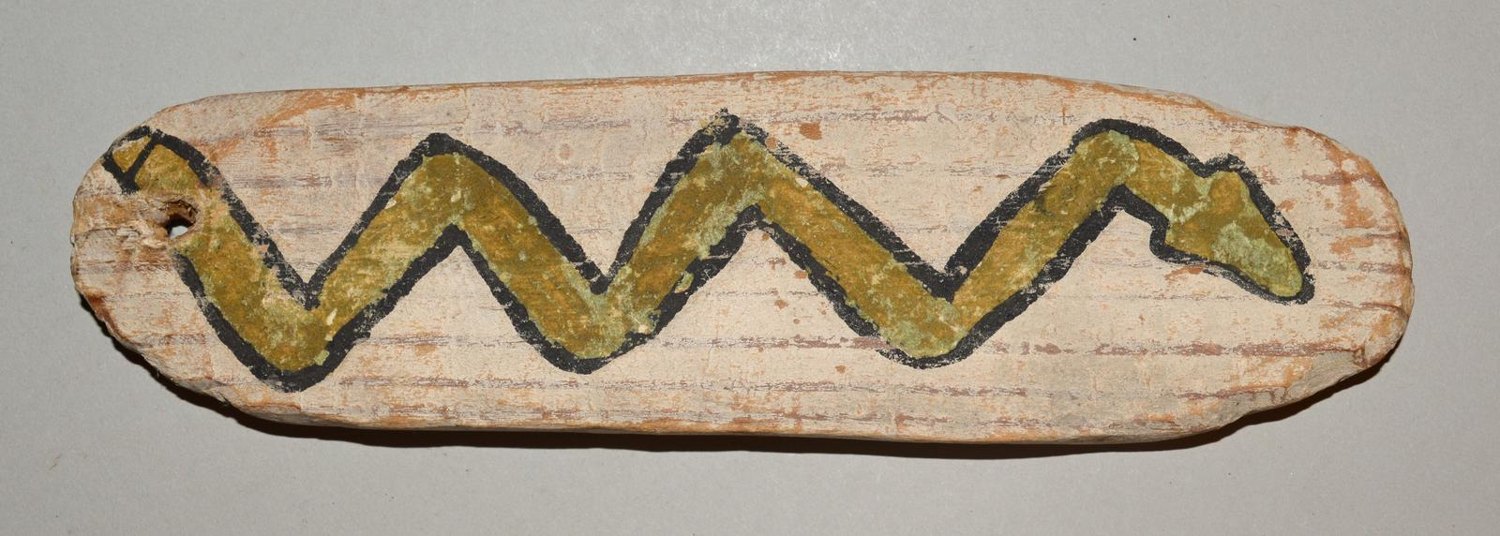
newUkivo
Source term: bull-roarer (newUkivo)
Among the Shoshoni of Promontory Point and Cache Valley the bullroarer was not a toy. Alone among the Northern Shoshoni in Julian Steward's account, they kept it for the weather and not for play, and gave the work to one kind of person only: someone born in summer. Of the summer-born at Fort Hall, who went out to observe the summer rain, Steward was careful to add that the distinction conferred nothing else - it bought no standing, no calling, no rank, and stopped at the edge of the weather. The Promontory name for the instrument, newUkivo, has nothing in common with the booming compounds of Fort Hall and the Bannock, and he left it untranslated.
This distinction of summer and winter-born people is not carried beyond this slight control of weather.
Steward 1943, p. 384, on the summer-born at Fort Hall.
Particulars
- Object
- Wooden whirrer fitted with a wooden handle.
- Function
- Swung to bring warm wind, by a person born in summer; the toy use is denied.
Source
Julian H. Steward, 'Culture Element Distributions: XXIII, Northern and Gosiute Shoshoni,' Anthropological Records 8:3 (1943), pp. 264, 333, 383 and 384