No. NAMER-008
Hopi thunder-stick bullroarer, Mishongnovi
United States · Arizona · Hopi Reservation · Second Mesa · Mishongnovi (Musangnuvi) · North America · Southwest
Weather / fertility magic
Source term: Thunder-Stick
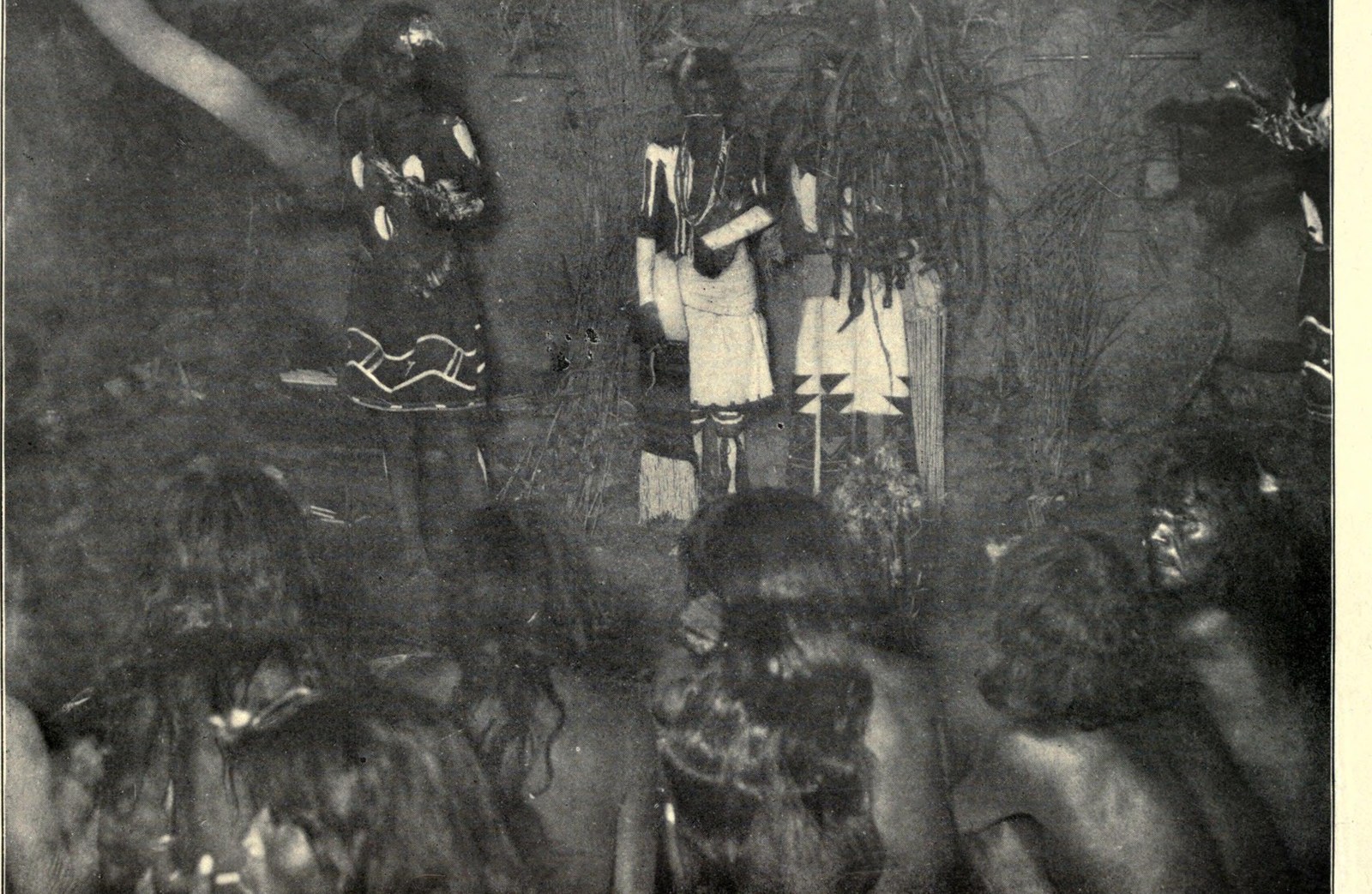
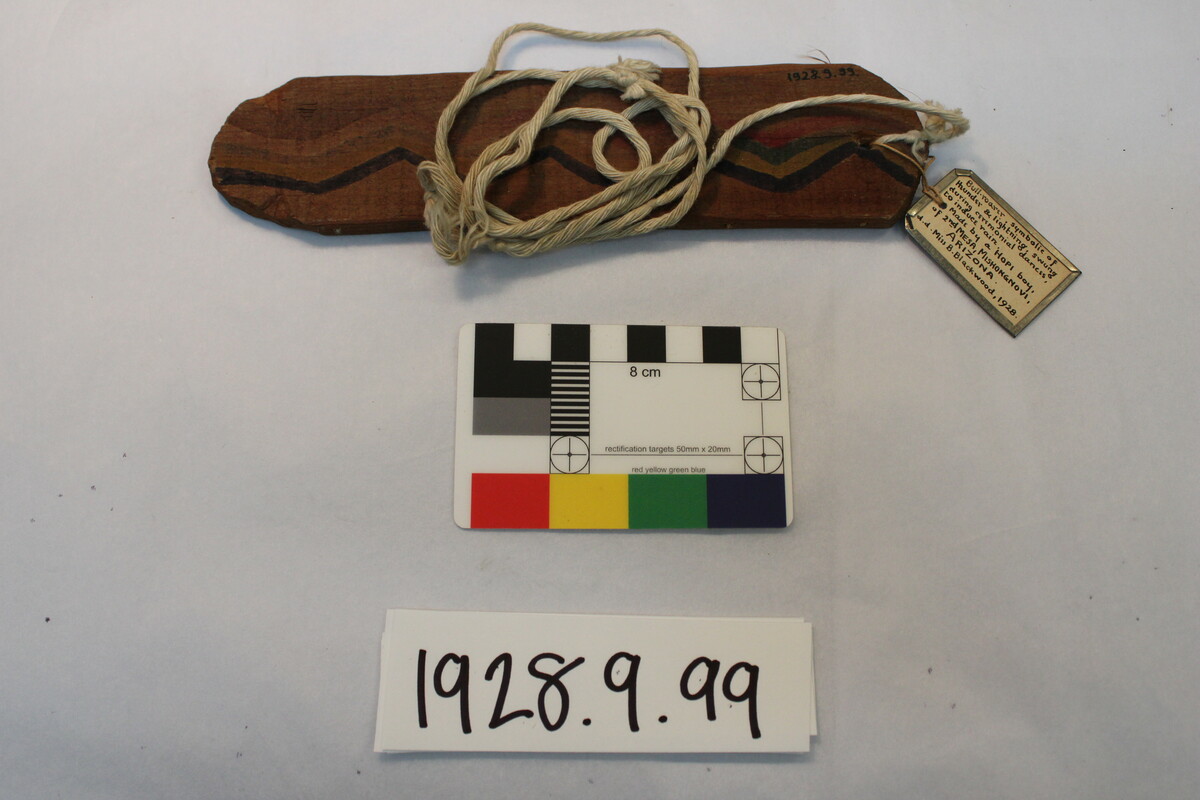
Thunder and lightning, swung to bring the rain: that is how the label on a Mishongnovi bullroarer explained it in 1928, on a blade a Hopi boy of the village had made and painted with a black zigzag. The Smithsonian's older Mishongnovi series goes under the same idea in English, "Thunder-Stick." Inside the Antelope kiva during the Mishongnovi Snake-Antelope ceremony, George Dorsey and H. R. Voth watched a Kalehtaka, a warrior of the Bow priesthood, sound the bullroarer, its whirring the thunder of the July storms the rite was calling.
The bull-roarer, or whizzer, used ceremonially by the Hopi, Zuni, Navaho, Apache, and other tribes, is employed in the same form as a child's toy, the latter being presumably borrowed from the implement used in religious rites.
Culin, Games of the North American Indians, 24th Annual Report of the Bureau of American Ethnology (1907), p. 750
Particulars
- Object
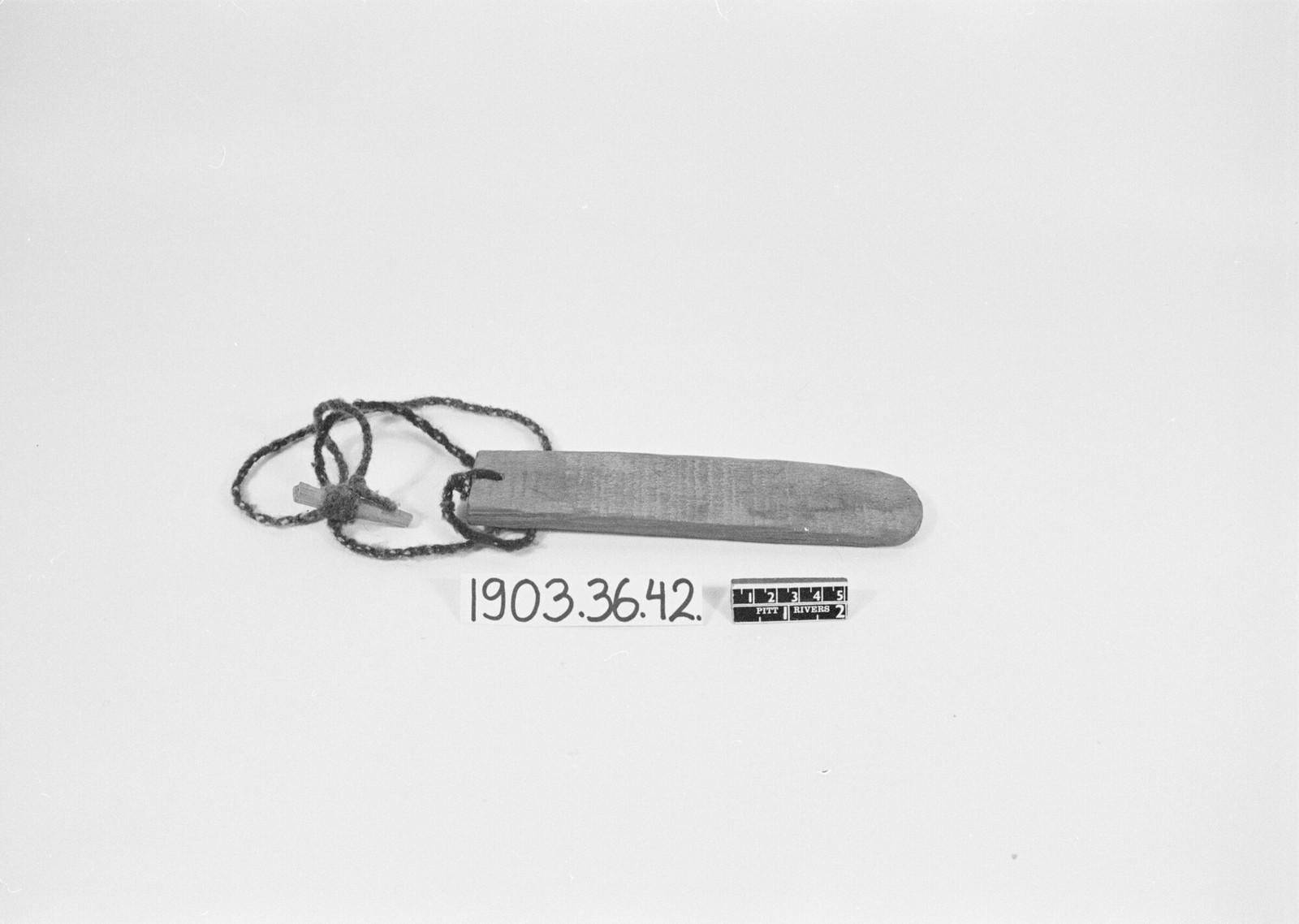
- A Hopi thunder-stick from Mishongnovi, Second Mesa, in the National Museum of Natural History, Washington. A second Mishongnovi blade reached the Pitt Rivers Museum, Oxford, in 1903 — 1903.36.42, carved wood, 217 by 49 mm, with its cord still on it. A third, Pitt Rivers Museum 1928.9.99 (195 × 50 mm), was made by a Hopi boy of the village and painted with a black zigzag between red and yellow bands; Beatrice Blackwood collected it in 1926-27.
- Function
- Function not recorded for the Smithsonian stick. A companion blade from the village was labelled in 1928 as symbolic of thunder and lightning and swung during ceremonial dances to induce rain; among the Hopi the bullroarer is whirled to imitate the sound of thunder and summon the monsoon rains.
Sources
- Smithsonian National Museum of Natural History, Anthropology, Thunder-Stick, Hopi, Mishongnovi, object ark:/65665/3aba18a80-78f3-440e-af45-f9349a36b23b View
- Stewart Culin, Games of the North American Indians, 24th Annual Report of the Bureau of American Ethnology (1907), p. 750