No. MINE2026-075
Elko and Battle Mountain Shoshoni wind bullroarer
United States · Elko and Battle Mountain, Humboldt River, Nevada · North America · Great Basin
Weather / fertility magic
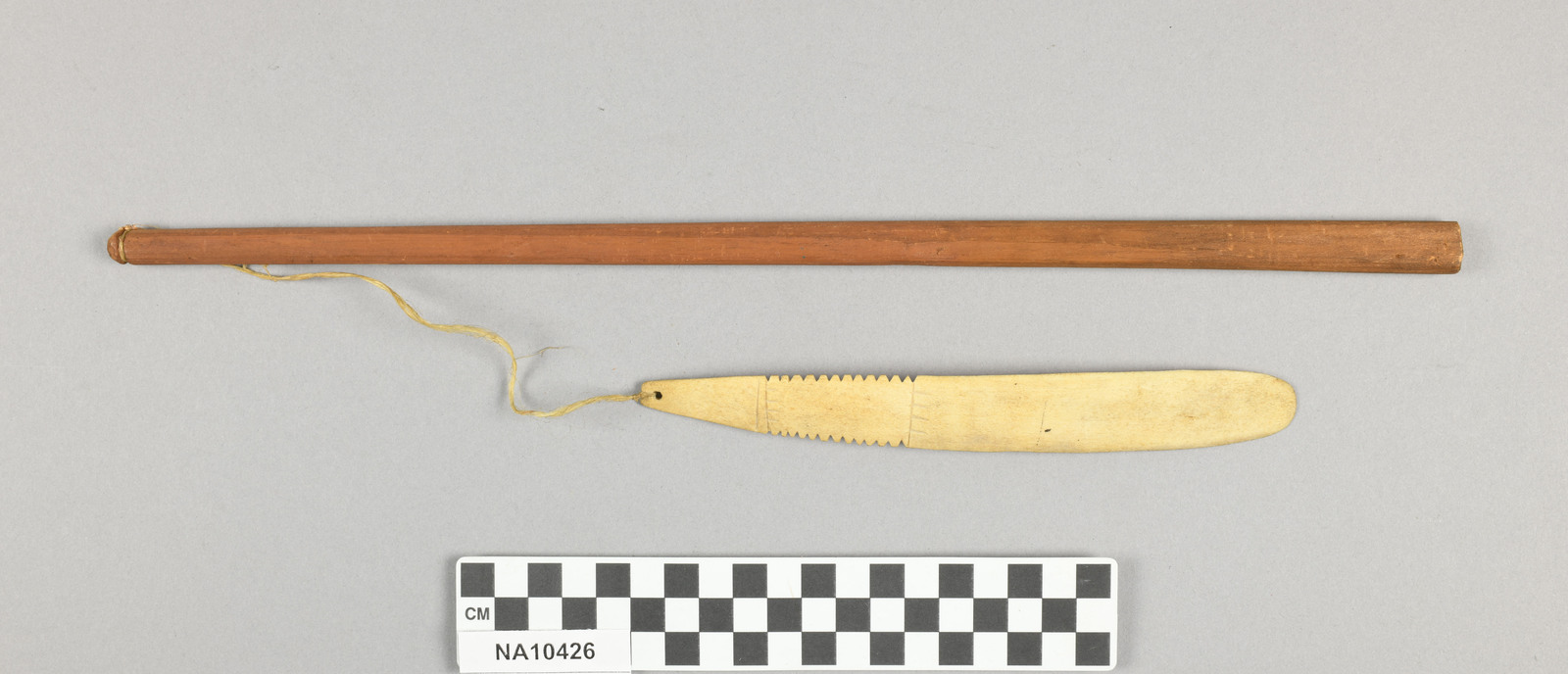
nui; tsahanunu
Source term: bull-roarer
nui (Elko) and tsahanunu (Battle Mountain). Nui means 'play', as in nui dua, 'play child', a Shoshoni name for a clay doll.
Along the Humboldt River, the Nevada Shoshoni swung the bullroarer at the weather from both ends of the year. At Elko, anyone might sound one in early spring to bring the warm wind; downstream at Battle Mountain, boys swung theirs in hot weather to set the air moving. Yet the Elko name for it, nui, is the word for play.
[The bull-roarer] was used in some localities to produce a warm wind that would dispel snow.
Steward, Culture Element Distributions: XIII, Nevada Shoshoni (1941), p. 262
Particulars
- Object
- At Battle Mountain, a whirrer made from an antelope patella, hung on a string from a stick handle and called tsahanunu; Steward gives no description of the Elko instrument.
Source
Julian H. Steward, 'Culture Element Distributions: XIII, Nevada Shoshoni,' Anthropological Records 4:2 (1941), p. 250 and p. 347, element 1874