No. BARNETT1937-001
Tolowa bull-roarer
United States · Smith River, Del Norte County, California · North America · Northwest Coast
Play / practical
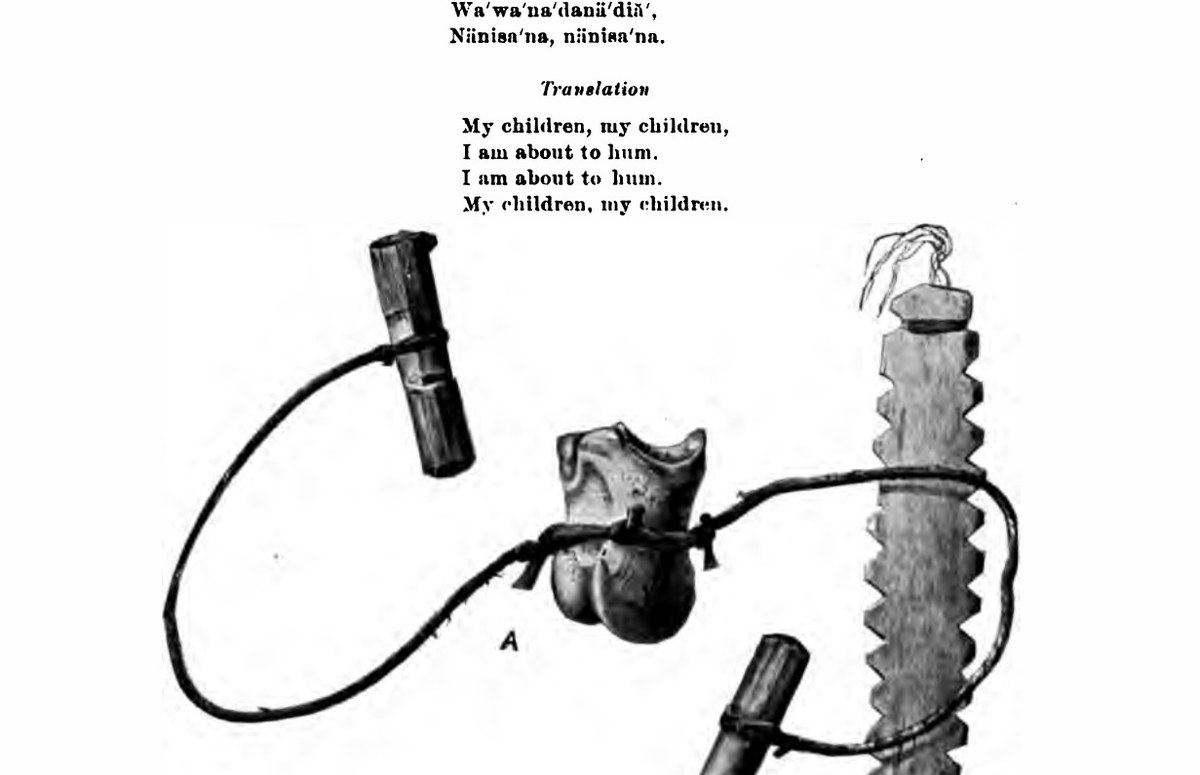
Source term: bull-roarer (boy's plaything)
On the Smith River the bullroarer was a boy's plaything, and it was filed where it was heard to belong: among the instruments, with the split-stick and deer-hoof rattles, the roof-plank drum and the bone whistle, rather than among the games. What can be added is what it was not. This coast had no ceremonial recognition of a boy's coming of age and no dance for men alone, and the Tolowa's one solemn rite — a ten-night dance for a girl come of age — was sung without any instrument at all. Whatever a Tolowa boy whirled, it was not the property of a cult.
Particulars
- Object
- Not described; recorded only as a bull-roarer.
- Function
- A boy's plaything.
Source
Homer G. Barnett, 'Culture Element Distributions: VII, Oregon Coast,' University of California Anthropological Records 1:3 (Berkeley, 1937), p. 174, element 746 ('Bull-roarer (boy's plaything)'); Philip Drucker, 'The Tolowa and Their Southwest Oregon Kin,' University of California Publications in American Archaeology and Ethnology 36:4 (1937), p. 263