No. GAMBLE2025-001North America
Muwu cache of three bullroarers
United States · California · Ventura County · Mugu Lagoon-Point Mugu · North America
Sacred / spirit
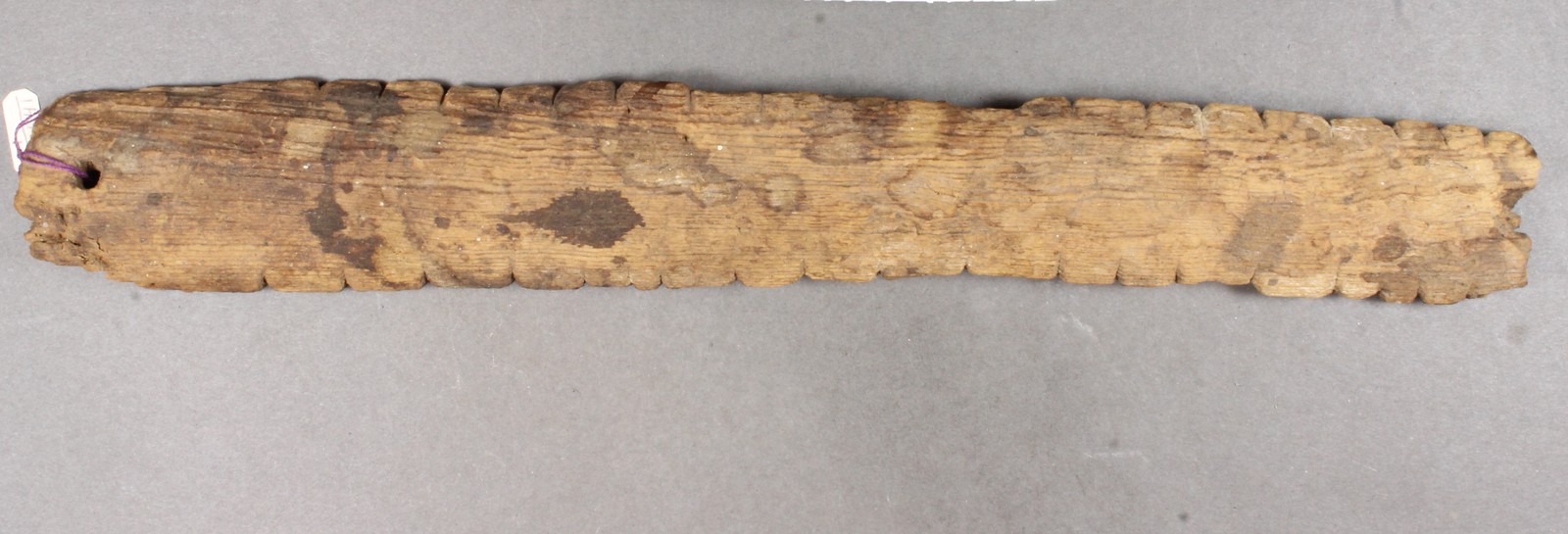
ʔalaxtəməmə / ʔaxtəməmənəʔəš
Source term: bullroarers
ʔalaxtəməmə, ʔaxtəməmənəʔəš: Ventureño Chumash words for the bullroarer, recorded by J. P. Harrington, built on axtəməmə 'to buzz', a verb also used of a bee or a fly.
At Muwu, on the marshy shore of Mugu Lagoon in Ventura County, a Chumash cache held three bullroarers beside eight bone whistles. In the Ventureño Chumash spoken along this coast the bullroarer was ʔalaxtəməmə, a word built on the verb 'to buzz' — the sound of a bee or a fly. The whistles survive in the Santa Barbara Museum of Natural History: deer tibiae about 22 to 26 centimetres long, decorated with asphaltum and beads. Among the Chumash, bullroarers and whistles alike are sacred things, to be studied only with tribal consent.
Particulars
- Object
- Three bullroarers recovered from a cache with eight deer-tibia whistles decorated with asphaltum and beads.
- Function
- Three bullroarers cached with eight decorated deer-tibia whistles. A regional archaeoacoustics study identifies bullroarers and bone whistles as sacred objects for south-central Californian Native peoples; the exact rite represented by this cache is not recorded.
Sources
- Lynn H. Gamble, "Navigating cooperative marketplaces: the Chumash Indians and the dynamics of hunting/gathering/fishing economies," Frontiers in Human Dynamics 7 (2025), article 1606256, fig. 7 and caption View · archived
- Hudson and Blackburn, The Material Culture of the Chumash Interaction Sphere, vol. IV (1986), pp. 358-360, via Gamble 2025, fig. 7