No. MUS2026-341
Maxakali panandóad voice-of-the-dead rig
Brazil · Itanhém region, Minas Gerais · Bahia borderlands · South America
Restricted
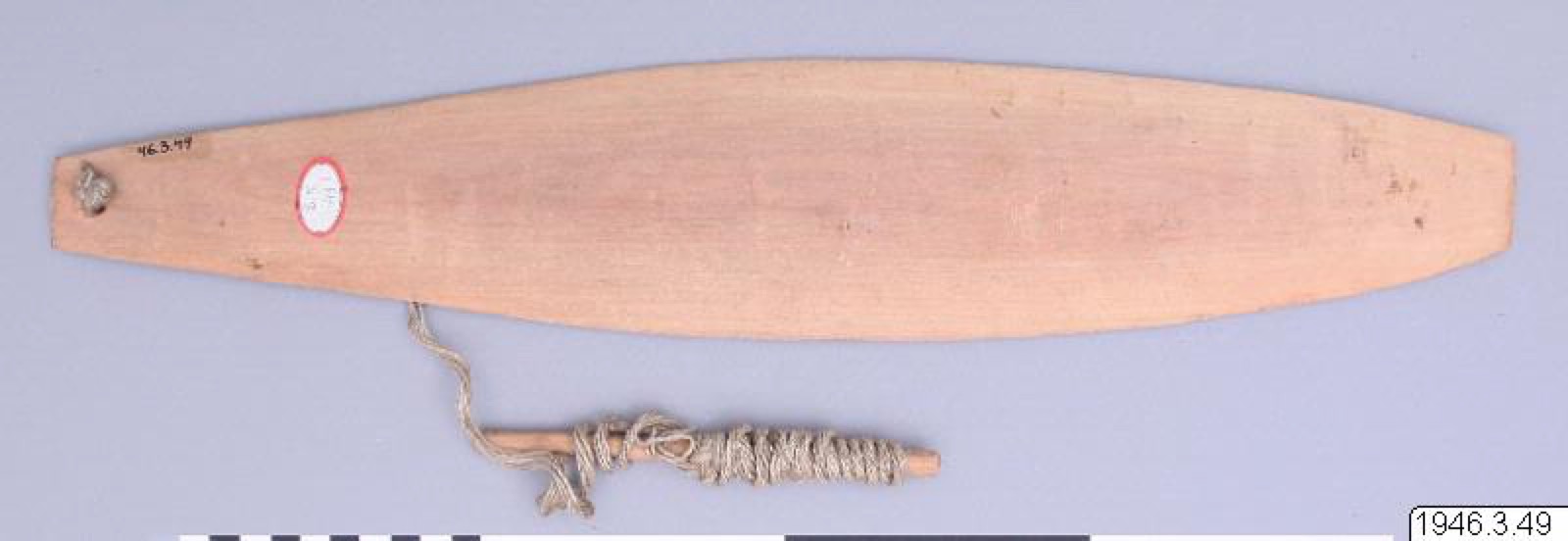
panandóad
Source term: Vinare
panandóad: the Maxakali name for the bullroarer — a word withheld from women and from the uninitiated.
After dark the howling came from the men's house, and the women and small boys outside were given to understand that it was the dead. Inside, initiated men and older boys were making that voice with rigs like this one — a broad blade of wood, a cord, a handle. Even the word was held back: the uninitiated were not to learn that the sound had a name, let alone that the name was panandóad. Working among the last Maxakali in 1938-39, Nimuendajú found their roarers sorted by size and called men, women and boys, kept in the men's house beside the bast-fringe costumes that hid a dancer completely. A newly initiated boy who gave the secret away was beaten for it.
Particulars
- Object
- A 48 cm broad wooden blade with single perforation, cord and wooden handle.
- Function
- Within the yami cult, men and initiated older boys sounded the dead souls' voices from the men's house; women and small boys heard the nocturnal howling, and the object's name was withheld from the uninitiated.
Source
Världskulturmuseerna 1946.03.0049; wood, cord and handle; Maxakali yami-cult documentation