No. SA-Z1953-036
Motilones ritual bullroarer
Colombia; Venezuela · Circum-Caribbean · Sierra de Perija · South America
Restricted
Source term: Schwirrgerät / Schwirrholz / bullroarer
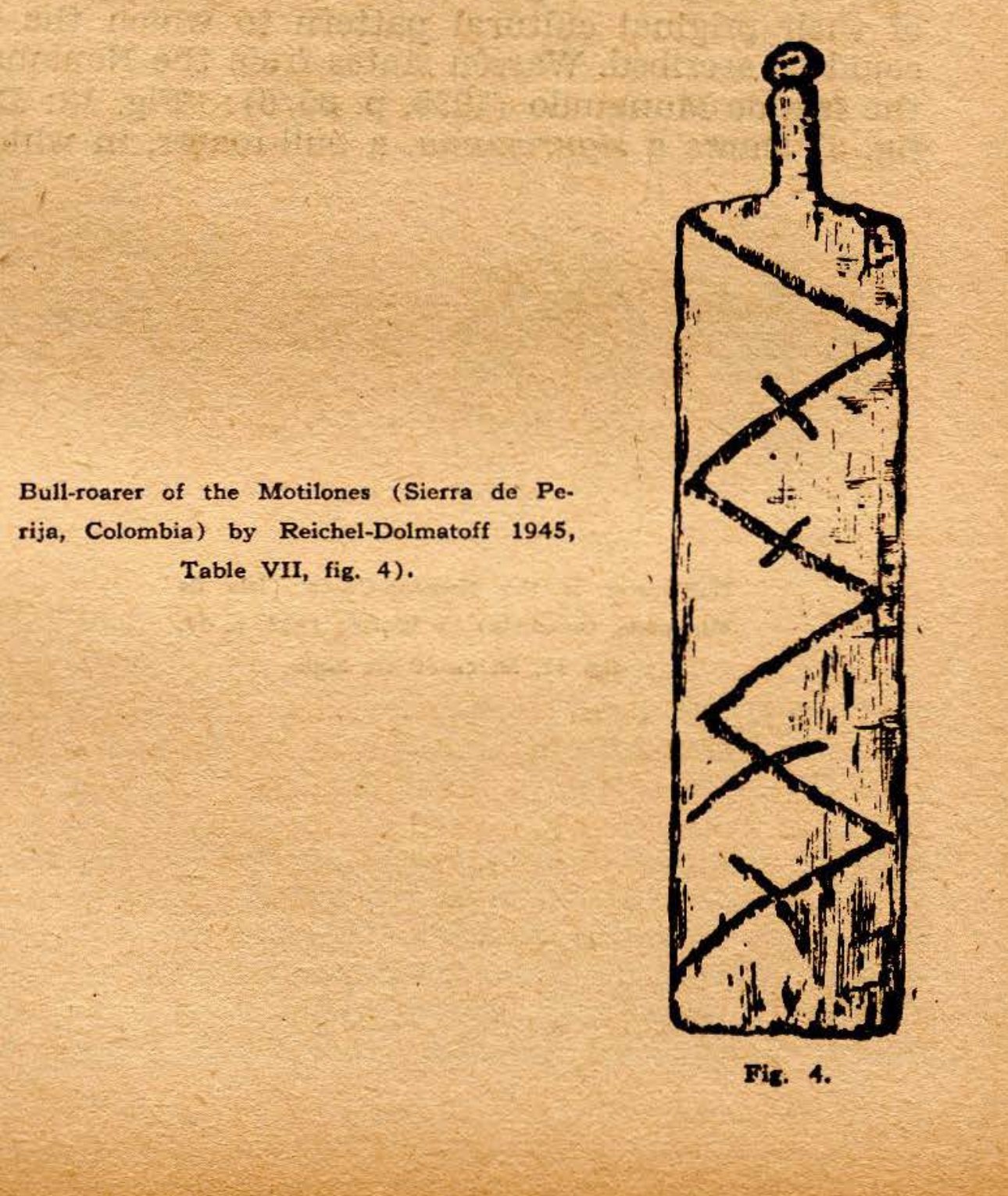
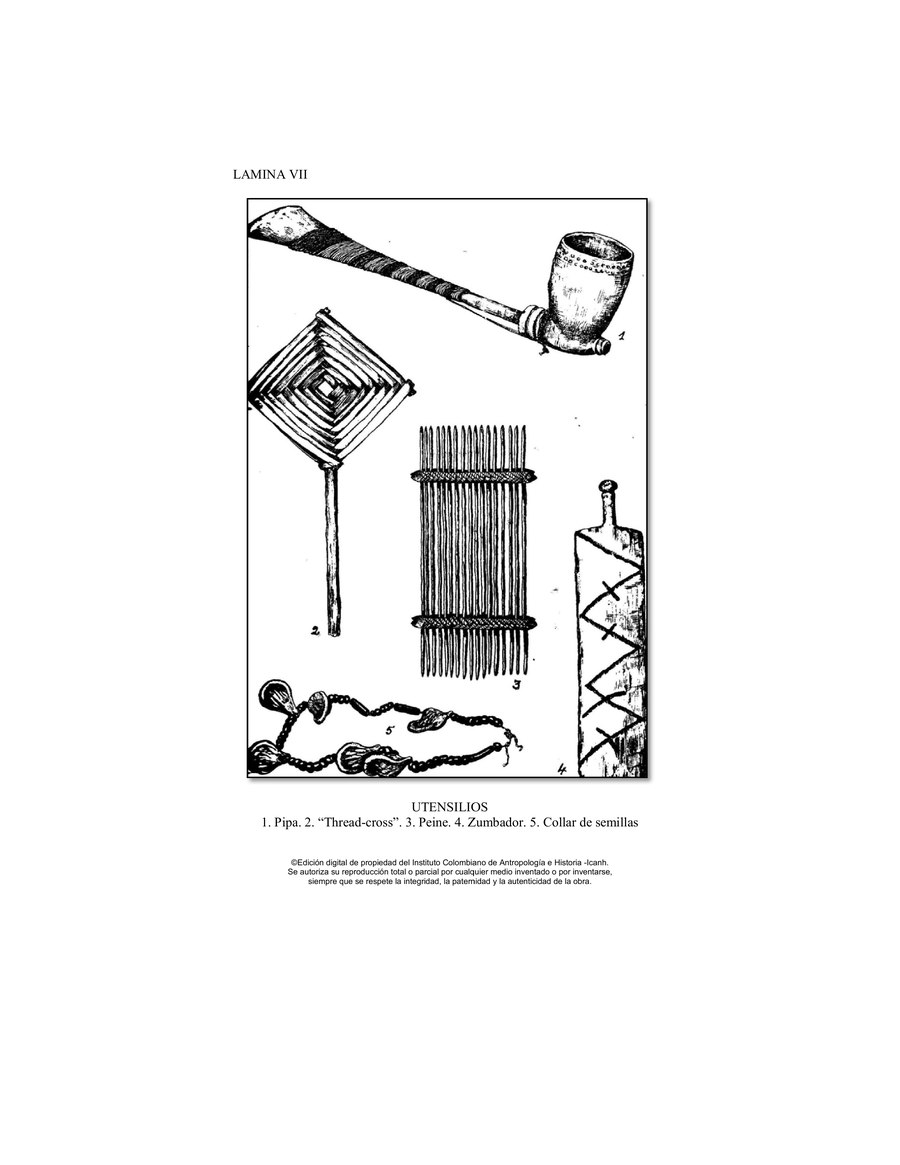
Among the Motilones of the Sierra de Perijá, on the Colombia–Venezuela border, the bullroarer was a thin rectangular plate of white wood with a small projecting tab where the cord was tied, its two faces covered in pyrographed designs. Gerardo Reichel-Dolmatoff, who recorded it as director of the 1944 Instituto Etnológico Nacional expedition, found it to be a strictly ritual instrument and forbidden to women. He could say little more, noting that he lacked the comparative data to treat so interesting an object properly. Otto Zerries supplied a comparison in 1953: among the related Caribs of Guiana, the bullroarer belonged to the medicine man and did much the same work as his maraca rattle.
El zumbador, instrumento estrictamente ritual para los Motilones, es tabú para las mujeres. Desgraciadamente me faltan datos comparativos detallados para poder tratar de este elemento tan interesante.
The bullroarer, an instrument strictly ritual for the Motilones, is taboo to women. Unfortunately I lack detailed comparative data to be able to treat this most interesting element.
Reichel-Dolmatoff 1945:44, quoted in Zerries 1953:290
Particulars
- Function
- Strictly ritual bullroarer; taboo to women; decorated rectangular wooden plate
Source
Gerardo Reichel-Dolmatoff, 'Los Indios Motilones,' Revista del Instituto Etnológico Nacional 2(1) (Bogotá, 1945), p. 44 and pl. VII fig. 4; Otto Zerries, 'The Bull-roarer among South American Indians,' Revista do Museu Paulista n.s. 7 (1953), pp. 290, 297