No. SA-Z1953-003
Eastern Timbira - Canela and Chakamekra
Eastern Brazil · South America
Restricted
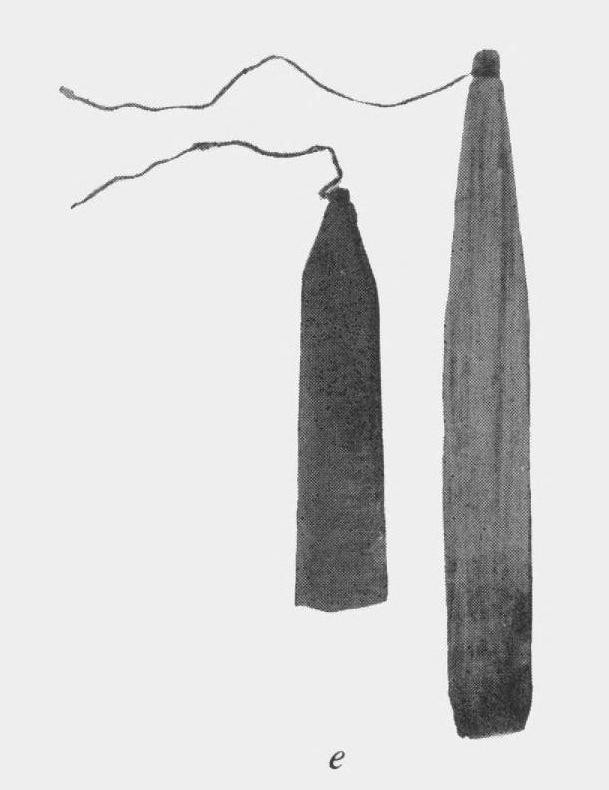
Source term: Schwirrgerät / Schwirrholz / bullroarer
pĩkwęk — the Ramkokamekra-Canela name for the bull-roarer; among the now-extinct Chakamekra it carried a special term, pepyetokárčą, "insignia of the pepyé," marking it as proper to the second initiation phase.
Among the Ramkokamekra (Canela) and the now-extinct Chakamekra of eastern Brazil, the bullroarer belonged to the second phase of male initiation, the pepyé. After nightfall and before daybreak the class leader was to swing the instrument, the booming alarm passed from cell to cell so that no secluded novice had fallen asleep; a sleeper would be punished by the commandant. When Curt Nimuendajú took part in the pepyé festival of 1933, he found the signal given only now and then, and at first did not understand the sound he occasionally heard. He recorded one exchange between two novices: "Did you hear my bull-roarer this noon?" "Yes!" "I thought you were asleep." Outside this rite the object was otherwise rare, turning up mainly as a children's toy. That its modest role was a decline from something larger is suggested by the Chakamekra, whose specimens were considerably larger and more carefully made than the surviving Ramkokamekra examples, and who had a special term, pepyetokárčą, marking it as insignia of the pepyé.
It seems clear that the comparative insignificance of the bull-roarer at initiation does not represent its original role.
Curt Nimuendajú, The Eastern Timbira, trans. Robert H. Lowie (1946), p. 186
Particulars
- Function
- Second phase male initiation; class leader sounds bullroarer at night; larger Chakamekra specimens imply stronger former role
Source
Curt Nimuendajú, The Eastern Timbira, ed. and trans. Robert H. Lowie, University of California Publications in American Archaeology and Ethnology 41 (1946), p. 186; Otto Zerries, 'The Bull-roarer among South American Indians,' Revista do Museu Paulista n.s. 7 (1953), pp. 279-280 and 293-294