No. MUS2026-138
Mesa Verde Ruin 14 bone bullroarer
United States · Wetherill Mesa, Mesa Verde, Colorado · North America · Southwest
Function not recorded
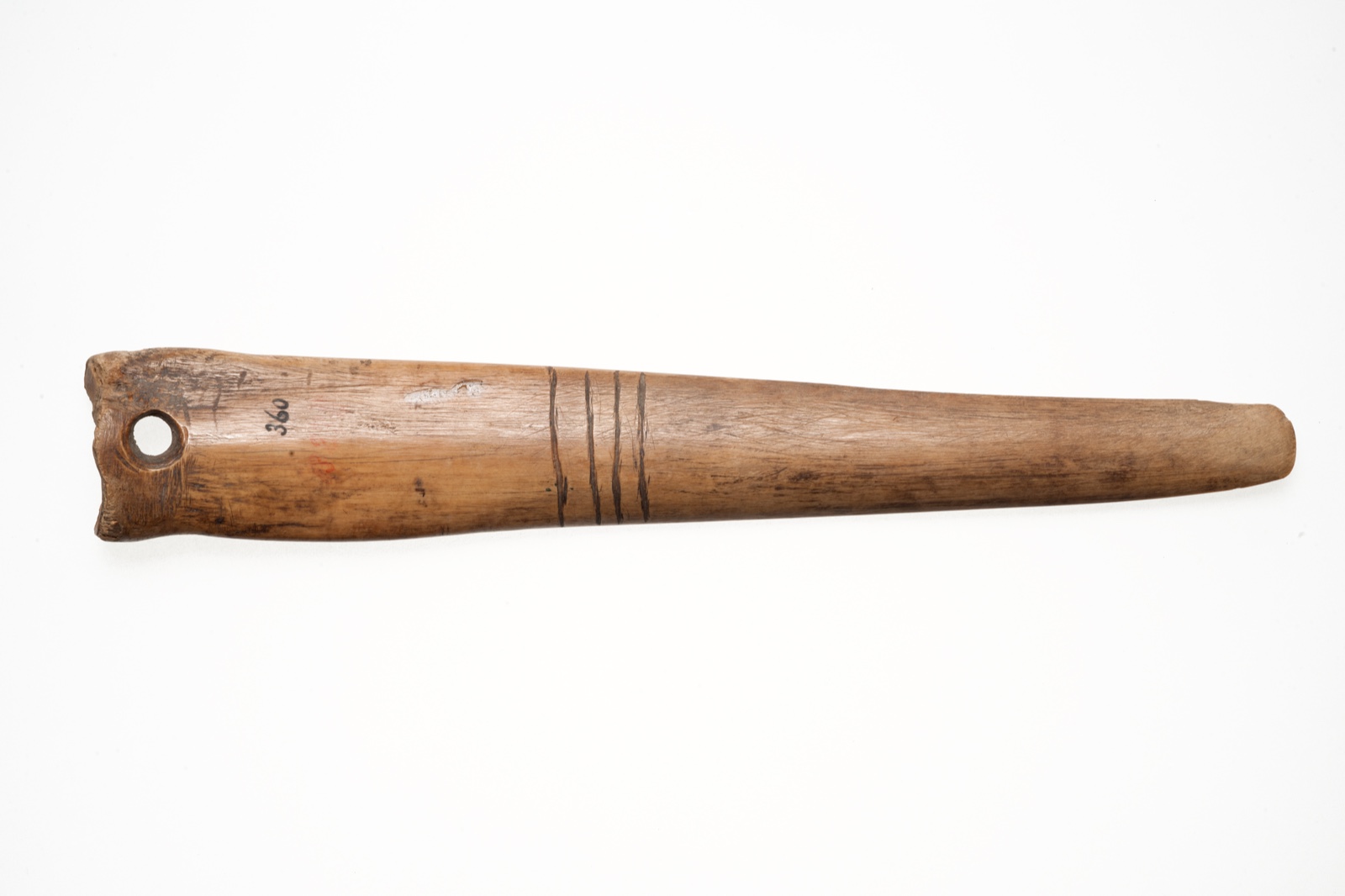
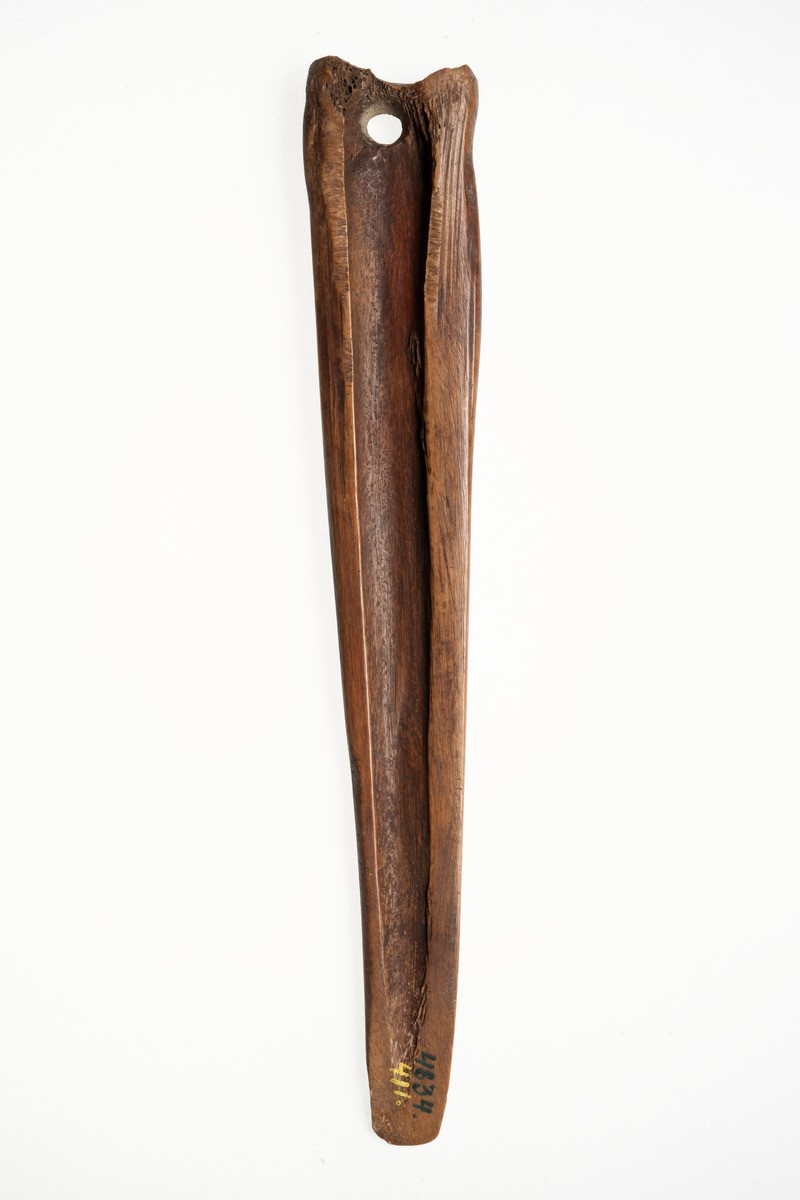
Source term: Suhistuspuu
suhistuspuu: Finnish for bullroarer.
Nordenskiöld catalogued this tapered deer-bone blade from a Wetherill Mesa cliff dwelling as a scraper; a later hand overruled him: bullroarer, probably not a scraper. One cord-hole is drilled through its smoothed, worn wide end. Among the Hopi who descend from these cliff builders, warriors of the Snake society still whirl the bullroarer, the tovokinpi, around the kivas before dawn to voice the thunder of the July monsoon and pull rain onto the corn. Whether this seven-hundred-year-old bone ever sang that note, no cord survives to say.
A string is attached to the hole and when the object is swung from the string, it makes a specific sound.
National Museum of Finland / Finna, VK4834:411.
Particulars
- Object
- Elongated deer metapodial bone blade, 21.8 x 3.4 cm: narrow and tapered, with a broad smoothed face, a single suspension hole drilled near the wide end, four transverse engraved lines, and a reverse that follows the bone's natural channel; National Museum of Finland VK4834:411.
- Function
- Not recorded.
Source
National Museum of Finland, VK4834:411 (Long Canyon, Wetherill Mesa); G. Nordenskiöld, The Cliff Dwellers of the Mesa Verde (1893), p. 99, pl. XLI:7