No. VIERTLER1991-001
Meruri Aije-doge, jaguar-faced
Brazil · Meruri, General Carneiro · Barra do Garças, Mato Grosso · South America
Restricted
aíje
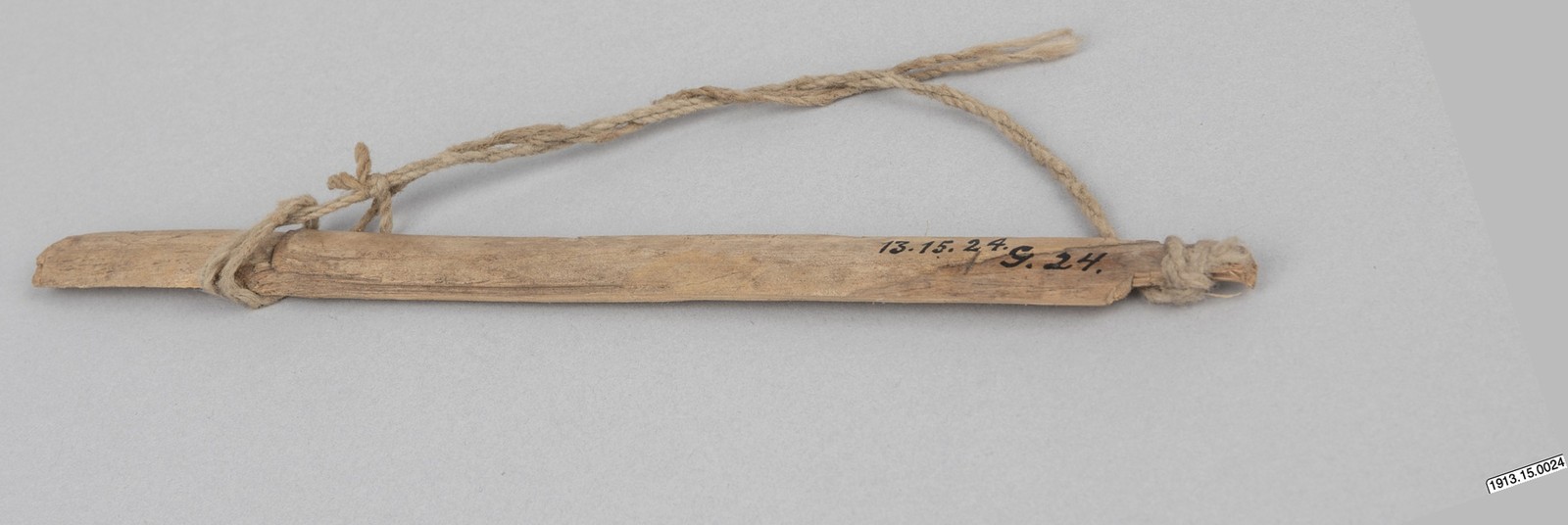
Source term: zunidor
aíje: the Bororo bullroarer and the water-being it embodies. Aije-doge Aroe: the aije spirits, played by men at funerals. Tugarege: one of the two Bororo moieties, owners of the ceremony.
At Meruri the spirits of the swamps came painted as jaguars. The Aije-doge actors, whitened with clay, with charcoal jaguar markings across their faces, stood and sat, stood and sat, crying “U, U, U,” and then set off for the village: some crawled on all fours with a roarer in one hand, others rode on the backs of the Tugarege, the ceremony's owners, while another man carried the blade. In the plaza they circled the dead person's ritual stand-in ever closer, crawling, and rubbed against him in homage. Then they spread out and whirled the roarers, a wail like sirens, as women and children wept hidden in their houses. When the spirits had gone the men ran to gather the blades and hid them in a swamp.
ao rumor como que de sereias, acrescentam-se os gritos dos próprios operadores
to the noise, like that of sirens, are added the cries of the operators themselves
César Albisetti and Ângelo Jayme Venturelli, Enciclopédia Bororo I (1962), p. 661
Particulars
- Object
- Wooden aíje blades, carried with a pole by the Aije-doge actors.
- Function
- Funeral representation of the Aije-doge Aroe, the spirits of swamps and river bottoms: jaguar-painted actors crawl or ride on men's backs into the village, honour the dead person's representative, then whirl the blades while women and children hide; afterwards the blades are hidden in a swamp. Newly initiated boys undergo a test of courage.