The Bullroarer Atlas

DRIVER1939-001 - primary ethnography

Sinkyone

United States - South Fork Eel River - Bull Creek - Garberville region - North America - California

Weather / fertility magic

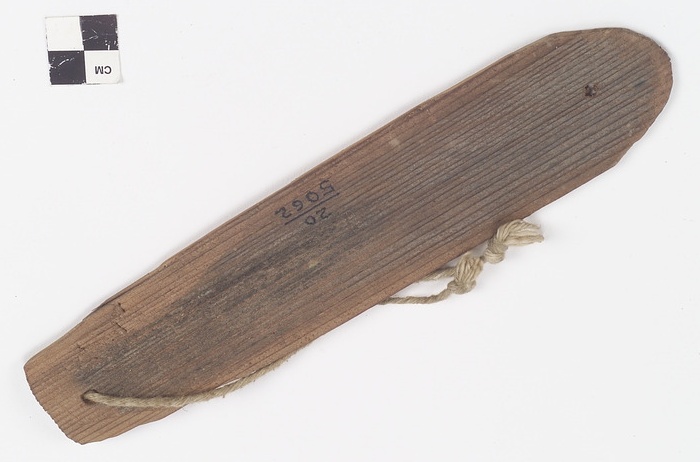
Representative—not this record’s object: Rappahannock bullroarer, shown as a regional stand-in; no image of this record’s own object is...
Representative—not this record’s object: Rappahannock bullroarer, shown as a regional stand-in; no image of this record’s own object is available yet. Department of Anthropology, Smithsonian Institution (USNM E391849-0) Image source

On the South Fork of the Eel, George Bert told Harold Driver in 1935 that the bullroarer's special power was to raise wind -- and that Sinkyone people used it more often to stop wind than to start it. A strip of madroña bark, struck and swung from one hand, was believed to do the same. Bert was eighty-four, born on Bull Creek, and had spent most of his life around Garberville; Driver recorded the practice without a local name or surviving object.

Bull-roarer produces especially wind; apparently more often used to stop than start it.

Driver 1939:398
Object
Wooden bullroarer; no exact object, dimensions, local name, or Sinkyone cord construction is recorded. Driver and Heizer use the ordinary free-air bullroarer class, not a buzzer.
Function
Produced wind and was used more often to stop wind than to start it.
Map confidence
medium - South Fork Eel anchor near Garberville and Bull Creek matching Driver's Sin 1 consultant history; not a named performance site.
Source location
printed p. 398; culture elements 1341 and 1344

View source Open this point on the interactive map