No. SAMER-006
Eastern Mataco bullroarer, Bermejo River
Argentina · Gran Chaco · Bermejo River · South America
Play / practical
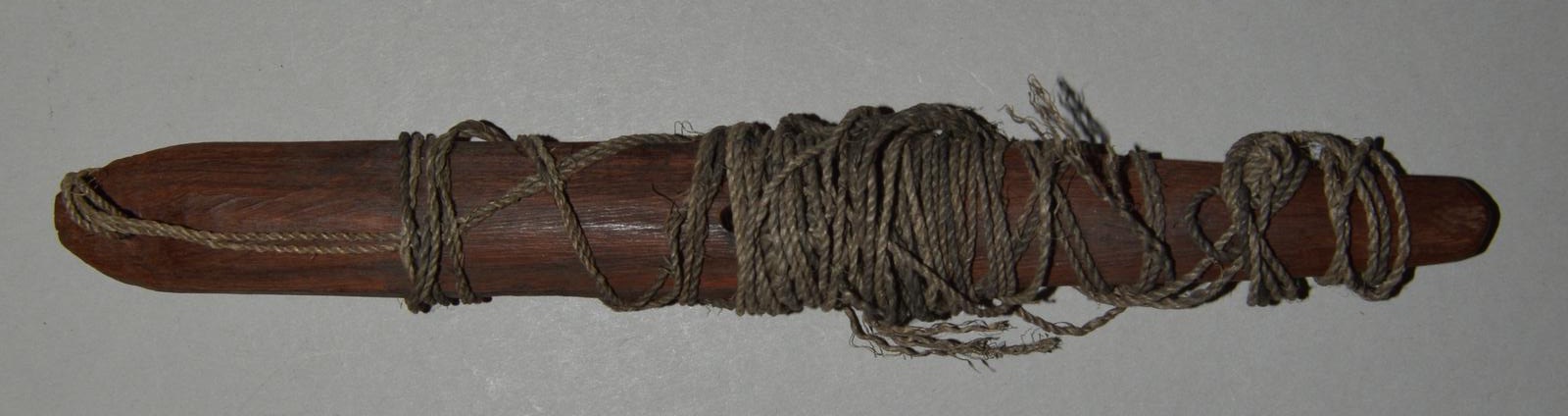
Source term: bullroarer; religious/ritual equipment
A wooden bullroarer from the Eastern Mataco (Wichí) of the Bermejo River, in the Gran Chaco of northern Argentina, accessioned by the British Museum in 1937. Izikowitz, surveying South American instruments in 1935, found the instrument among only two Chaco peoples, the Mataco and the Caduveo, and judged that they had likely taken it, like several other elements, from the cultures of Amazonas to the north. Where the Caduveo whirled theirs at funerals, among the Mataco the instrument was a toy: Nordenskiöld found it a plaything of Choroti and Ashluslay children, and Métraux noted that they gave their bullroarers to the young in the same way. It sits in the British Museum under "religious/ritual equipment."
Particulars
- Object
- An Eastern Mataco bullroarer from the Bermejo River region (British Museum Am1937,0316.28.a).
- Function
- Among the Mataco the bullroarer was a child's plaything; no ritual use is recorded for them.
Source
British Museum object Am1937,0316.28.a; Erland Nordenskiöld (1913), p. 70; Alfred Métraux (1946), p. 343; Karl Gustav Izikowitz, Musical and Other Sound Instruments of the South American Indians (1935), p. 210; all via Otto Zerries, 'The Bull-roarer among South American Indians,' Revista do Museu Paulista n.s. 7 (1953), pp. 288-289 n. 2