No. NA-S1952-004
Wimönuntci Ute women's-taboo bullroarer
United States · Great Basin · Colorado Plateau · North America
Restricted
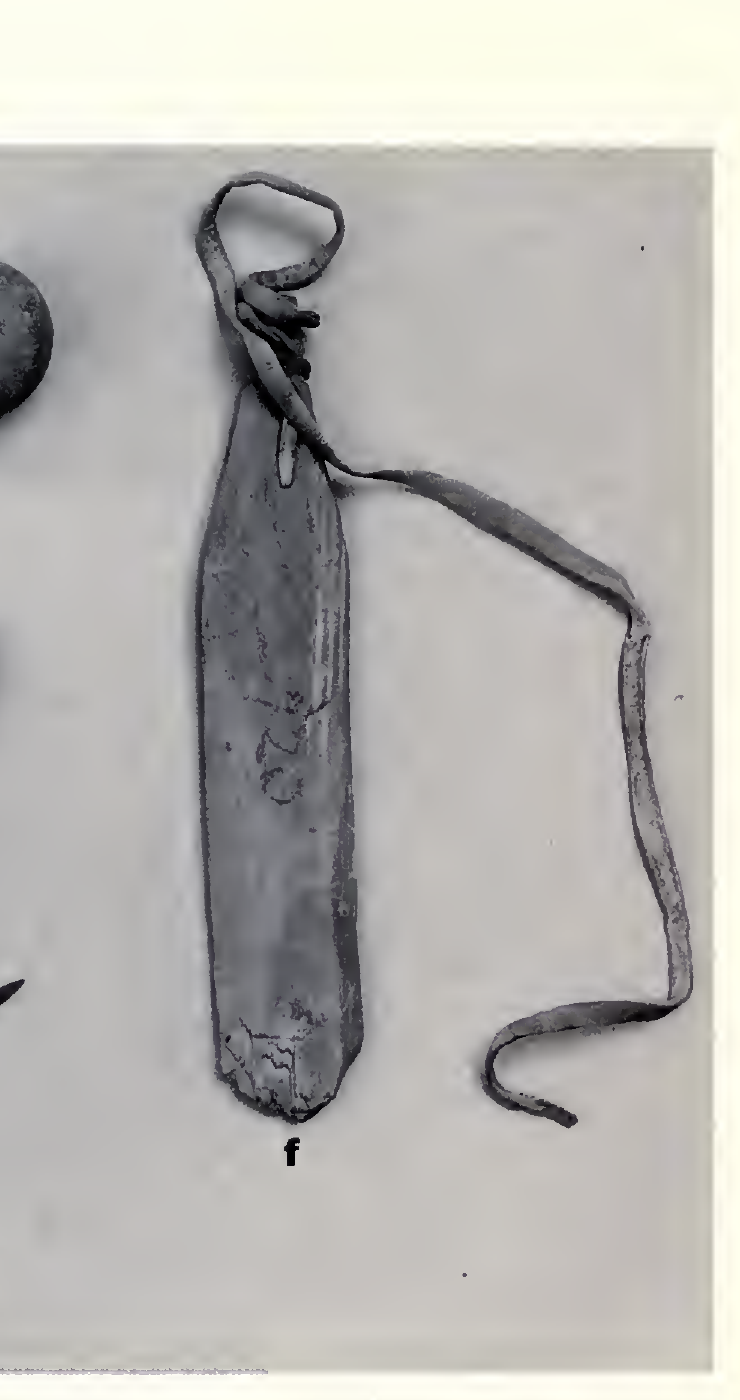
kwiemtinömpö
Source term: bullroarer
kwiemtinömpö: the Wimönuntci word for the bull-roarer.
The Wimönuntci — the Weeminuche, southernmost of the Colorado Ute, whose base camp lay in the La Sal Mountains of eastern Utah — forbade the bull-roarer to women, and only the summer-born could make it work at all. Whirled on its handled string, the wooden kwiemtinömpö raised wind and cleared away clouds. One shaman needed no arm for it: his bull-roarer hung tied outside the dwelling and whirled by itself whenever he wished it to.
Bull-roarer tied outside; it whirled by itself whenever wished by shaman to do so.
Stewart 1942:347 (Culture Element Distributions: XVIII, Anthropological Records 6:4), note to element 4087, Wimönuntci list
Particulars
- Object
- Whirrer of wood swung on a string with a wooden handle.
- Function
- Taboo to women; whirled to make wind blow and clear away clouds, effective only for people born in summer.
Sources
- Omer C. Stewart, “Culture Element Distributions: XVIII, Ute-Southern Paiute,” Anthropological Records 6(4) (1942), pp. 239, 291, 315, 347, 352 View · archived
- Theodore A. Seder, 'Old World Overtones in the New World,' Museum Bulletin (University of Pennsylvania) XVI(4) (1952), pp. 51-54 View · archived